Halifax · CountriesHalifax lives off its harbour.
Halifax has one of the deepest ice-free harbours on the east coast. The navy has a major base here, and shipyards, seafood handlers and ocean research groups work along the water. Dalhousie and other universities add students and researchers. Nova Scotia charges a harmonised sales tax that firms must show on invoices.
Ships have shaped the town since it was founded. Container terminals, cruise berths and a working naval dockyard sit within sight of downtown, and marine suppliers, repair shops and freight agents depend on all three.
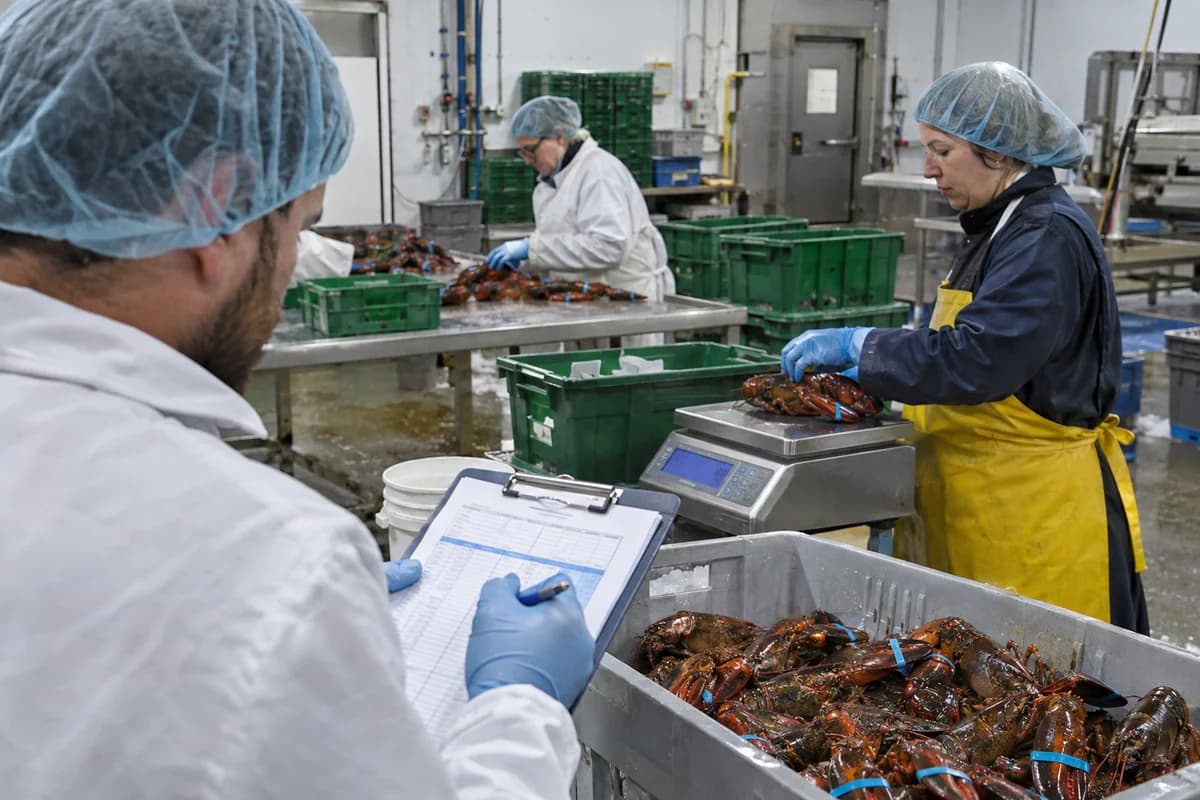
Nova Scotia is also lobster country. Seafood processors around the city buy from boats along the coast and ship fresh and frozen product abroad, and live product loses value by the hour. Winter storms close roads for days. Ocean scientists at the universities and nearby institutes test sensors in the harbour and the Atlantic beyond, and smaller technology firms build the instruments for them.
The districts, business parks and markets that matter in Halifax.
How Halifax businesses pick and use software.
Seafood processors want catch intake, lot tracking and export documents together, so that a buyer in another country can be shown where a lot was landed and when it left.
Marine suppliers and repair shops need job quotes and parts stock in one tool.
Small ocean technology firms want projects and grant spending tracked per project, so that a funder’s report can be produced from the books without a week of digging.
Where Halifax businesses lose time and money.
Catch records kept on paper
A buyer asks where a lot came from, and intake records linked to each shipment answer at once.
Export paperwork rushed
A container is held because a certificate is missing, so a checklist per shipment catches gaps.
Repair jobs priced from memory
A shipyard job runs past the quote, and logged hours and parts per job show why.
Storm delays untracked
Weather closes the road and deliveries slip, so a schedule that shifts with them warns customers.
What we would build for Halifax businesses.
Usually in this order, starting with whatever the audit ranks first.
IoT and Edge Computing
Machine and sensor readings connected to office records, with buffering limits and recovery after a lost connection defined.
Learn moreData Engineering and Business Intelligence
Dashboards that answer the owner’s Monday questions without anyone building an Excel sheet first.
Learn moreERP, CRM and Business Software Implementation
One record of stock, orders, customers and accounts, set up so your team opens it every day.
Learn moreWeb and Mobile Application Development
Web and mobile apps for customers, field staff and dealers, built to work on ordinary phones.
Learn moreReady products that fit Halifax businesses.
Each one is adapted to how your business works before it goes live, and anything your trade needs that it lacks is added then. You are not paying to build the basics again.
Fisheries and Aquaculture Farm Management Software
Ponds and cages, seed lots, feed rounds, water readings, mortality, treatments, harvest grading and buyer billing for fish and shrimp farms.
Learn moreFreight Forwarder Management Software
Rate sheets, quotations, job files, house bill drafts, milestones, buying and selling charges, vendor bills and agent statements for freight forwarders.
Learn moreSensor Manufacturer Management Software
Variant codes, element lots, chamber calibration runs, master gauge register, certificates, OEM orders and drift returns for makers of pressure, temperature and level sensors.
Learn moreHow the work runs from Bengaluru for Halifax.
- 1
The audit, by call
A screen-share and a look at the sheets, accounting reports and WhatsApp groups your team uses. No travel needed.
- 2
A written proposal
Scope, what we build first and the cost, agreed in writing before anything starts.
- 3
Build in short rounds
Working screens shared every few weeks. Your team tests them from your own office.
- 4
Go-live, in person when it helps
For data migration and training we can come to Halifax. Travel is agreed in advance.
- 5
Support online
Fixes, changes and hosting handled remotely by the same team that built it.
The work we have published.
We don’t claim Halifax clients we don’t have. These are systems our team built; the way we work is the same wherever you are.
PetSeva: matching owners to the right vet, at any hour
A two-sided veterinary platform where vets are searchable by specialisation and bookable outside clinic hours. It now carries more than 2,000 veterinary doctors.
Read the case study Paying guest accommodationSAM Atithi Pavathi: bed-level occupancy as the source of truth
PG management software where allocation, rates and invoices are derived from bed-level occupancy and not maintained in parallel spreadsheets.
Read the case study School transport servicesSAM Tours: school transport on a single ledger
Registration, fee collection, routing and finance write to the same records, closing the gap between journeys run and fees collected.
Read the case study Microfinance and Self Help GroupsVikasa RDO: making SHG loan recovery auditable
Loan proposals, recoveries and commissions sit on one record, with a person attached to every state change, so a business handling a bank’s money can show where each rupee went.
Read the case studyMake the scope specific to your business.
Work through a real example from your operation and agree the handoffs, controls and support the project needs.
Catch records kept on paper
Which observation would change the proposed scope?
For “Catch records kept on paper”, observe someone completing the task with a representative example. Record where they stop, ask another person or re-enter information, then choose the smallest change whose result the team can verify.
Background reading: GOV.UK: researching user needs
Questions Halifax owners ask before they call.
Can lot tracking follow seafood from boat to buyer?
Yes. Every intake carries its source, grade and date, and shipments link back to it. Buyers can be sent the history.
How do Halifax mornings work with Bengaluru?
Halifax mornings arrive in the Indian evening. We keep a regular weekly slot and write up decisions after each call.
What happens after I share my requirements?
We review your brief and clarify the work with you. We then look at the software, spreadsheets and WhatsApp groups your business runs on today and write down what works, what slows your team down and what is missing. A demo login, a screen-share or a few screenshots are enough. You get a short written summary ordered by priority, with no obligation to hire us afterwards.
How much will the software cost?
We don’t publish a price, because it depends on what the system has to do. That first review settles the scope, and the cost goes into a written proposal before any work starts.
Industries we build for in Halifax.
Elsewhere in Canada.
Tell us what your Halifax business runs on today.
Send a short note on the spreadsheets, software or WhatsApp groups your team depends on. We reply the same working day.
What happens after you share your requirements
- We review your brief and the systems you already use.
- We clarify the workflow, missing information and the work to consider first.
- The proposed scope sets out the deliverables, responsibilities and dependencies.
- Review the scope and commercial terms before deciding whether to proceed.
Start with your requirements
Describe your current process, the people involved and the change you need. Start with the details you know; we can clarify the rest together.
Share your requirements