Montreal · CountriesMontreal firms in aerospace, games, design and food work in French and English at once.
Montreal combines aerospace plants near Dorval, video-game and visual studios in the Mile End and downtown, universities, festivals and a serious bakery and restaurant culture. Quebec law expects French on customer documents. We can prepare quotes, invoices and reminders in French for review by a native speaker.
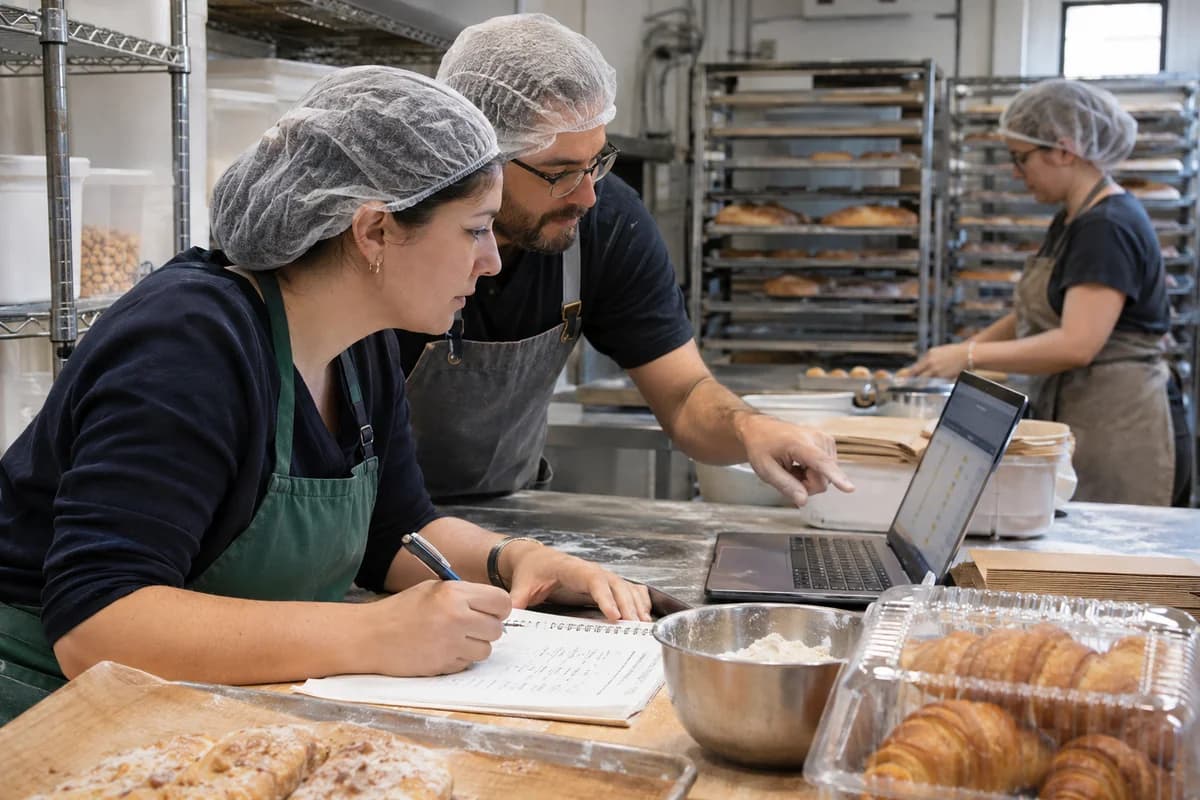
Quebec’s language law is not a footnote here. Invoices, labels, signs and customer messages are expected in French, and firms keep English versions for clients elsewhere. Software that can hold both is a requirement, not a nicety, though translations still need a native reader before anything goes to a customer.
The economy is wide. Aerospace suppliers machine parts to strict inspection records, studios in the Plateau and Mile End build games and effects, and festivals fill the summer. Restaurants and bakeries open early. Small shops serve neighbourhoods with long memories.
The districts, business parks and markets that matter in Montreal.
How Montreal businesses pick and use software.
Aerospace suppliers want traceability and inspection records kept in a system an auditor can read, and bilingual output is welcome where staff read both languages.
Studios want to track hours and milestones per project without chasing timesheets every Friday.
Bakeries and restaurant owners need ordering and stock tools that work in French on the shop floor.
Where Montreal businesses lose time and money.
Documents needed in two languages
A quote for a Quebec customer must be in French, while the same job abroad may be in English. Checked templates stop the wrong version going out.
Traceability gaps on machined parts
Batches pass through several operations before inspection, and linking each batch number to its operations and checks makes audits faster.
Festival season staffing and stock
Summer events and tourism lift demand within weeks, and rosters and ordering must scale quickly and shrink just as fast.
Provincial tax rules on invoices
Quebec has its own sales tax alongside the federal one. Registration numbers and tax lines appear separately and are reviewed with your accountant.
What we would build for Montreal businesses.
Usually in this order, starting with whatever the audit ranks first.
Global Compliance and Localisation
Software has to change for each country. Currency tables, VAT and sales tax codes, invoice layouts, translation files, storage regions and consent records are built as configuration that your team can edit without code changes. The legal question stays with your adviser.
Learn moreCustom Software and Product Engineering
Software built around how your business actually runs, when nothing off the shelf fits without workarounds.
Learn moreQA and Software Testing
Testing on the phones, browsers and patchy networks your customers and staff actually use.
Learn moreSoftware Maintenance, Support and Rescue
Taking over the system your last vendor stopped answering for: fixing it, documenting it and keeping it running.
Learn moreReady products that fit Montreal businesses.
Each one is adapted to how your business works before it goes live, and anything your trade needs that it lacks is added then. You are not paying to build the basics again.
Aerospace Manufacturer Management Software
Quotations, routings, work orders, heat and lot traceability, first article reports, nonconformances, special processes and certificates for aerospace and aviation parts makers.
Learn moreBakery Management System
Cake slips, bake plans, flour and butter stock, counter billing and wastage for bakeries and cake shops, with every recipe costed in your own ingredients.
Learn moreHow the work runs from Bengaluru for Montreal.
- 1
The audit, by call
A screen-share and a look at the sheets, accounting reports and WhatsApp groups your team uses. No travel needed.
- 2
A written proposal
Scope, what we build first and the cost, agreed in writing before anything starts.
- 3
Build in short rounds
Working screens shared every few weeks. Your team tests them from your own office.
- 4
Go-live, in person when it helps
For data migration and training we can come to Montreal. Travel is agreed in advance.
- 5
Support online
Fixes, changes and hosting handled remotely by the same team that built it.
The work we have published.
We don’t claim Montreal clients we don’t have. These are systems our team built; the way we work is the same wherever you are.
PetSeva: matching owners to the right vet, at any hour
A two-sided veterinary platform where vets are searchable by specialisation and bookable outside clinic hours. It now carries more than 2,000 veterinary doctors.
Read the case study Paying guest accommodationSAM Atithi Pavathi: bed-level occupancy as the source of truth
PG management software where allocation, rates and invoices are derived from bed-level occupancy and not maintained in parallel spreadsheets.
Read the case study School transport servicesSAM Tours: school transport on a single ledger
Registration, fee collection, routing and finance write to the same records, closing the gap between journeys run and fees collected.
Read the case study Microfinance and Self Help GroupsVikasa RDO: making SHG loan recovery auditable
Loan proposals, recoveries and commissions sit on one record, with a person attached to every state change, so a business handling a bank’s money can show where each rupee went.
Read the case studyMake the scope specific to your business.
Work through a real example from your operation and agree the handoffs, controls and support the project needs.
Traceability gaps on machined parts
Can you follow a suspect input through to the affected deliveries?
Pick one real record from “Traceability gaps on machined parts”. Ask the team to trace its origin and identify the later work or deliveries it affected, including any split quantities.
Background reading: ERPNext: forward and backward traceability
Festival season staffing and stock
What happens to movements entered while a count is being checked?
For “Festival season staffing and stock”, choose a count date and trace the movements around it. Agree who investigates a difference before an adjustment changes the available balance.
Background reading: ERPNext: stock reconciliation
Questions Montreal owners ask before they call.
Can customer documents be produced in French?
Yes. Templates can carry French and English text. A native French speaker on your side should review the wording before it is used, because tone and legal terms matter.
Does our software team speak French?
No, our working language is English. French text is supplied by you or your translator and set into the templates, then checked by your own staff.
What happens after I share my requirements?
We review your brief and clarify the work with you. We then look at the software, spreadsheets and WhatsApp groups your business runs on today and write down what works, what slows your team down and what is missing. A demo login, a screen-share or a few screenshots are enough. You get a short written summary ordered by priority, with no obligation to hire us afterwards.
How much will the software cost?
We don’t publish a price, because it depends on what the system has to do. That first review settles the scope, and the cost goes into a written proposal before any work starts.
Industries we build for in Montreal.
Elsewhere in Canada.
Tell us what your Montreal business runs on today.
Send a short note on the spreadsheets, software or WhatsApp groups your team depends on. We reply the same working day.
What happens after you share your requirements
- We review your brief and the systems you already use.
- We clarify the workflow, missing information and the work to consider first.
- The proposed scope sets out the deliverables, responsibilities and dependencies.
- Review the scope and commercial terms before deciding whether to proceed.
Start with your requirements
Describe your current process, the people involved and the change you need. Start with the details you know; we can clarify the rest together.
Share your requirements