Hamilton · CountriesHamilton makes steel on Lake Ontario.
Hamilton sits at the western end of Lake Ontario, with a working harbour and two large steelmakers. Fabricators, machine shops and metal suppliers have grown around them. McMaster University and the hospitals bring research and health jobs. Ontario charges one harmonised sales tax on most goods.
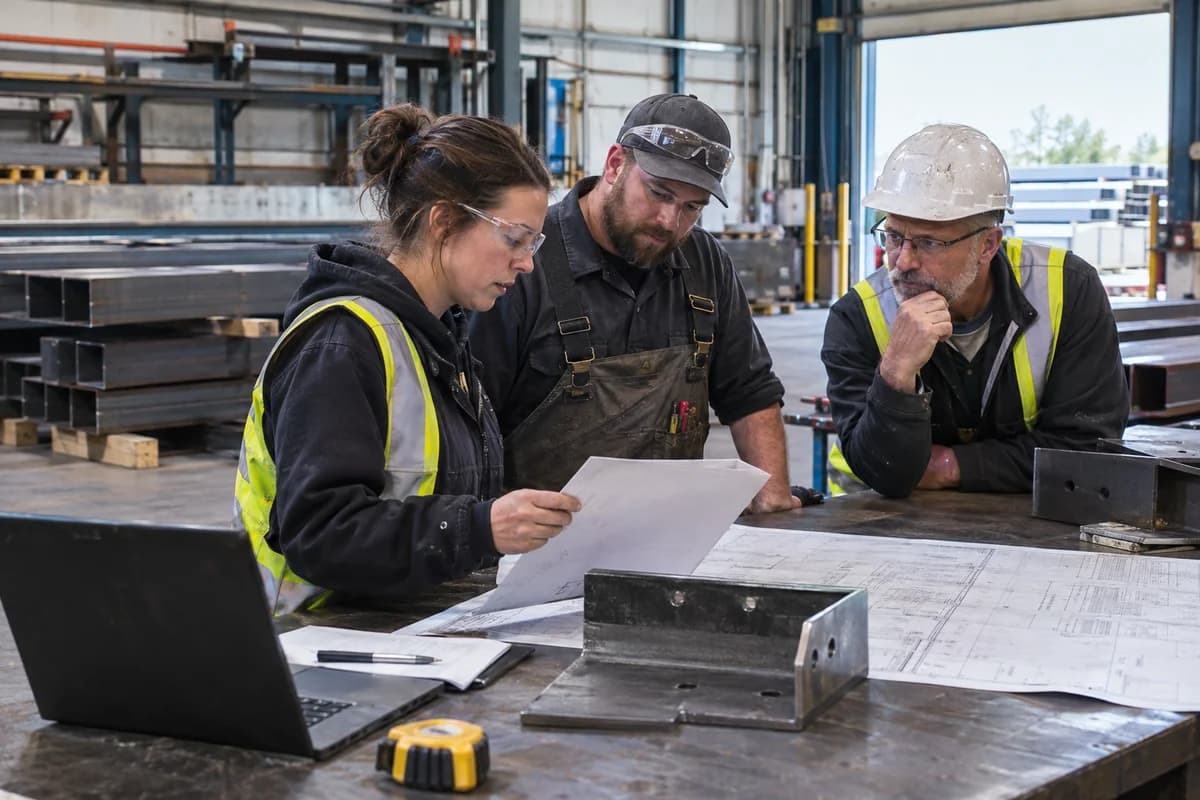
The bay is lined with steel mills, and the trade shapes the town’s character. Scrap, coil, plate and finished product all move by rail, truck and ship, and fabricators and machining shops buy from the mills to sell to builders and equipment makers.
McMaster University is a major research centre. The hospitals around it employ thousands of staff. Cargo flights use the airport south of the city, which is a hub for parcel carriers. The older downtown is changing as galleries and small firms move into James Street North, and rents there are rising each year.
The districts, business parks and markets that matter in Hamilton.
How Hamilton businesses pick and use software.
Metal fabricators want quotes, cutting jobs and delivery in one workflow, so the plate ordered for a job is the plate cut for it and the customer sees one clean invoice.
Machine shops need job tracking, tooling and quality records tied to customer orders.
Distribution and parcel firms want inbound loads and dock schedules visible to the whole team, so drivers are told which door to use before they reach the gate.
Where Hamilton businesses lose time and money.
Steel prices changing mid-quote
A quote is out and the plate price moves, so a quote expiry tied to supplier prices protects margin.
Jobs lost between cutting and welding
A part waits at the wrong station for a day, and a floor board with job status shows where.
Mill certificates misfiled
The shop hunts for a paper when someone wants a heat number, so certificates linked to jobs fix it.
Dock slots managed on whiteboards
Two trucks arrive for one bay, and a booked schedule spreads them.
What we would build for Hamilton businesses.
Usually in this order, starting with whatever the audit ranks first.
ERP, CRM and Business Software Implementation
One record of stock, orders, customers and accounts, set up so your team opens it every day.
Learn moreIoT and Edge Computing
Machine and sensor readings connected to office records, with buffering limits and recovery after a lost connection defined.
Learn moreBusiness Process Automation
Approvals, reminders and reports triggered by agreed rules, with exceptions assigned to a responsible person.
Learn moreQA and Software Testing
Testing on the phones, browsers and patchy networks your customers and staff actually use.
Learn moreReady products that fit Hamilton businesses.
Each one is adapted to how your business works before it goes live, and anything your trade needs that it lacks is added then. You are not paying to build the basics again.
Structural Steel Fabricator Management Software
Piece mark lists, drawing revisions, heat traceability, fabrication stages, erection sequence loading, loose items and tonnage bills for steel fabricators.
Learn moreSteel Mill Management Software
Orders, raw material, heat and lot traceability, test certificates, yard stock, dispatch and receivables for steel mills and re-rollers.
Learn moreCNC Milling Shop Management Software
Quotes with programming time, programme revisions, fixture register, plate stock, operation routing, inspection reports and outside finishing for CNC milling shops.
Learn moreHow the work runs from Bengaluru for Hamilton.
- 1
The audit, by call
A screen-share and a look at the sheets, accounting reports and WhatsApp groups your team uses. No travel needed.
- 2
A written proposal
Scope, what we build first and the cost, agreed in writing before anything starts.
- 3
Build in short rounds
Working screens shared every few weeks. Your team tests them from your own office.
- 4
Go-live, in person when it helps
For data migration and training we can come to Hamilton. Travel is agreed in advance.
- 5
Support online
Fixes, changes and hosting handled remotely by the same team that built it.
The work we have published.
We don’t claim Hamilton clients we don’t have. These are systems our team built; the way we work is the same wherever you are.
PetSeva: matching owners to the right vet, at any hour
A two-sided veterinary platform where vets are searchable by specialisation and bookable outside clinic hours. It now carries more than 2,000 veterinary doctors.
Read the case study Paying guest accommodationSAM Atithi Pavathi: bed-level occupancy as the source of truth
PG management software where allocation, rates and invoices are derived from bed-level occupancy and not maintained in parallel spreadsheets.
Read the case study School transport servicesSAM Tours: school transport on a single ledger
Registration, fee collection, routing and finance write to the same records, closing the gap between journeys run and fees collected.
Read the case study Microfinance and Self Help GroupsVikasa RDO: making SHG loan recovery auditable
Loan proposals, recoveries and commissions sit on one record, with a person attached to every state change, so a business handling a bank’s money can show where each rupee went.
Read the case studyMake the scope specific to your business.
Work through a real example from your operation and agree the handoffs, controls and support the project needs.
Steel prices changing mid-quote
Which observation would change the proposed scope?
For “Steel prices changing mid-quote”, observe someone completing the task with a representative example. Record where they stop, ask another person or re-enter information, then choose the smallest change whose result the team can verify.
Background reading: GOV.UK: researching user needs
Questions Hamilton owners ask before they call.
Can heat numbers follow a part through the shop?
Yes. Mill certificates are stored against the stock, and each cut piece carries the number. A customer receives the paperwork with the order.
How would a Hamilton shop meet a Bengaluru team?
Hamilton mornings fall in the Indian evening. A late afternoon call suits shop managers, with notes sent afterwards.
What happens after I share my requirements?
We review your brief and clarify the work with you. We then look at the software, spreadsheets and WhatsApp groups your business runs on today and write down what works, what slows your team down and what is missing. A demo login, a screen-share or a few screenshots are enough. You get a short written summary ordered by priority, with no obligation to hire us afterwards.
How much will the software cost?
We don’t publish a price, because it depends on what the system has to do. That first review settles the scope, and the cost goes into a written proposal before any work starts.
Industries we build for in Hamilton.
Elsewhere in Canada.
Tell us what your Hamilton business runs on today.
Send a short note on the spreadsheets, software or WhatsApp groups your team depends on. We reply the same working day.
What happens after you share your requirements
- We review your brief and the systems you already use.
- We clarify the workflow, missing information and the work to consider first.
- The proposed scope sets out the deliverables, responsibilities and dependencies.
- Review the scope and commercial terms before deciding whether to proceed.
Start with your requirements
Describe your current process, the people involved and the change you need. Start with the details you know; we can clarify the rest together.
Share your requirements