Concepción · CountriesConcepción anchors the Biobío region, with pulp mills, sawmills, fishing ports and a university.
Concepción is the centre of the Biobío region, south of Santiago, where pine plantations feed sawmills and pulp mills along the river and the coast. Fishing boats land their catch at Talcahuano. The Universidad de Concepción draws students from across the south. GullySystem in Bengaluru writes mill, plant and harbour tools and supports them remotely.
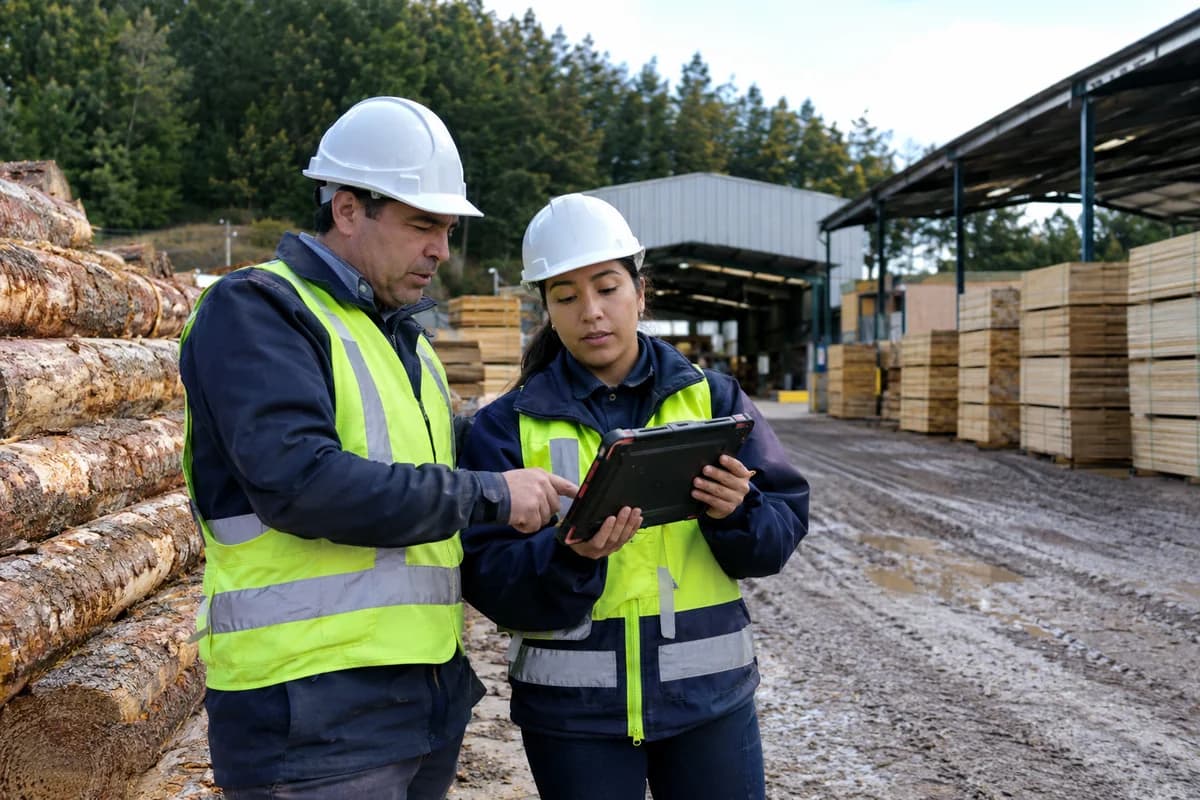
Trees are planted, felled and hauled on long cycles, yet mills run every day. A timber dealer needs volumes by species and grade, and a plywood maker needs veneer counts per order, while trucks leave for the ports with their paperwork in hand. Pulp leaves by ship.
On the coast, fish are landed, processed and frozen within hours. Plants record each catch by boat and species so that a buyer abroad can see where a lot came from. Hours overlap only in your morning, and clock changes move the window during the year.
The districts, business parks and markets that matter in Concepción.
How Concepción businesses pick and use software.
Sawmill and plywood managers who track logs, veneer and finished boards through several machines.
Fish processors who record catches by boat and species and must prove where each lot came from.
Where Concepción businesses lose time and money.
Yield is guessed, not measured
A mill receives logs by the truck and ships boards by the pack. Volume in and volume out for each batch show how much was lost along the way.
Catch records do not reach the buyer
A buyer abroad asks where a lot was caught and when, and landing records linked to each frozen batch answer that from one screen.
Machines stop without warning
Heavy equipment at mills and harbours needs scheduled servicing. A maintenance calendar per machine, with parts and hours logged, reduces surprise stops.
What we would build for Concepción businesses.
Usually in this order, starting with whatever the audit ranks first.
IoT and Edge Computing
Machine and sensor readings connected to office records, with buffering limits and recovery after a lost connection defined.
Learn moreBusiness Process Automation
Approvals, reminders and reports triggered by agreed rules, with exceptions assigned to a responsible person.
Learn moreERP, CRM and Business Software Implementation
One record of stock, orders, customers and accounts, set up so your team opens it every day.
Learn moreData Migration and Moving Off Spreadsheets
Data migration and spreadsheet replacement covers auditing existing files, cleaning and deduplicating records, loading them into a new system and reconciling the loaded result against known totals. Both systems then run side by side before cutover. Originals stay untouched.
Learn moreReady products that fit Concepción businesses.
Each one is adapted to how your business works before it goes live, and anything your trade needs that it lacks is added then. You are not paying to build the basics again.
Plywood Manufacturer Management Software
Log intake, peeling recovery, dryer loads, veneer grading, glue batches, press loads, bond tests, graded pallets and dealer dispatch for plywood mills.
Learn morePaper Product Manufacturer Management Software
Reel intake by grammage and width, slitter yield, ruling and pasting runs, set-up waste, thread and glue costing, ream and carton packing for paper product makers.
Learn moreFisheries and Aquaculture Farm Management Software
Ponds and cages, seed lots, feed rounds, water readings, mortality, treatments, harvest grading and buyer billing for fish and shrimp farms.
Learn moreHow the work runs from Bengaluru for Concepción.
- 1
The audit, by call
A screen-share and a look at the sheets, accounting reports and WhatsApp groups your team uses. No travel needed.
- 2
A written proposal
Scope, what we build first and the cost, agreed in writing before anything starts.
- 3
Build in short rounds
Working screens shared every few weeks. Your team tests them from your own office.
- 4
Go-live, in person when it helps
For data migration and training we can come to Concepción. Travel is agreed in advance.
- 5
Support online
Fixes, changes and hosting handled remotely by the same team that built it.
The work we have published.
We don’t claim Concepción clients we don’t have. These are systems our team built; the way we work is the same wherever you are.
PetSeva: matching owners to the right vet, at any hour
A two-sided veterinary platform where vets are searchable by specialisation and bookable outside clinic hours. It now carries more than 2,000 veterinary doctors.
Read the case study Paying guest accommodationSAM Atithi Pavathi: bed-level occupancy as the source of truth
PG management software where allocation, rates and invoices are derived from bed-level occupancy and not maintained in parallel spreadsheets.
Read the case study School transport servicesSAM Tours: school transport on a single ledger
Registration, fee collection, routing and finance write to the same records, closing the gap between journeys run and fees collected.
Read the case study Microfinance and Self Help GroupsVikasa RDO: making SHG loan recovery auditable
Loan proposals, recoveries and commissions sit on one record, with a person attached to every state change, so a business handling a bank’s money can show where each rupee went.
Read the case studyMake the scope specific to your business.
Work through a real example from your operation and agree the handoffs, controls and support the project needs.
Machines stop without warning
What proves that a planned task was actually completed?
Select an overdue entry in “Machines stop without warning”. Ask which work record closes it and what remains visible when the visit is postponed or only part of the job is done.
Background reading: ERPNext: maintenance plans
Questions Concepción owners ask before they call.
Can a mill record yield?
Incoming logs are logged by volume and grade, and production records show boards made from each batch. The difference between the two is reported as yield.
Can a fish processor trace lots to boats?
Each landing is recorded by boat, species, weight and date, and the freezing batch points back to it. A buyer’s question is answered by looking up the lot.
What happens after I share my requirements?
We review your brief and clarify the work with you. We then look at the software, spreadsheets and WhatsApp groups your business runs on today and write down what works, what slows your team down and what is missing. A demo login, a screen-share or a few screenshots are enough. You get a short written summary ordered by priority, with no obligation to hire us afterwards.
How much will the software cost?
We don’t publish a price, because it depends on what the system has to do. That first review settles the scope, and the cost goes into a written proposal before any work starts.
Industries we build for in Concepción.
Elsewhere in Chile.
Tell us what your Concepción business runs on today.
Send a short note on the spreadsheets, software or WhatsApp groups your team depends on. We reply the same working day.
What happens after you share your requirements
- We review your brief and the systems you already use.
- We clarify the workflow, missing information and the work to consider first.
- The proposed scope sets out the deliverables, responsibilities and dependencies.
- Review the scope and commercial terms before deciding whether to proceed.
Start with your requirements
Describe your current process, the people involved and the change you need. Start with the details you know; we can clarify the rest together.
Share your requirements