Resort, free-zone and tour software for Dominican firms, built and supported remotely from Bengaluru.
The Dominican Republic shares Hispaniola with Haiti. Beach resorts line its east and north coasts. Free zones turn out cigars, garments and medical devices for export. Cocoa, bananas and sugar cane come from farms inland. Invoices are in Spanish and carry the ITBIS. GullySystem is a Bengaluru firm and works remotely only, with no staff or customers in the country.
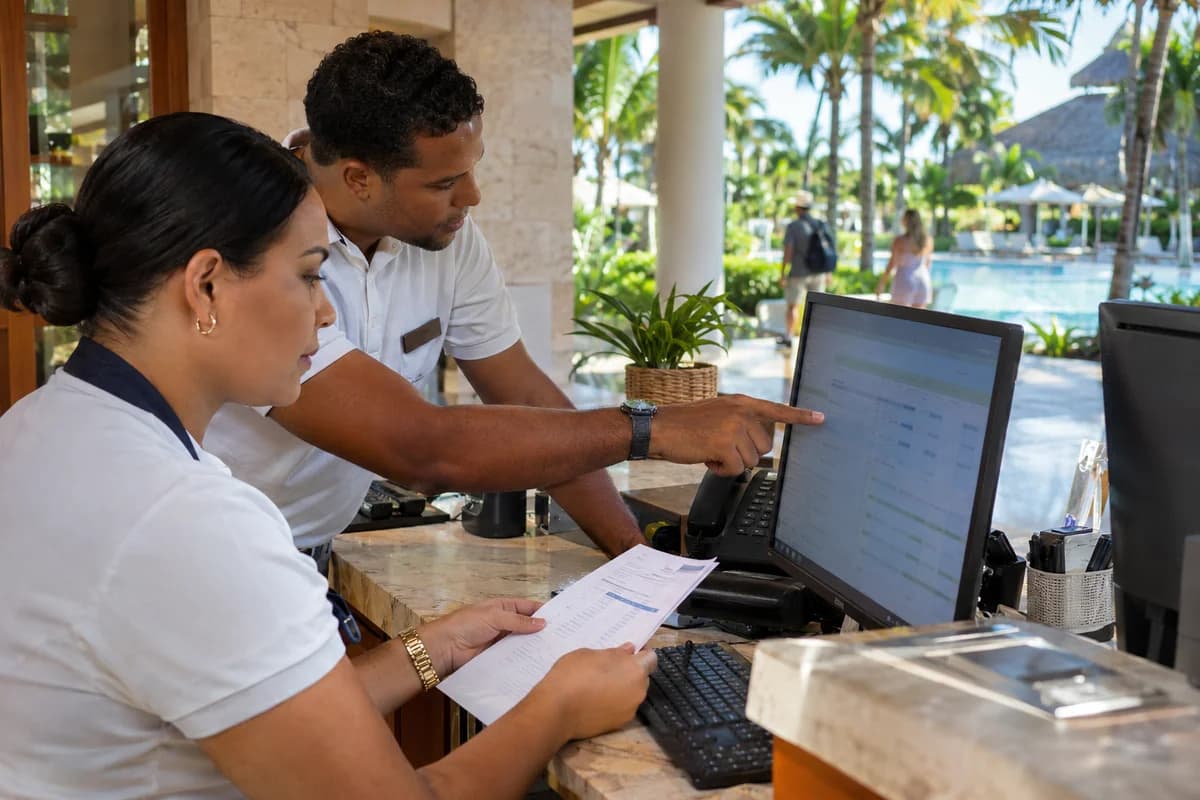
Working with a team in India from Dominican Republic.
A resort on the east coast, a cigar workshop in the Cibao valley and a garment plant inside a free zone share very little. Their back offices share a lot. Room nights, production lots, shipments and invoices live in separate sheets and chat threads, and one tired person ties them together at month end. Totals get questioned weeks later, when a guest, a buyer or an accountant asks where a figure came from. That is when the missing link shows.
Our desks are in Nagarbhavi, Bengaluru, and nobody on our team lives in the Dominican Republic. We hold no licence there and have served no customer in the country. Code is written and maintained from India. Santo Domingo’s morning arrives while our evening is underway, so planned calls are set inside that overlap. The gap is wide.
What changes when your business is in Dominican Republic.
Hours, money, language and data are decided with you at the start, not discovered later.
What the software has to fit.
The filing cycles, payment habits and licences a small business there already works around.
Trades we write for in Dominican Republic.
Products that fit them.
Capabilities often asked for.
Cities we write software for in Dominican Republic.
What we would build for Dominican Republic businesses.
Usually in this order, starting with whatever the audit ranks first.
Web and Mobile Application Development
Web and mobile apps for customers, field staff and dealers, built to work on ordinary phones.
Learn moreERP, CRM and Business Software Implementation
One record of stock, orders, customers and accounts, set up so your team opens it every day.
Learn moreGlobal Compliance and Localisation
Software has to change for each country. Currency tables, VAT and sales tax codes, invoice layouts, translation files, storage regions and consent records are built as configuration that your team can edit without code changes. The legal question stays with your adviser.
Learn moreData Migration and Moving Off Spreadsheets
Data migration and spreadsheet replacement covers auditing existing files, cleaning and deduplicating records, loading them into a new system and reconciling the loaded result against known totals. Both systems then run side by side before cutover. Originals stay untouched.
Learn moreMake the scope specific to your business.
Work through a real example from your operation and agree the handoffs, controls and support the project needs.
ITBIS and electronic receipts
Can the same receipt be allocated without counting the money twice?
Take an unallocated amount in “ITBIS and electronic receipts” and apply it to the intended balance. Review the remaining amount and the original receipt reference together.
Background reading: ERPNext: payment allocation
Questions from businesses in Dominican Republic.
Does GullySystem have staff in the Dominican Republic?
No. Our people work in Bengaluru and join you on screen and by email. If your project needs someone on site, that comes up at the first call.
Can invoices follow the DGII electronic format?
Invoice fields and layouts follow the format your accountant gives us. Whether documents reach the DGII directly or through an approved provider is a choice to settle with your contador before the build starts.
Can screens show Spanish and English?
Yes. Each screen, receipt and voucher can carry both languages, or only one of them. A fluent reader at your firm should check every template before it goes live.
Can one system show pesos and dollars together?
Yes. A quote or invoice can hold both amounts with the exchange rate used on that day. Your accountant decides which figure goes into the books.
What do we own when the project ends?
You own the software we write for you and your data. Exports are available on request in open file formats, so a later supplier can take over.
Can a garment plant in a free zone track orders by style and size?
Yes, an order breaks into styles, colours and sizes, and every carton is linked back to the exact order line that called for it. A buyer’s query about one carton leads straight to the cutting lot and the sewing line that made it. Teams see daily targets.
Tell us what you run.
Share your requirements and an engineer will read them before getting in touch, at an hour that suits your day.
What happens after you share your requirements
- We review your brief and the systems you already use.
- We clarify the workflow, missing information and the work to consider first.
- The proposed scope sets out the deliverables, responsibilities and dependencies.
- Review the scope and commercial terms before deciding whether to proceed.
Start with your requirements
Describe your current process, the people involved and the change you need. Start with the details you know; we can clarify the rest together.
Share your requirements