Hiroshima · CountriesHiroshima’s car parts makers, shipyards, oyster rafts and island visitors need exact orders and dates.
Hiroshima sits on a river delta facing the Seto Inland Sea. A large car maker and its suppliers anchor the economy. Shipbuilding runs along the coast, oysters grow in the bay, and visitors flow steadily to the Peace Memorial Park and Miyajima. Invoices are in yen. GullySystem writes order and batch tools for such firms remotely from Bengaluru.
Car parts come first. A large car maker anchors a chain of machining shops, press shops and mould makers. Each supplier delivers to a schedule set by the assembly line, with little room for a wrong or late lot.
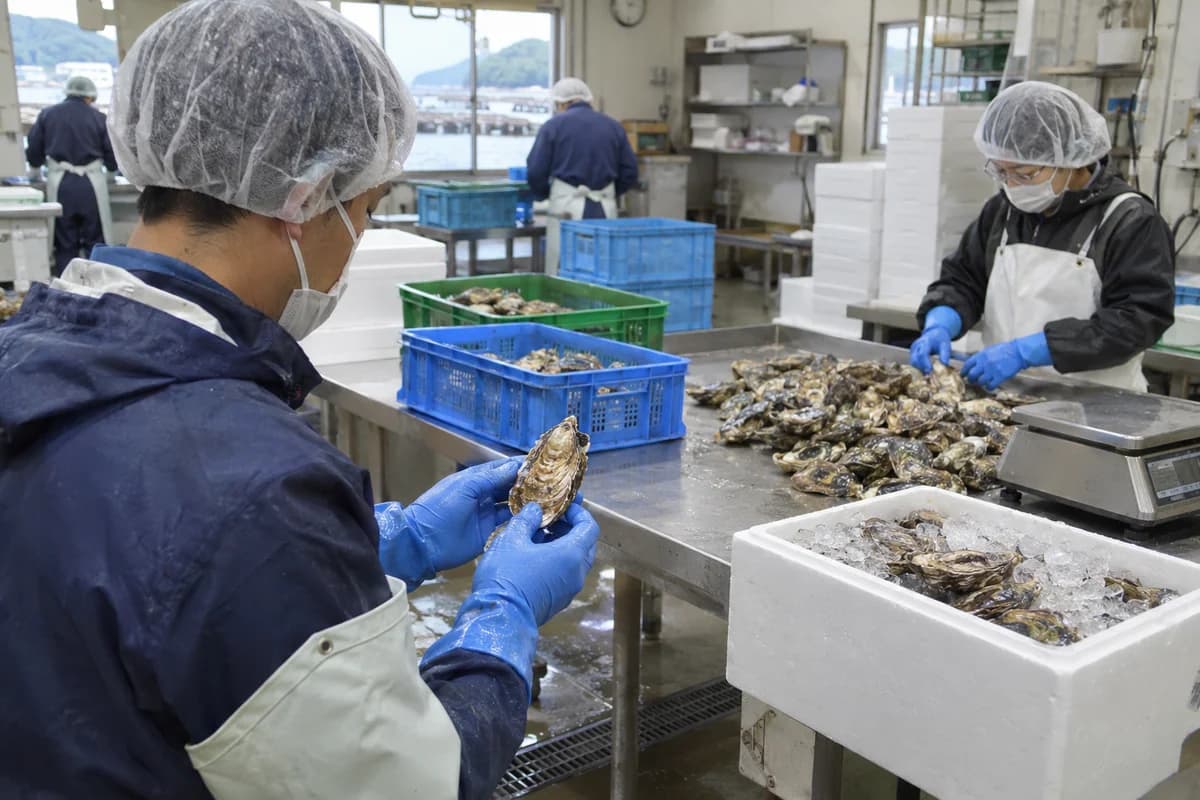
Oysters grow on rafts in the bay and are shucked and packed through the cold months. Visitors reach the Peace Memorial Park and cross by ferry to Miyajima, so inns, cafes and boat operators fill with groups across the year.
The districts, business parks and markets that matter in Hiroshima.
How Hiroshima businesses pick and use software.
Press shop owners who deliver parts to a car maker’s schedule.
Oyster farm managers who pack by lot and ship chilled orders within a day.
Where Hiroshima businesses lose time and money.
Parts shipments miss the delivery slot
Suppliers to an assembly line get call-off orders that keep changing, and clerks recopy them into spreadsheets. A single order board that updates itself cuts the rewriting.
Oyster lots lose their origin
Rafts, harvest dates and packing days are noted in different places, so any question about a single lot takes a long search. A lot code from raft to box answers it.
Inns and ferries miss group changes
Tour groups change headcount by message the night before, and rooms and boat seats are adjusted by hand. A shared manifest keeps everyone aligned.
What we would build for Hiroshima businesses.
Usually in this order, starting with whatever the audit ranks first.
ERP, CRM and Business Software Implementation
One record of stock, orders, customers and accounts, set up so your team opens it every day.
Learn moreGlobal Compliance and Localisation
Software has to change for each country. Currency tables, VAT and sales tax codes, invoice layouts, translation files, storage regions and consent records are built as configuration that your team can edit without code changes. The legal question stays with your adviser.
Learn moreQA and Software Testing
Testing on the phones, browsers and patchy networks your customers and staff actually use.
Learn moreAPI and System Integration
Connections between existing tools, with record ownership, duplicate handling and reconciliation agreed for each flow.
Learn moreReady products that fit Hiroshima businesses.
Each one is adapted to how your business works before it goes live, and anything your trade needs that it lacks is added then. You are not paying to build the basics again.
Metal Stamping Company Management Software
Quotes by strip pitch and tonnage, die register, coil lot trace, press scheduling, first-off checks, scrap and call-off deliveries for metal stamping companies.
Learn moreFisheries and Aquaculture Farm Management Software
Ponds and cages, seed lots, feed rounds, water readings, mortality, treatments, harvest grading and buyer billing for fish and shrimp farms.
Learn moreBrewery Management Software
Recipes, tank schedules, batch records, ingredient stock, packaging runs, keg tracking, taproom sales and trade orders for breweries.
Learn moreHow the work runs from Bengaluru for Hiroshima.
- 1
The audit, by call
A screen-share and a look at the sheets, accounting reports and WhatsApp groups your team uses. No travel needed.
- 2
A written proposal
Scope, what we build first and the cost, agreed in writing before anything starts.
- 3
Build in short rounds
Working screens shared every few weeks. Your team tests them from your own office.
- 4
Go-live, in person when it helps
For data migration and training we can come to Hiroshima. Travel is agreed in advance.
- 5
Support online
Fixes, changes and hosting handled remotely by the same team that built it.
The work we have published.
We don’t claim Hiroshima clients we don’t have. These are systems our team built; the way we work is the same wherever you are.
PetSeva: matching owners to the right vet, at any hour
A two-sided veterinary platform where vets are searchable by specialisation and bookable outside clinic hours. It now carries more than 2,000 veterinary doctors.
Read the case study Paying guest accommodationSAM Atithi Pavathi: bed-level occupancy as the source of truth
PG management software where allocation, rates and invoices are derived from bed-level occupancy and not maintained in parallel spreadsheets.
Read the case study School transport servicesSAM Tours: school transport on a single ledger
Registration, fee collection, routing and finance write to the same records, closing the gap between journeys run and fees collected.
Read the case study Microfinance and Self Help GroupsVikasa RDO: making SHG loan recovery auditable
Loan proposals, recoveries and commissions sit on one record, with a person attached to every state change, so a business handling a bank’s money can show where each rupee went.
Read the case studyMake the scope specific to your business.
Work through a real example from your operation and agree the handoffs, controls and support the project needs.
Parts shipments miss the delivery slot
Can a partial delivery be distinguished from a completed order?
For “Parts shipments miss the delivery slot”, follow an example that leaves in more than one trip. Compare the quantity handed over with the quantity still owed before closing the order.
Background reading: ERPNext: delivery notes
Questions Hiroshima owners ask before they call.
Can an order board follow a car maker’s changing call-offs?
Yes. Each call-off is entered or imported, and the board shows what is due, what is packed and what is late. We would start with one customer’s format and add the others after a trial month.
Will the screens work in Japanese?
Yes. Screens and printed slips can appear in Japanese or English, and your staff review the wording on a sample first. Japan has no daylight saving, and Hiroshima mornings fall in our late morning, so early calls are easy.
What happens after I share my requirements?
We review your brief and clarify the work with you. We then look at the software, spreadsheets and WhatsApp groups your business runs on today and write down what works, what slows your team down and what is missing. A demo login, a screen-share or a few screenshots are enough. You get a short written summary ordered by priority, with no obligation to hire us afterwards.
How much will the software cost?
We don’t publish a price, because it depends on what the system has to do. That first review settles the scope, and the cost goes into a written proposal before any work starts.
Industries we build for in Hiroshima.
Tell us what your Hiroshima business runs on today.
Send a short note on the spreadsheets, software or WhatsApp groups your team depends on. We reply the same working day.
What happens after you share your requirements
- We review your brief and the systems you already use.
- We clarify the workflow, missing information and the work to consider first.
- The proposed scope sets out the deliverables, responsibilities and dependencies.
- Review the scope and commercial terms before deciding whether to proceed.
Start with your requirements
Describe your current process, the people involved and the change you need. Start with the details you know; we can clarify the rest together.
Share your requirements