Kyoto · CountriesKyoto’s weavers, ryokan, temples and kaiseki kitchens keep records as carefully as they keep craft.
Kyoto was Japan’s capital for over a thousand years, and craft still shapes its trade. Nishijin weavers, textile dyers, guesthouses, tea houses and temples run on seasonal calendars and repeat patrons. Invoices are in yen. Deals start by introduction. GullySystem in Bengaluru writes order, booking and temple-office software for them without a local office.
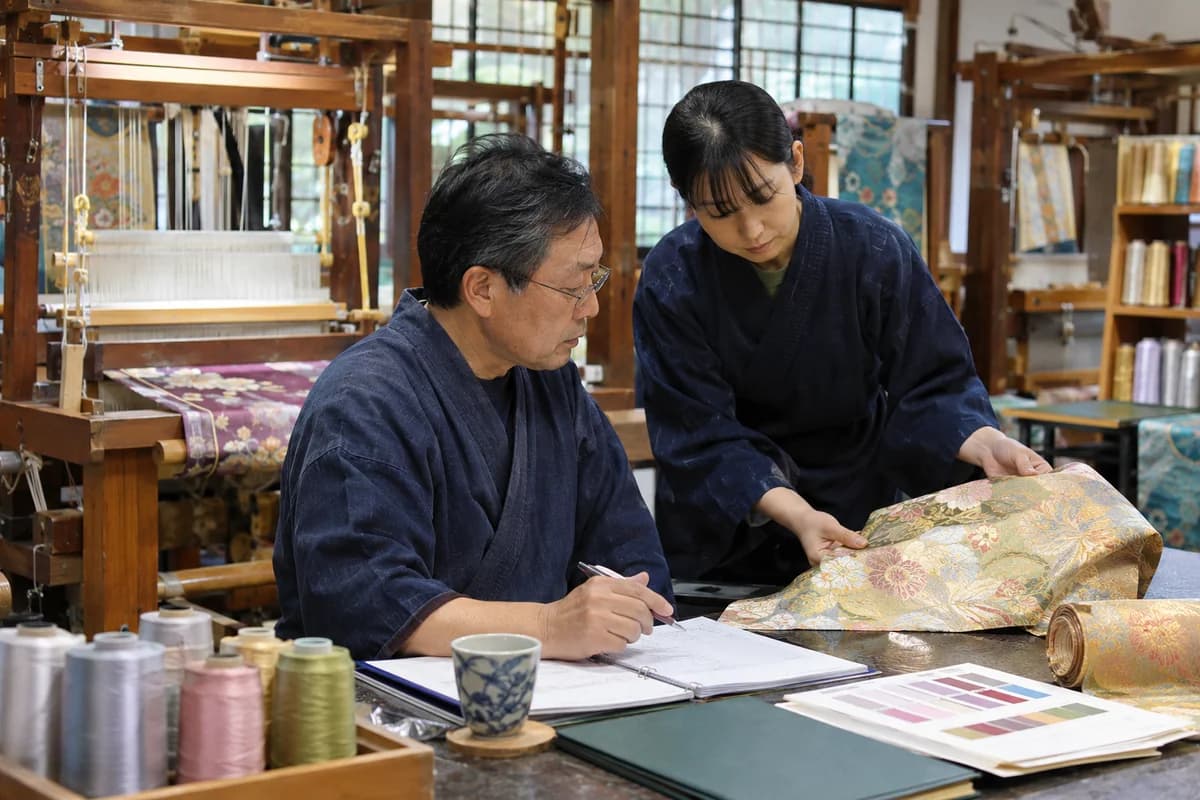
Nishijin is the old weaving quarter, and its workshops still produce silk for obi sashes and kimono. A single piece may pass through designers, dyers and weavers over several weeks, with a note needed at each hand-off because one wrong thread colour spoils the whole length. Cloth is paid by the piece.
Visitors shape the rest of the city. Ryokan, guesthouses and restaurants fill for the cherry blossom and autumn leaf seasons, and prices and rooms are fixed far in advance of the first booking. Temples keep their own yearly calendar of ceremonies and donations.
The districts, business parks and markets that matter in Kyoto.
How Kyoto businesses pick and use software.
Owners of weaving and dyeing workshops who track each length of cloth through several craftspeople.
Ryokan and guesthouse hosts who handle seasonal room pricing and returning guests.
Where Kyoto businesses lose time and money.
Cloth moves between workshops without notes
A length leaves for dyeing after a phone call, and nobody writes down the colour that was agreed. A job card follows the cloth instead.
Peak-season rooms are held by memory
Hosts remember who is returning and which room that guest prefers, but the knowledge leaves the building when a long-time manager does. A guest register keeps it.
Temple donations are logged in notebooks
Ceremonies, offerings and supporters are written by hand in several books, and the yearly accounts take the office a full week. One register by supporter helps.
What we would build for Kyoto businesses.
Usually in this order, starting with whatever the audit ranks first.
E-Commerce and Digital Commerce
An online store or B2B order portal wired to your stock, billing and dispatch.
Learn moreWeb and Mobile Application Development
Web and mobile apps for customers, field staff and dealers, built to work on ordinary phones.
Learn moreUI/UX Design and Prototyping
Prototypes tested with the people doing the work, including corrections, missing information and everyday devices.
Learn moreData Migration and Moving Off Spreadsheets
Data migration and spreadsheet replacement covers auditing existing files, cleaning and deduplicating records, loading them into a new system and reconciling the loaded result against known totals. Both systems then run side by side before cutover. Originals stay untouched.
Learn moreReady products that fit Kyoto businesses.
Each one is adapted to how your business works before it goes live, and anything your trade needs that it lacks is added then. You are not paying to build the basics again.
Fabric Manufacturer Management Software
Yarn lots, warp beams, loom output, roll registers, grey inspection points, outside processing and packing lists for fabric manufacturers.
Learn moreHomestays and Guesthouse Management Software
Room and bed calendar, enquiries, guest register, deposits, meals, extras, housekeeping and bills for homestays and guesthouses.
Learn moreTemple Management Software
Pooja and seva bookings, donations with numbered PDF receipts, devotees, events, priests and a temple website with your own domain.
Learn moreHow the work runs from Bengaluru for Kyoto.
- 1
The audit, by call
A screen-share and a look at the sheets, accounting reports and WhatsApp groups your team uses. No travel needed.
- 2
A written proposal
Scope, what we build first and the cost, agreed in writing before anything starts.
- 3
Build in short rounds
Working screens shared every few weeks. Your team tests them from your own office.
- 4
Go-live, in person when it helps
For data migration and training we can come to Kyoto. Travel is agreed in advance.
- 5
Support online
Fixes, changes and hosting handled remotely by the same team that built it.
The work we have published.
We don’t claim Kyoto clients we don’t have. These are systems our team built; the way we work is the same wherever you are.
PetSeva: matching owners to the right vet, at any hour
A two-sided veterinary platform where vets are searchable by specialisation and bookable outside clinic hours. It now carries more than 2,000 veterinary doctors.
Read the case study Paying guest accommodationSAM Atithi Pavathi: bed-level occupancy as the source of truth
PG management software where allocation, rates and invoices are derived from bed-level occupancy and not maintained in parallel spreadsheets.
Read the case study School transport servicesSAM Tours: school transport on a single ledger
Registration, fee collection, routing and finance write to the same records, closing the gap between journeys run and fees collected.
Read the case study Microfinance and Self Help GroupsVikasa RDO: making SHG loan recovery auditable
Loan proposals, recoveries and commissions sit on one record, with a person attached to every state change, so a business handling a bank’s money can show where each rupee went.
Read the case studyMake the scope specific to your business.
Work through a real example from your operation and agree the handoffs, controls and support the project needs.
Temple donations are logged in notebooks
Does each receipt retain its agreed purpose?
For “Temple donations are logged in notebooks”, compare an unrestricted receipt with one assigned to a named purpose. Ask the trustees to confirm the reporting category before combining the totals.
Background reading: ERPNext: nonprofit operations
Gion and Higashiyama
What becomes available when a booking is moved or cancelled?
Use “Gion and Higashiyama” to move a booking, then cancel a second example. Check the released slot, the person or resource still assigned, and any amount left to settle before accepting the revised schedule.
Background reading: ERPNext: appointment records
Questions Kyoto owners ask before they call.
Can a small weaving workshop track each length of cloth?
Yes. Each piece gets a job card with pattern, colour, thread lots and the craftsperson, and the card is scanned at every stage. Payment per piece can then be worked out from the same record.
How are calls arranged across the time gap?
We offer the early afternoon in Kyoto, which is the middle of our morning, and send a written summary after the call. Evening calls on your side are also possible.
What happens after I share my requirements?
We review your brief and clarify the work with you. We then look at the software, spreadsheets and WhatsApp groups your business runs on today and write down what works, what slows your team down and what is missing. A demo login, a screen-share or a few screenshots are enough. You get a short written summary ordered by priority, with no obligation to hire us afterwards.
How much will the software cost?
We don’t publish a price, because it depends on what the system has to do. That first review settles the scope, and the cost goes into a written proposal before any work starts.
Industries we build for in Kyoto.
Tell us what your Kyoto business runs on today.
Send a short note on the spreadsheets, software or WhatsApp groups your team depends on. We reply the same working day.
What happens after you share your requirements
- We review your brief and the systems you already use.
- We clarify the workflow, missing information and the work to consider first.
- The proposed scope sets out the deliverables, responsibilities and dependencies.
- Review the scope and commercial terms before deciding whether to proceed.
Start with your requirements
Describe your current process, the people involved and the change you need. Start with the details you know; we can clarify the rest together.
Share your requirements