Business software for Nigerian firms that run on bank transfers, generators and WhatsApp orders.
Nigerian businesses trade in Lagos, Abuja, Kano and Port Harcourt, running outlets side by side and moving a heavy load of cash and transfers. Owners deal with VAT, stock that moves daily and customers who order on WhatsApp. GullySystem, in Bengaluru, assists them from a distance with software for sales, stock, jobs and invoices.
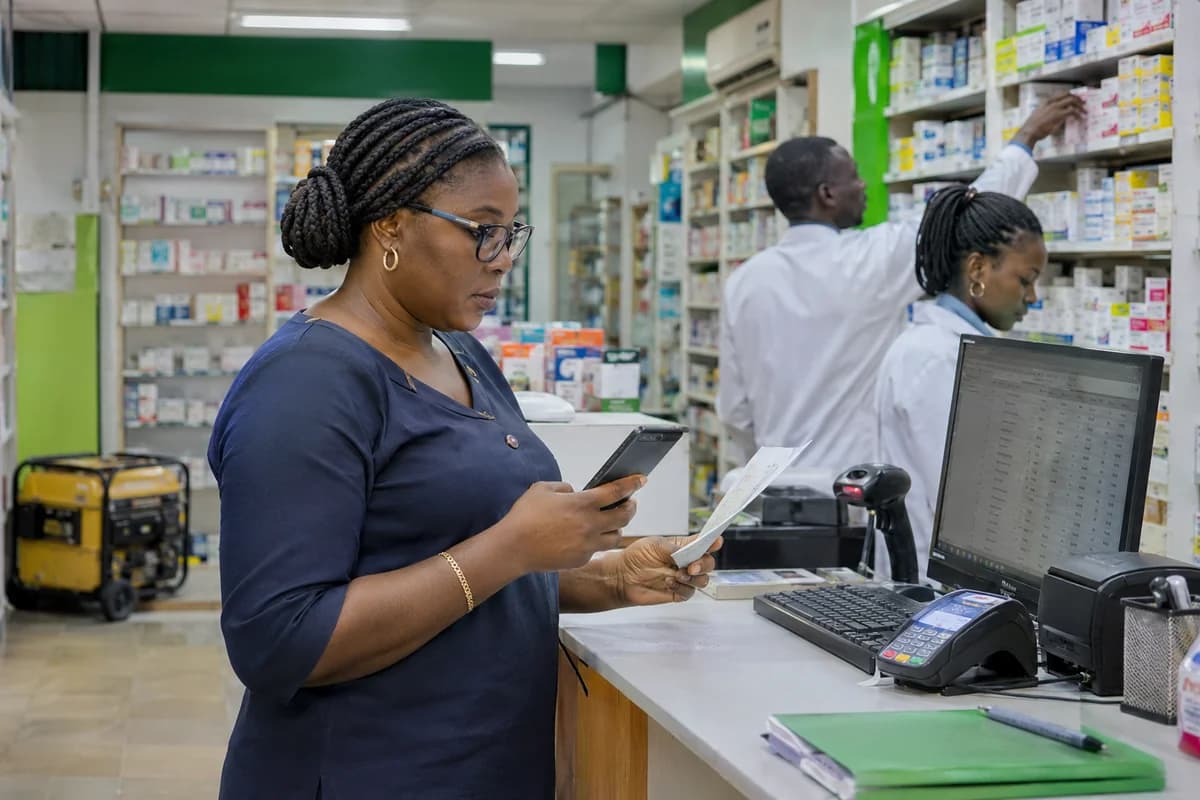
Working with a team in India from Nigeria.
Nigeria has a very large number of small and mid-sized firms. Pharmacies, supermarkets, schools, solar installers, hauliers and property developers all run on thin margins and fast decisions. Owners with more than one outlet split their week between two or three sites. They need numbers they can read from a phone.
Our team sits in Bengaluru, with no Nigerian office. Sessions are held by video, with email and WhatsApp between them. We have no Nigerian customers, partners or projects to name, and no local licences; the software is shaped around how your business already runs. A shop with three outlets, a workshop taking orders on WhatsApp and a school with termly fees keep separate books, so each routine gets its own write-up. Each outlet counts its own cash.
What changes when your business is in Nigeria.
Hours, money, language and data are decided with you at the start, not discovered later.
What the software has to fit.
The filing cycles, payment habits and licences a small business there already works around.
Trades we write for in Nigeria.
Products that fit them.
Capabilities often asked for.
Cities we write software for in Nigeria.
What we would build for Nigeria businesses.
Usually in this order, starting with whatever the audit ranks first.
WhatsApp Business API and Chatbots
WhatsApp Business API work covers number onboarding, template approval, opt-in records and a chatbot with human handover, all set up under the client’s own Meta account. It connects WhatsApp to a CRM, billing or booking system, so every message is sent from an existing record and every reply is written back. It suits businesses that already take orders, payments or bookings in chat.
Learn moreERP, CRM and Business Software Implementation
One record of stock, orders, customers and accounts, set up so your team opens it every day.
Learn moreAPI and System Integration
Connections between existing tools, with record ownership, duplicate handling and reconciliation agreed for each flow.
Learn moreBusiness Process Automation
Approvals, reminders and reports triggered by agreed rules, with exceptions assigned to a responsible person.
Learn moreMake the scope specific to your business.
Work through a real example from your operation and agree the handoffs, controls and support the project needs.
Branches, cash and stock leakage
What happens to movements entered while a count is being checked?
For “Branches, cash and stock leakage”, choose a count date and trace the movements around it. Agree who investigates a difference before an adjustment changes the available balance.
Background reading: ERPNext: stock reconciliation
Naira, VAT and invoices
Can you explain the balance from its original documents?
Select a partly settled example in “Naira, VAT and invoices”. Ask for the invoice, allocated receipts and remaining balance to be shown together before agreeing the opening figures.
Background reading: ERPNext: outstanding invoices
Questions from businesses in Nigeria.
Can sales keep working when the power or network drops?
Billing screens can be built to keep taking sales on a weak or lost connection and sync when it returns. How far that goes depends on the device and the module. We test it on your own premises setup during scoping.
Will the time difference get in our way?
Nigeria is four hours thirty minutes behind India, so overlap is shorter than for some countries. Your morning lines up with our afternoon. We agree call windows at the start and write response times into the support plan.
Can we attach a transfer screenshot to an order?
Yes. Staff can upload proof of payment to the order or invoice, and a manager can approve it. Matching to a bank statement is handled by import. Live bank feeds depend on what your bank allows.
Do we need to be in Lagos to work with you?
No. Meetings run by video with shared screens, and training is done the same way; a single decision-maker at your end should review each stage. Any visit is agreed separately.
Can invoices show VAT and dollar amounts?
Yes. Tax codes and currency pairs are set per business, to the format your accountant requests. Rates are never hard-coded. Current tax invoicing rules are checked with your accountant before launch.
What decides how fast we go live?
The first release, the number of branches, the systems to connect and how quickly your side replies; a single shop is quicker than a chain with six outlets. The proposal sets dates once scoping is done.
What stays with us if we end the contract?
The source code and all your data. Records export as plain files. Hosting stays where it was agreed at set-up, and our original team handles support.
Can a hotel run rooms and a restaurant here?
Rooms, restaurant bills and laundry post to one guest folio, and the front desk closes each shift with a cash count. Generator fuel sits as an expense line. A manager reads the whole day from a phone.
Tell us what you run.
Share your requirements and an engineer will read them before getting in touch, at an hour that suits your day.
What happens after you share your requirements
- We review your brief and the systems you already use.
- We clarify the workflow, missing information and the work to consider first.
- The proposed scope sets out the deliverables, responsibilities and dependencies.
- Review the scope and commercial terms before deciding whether to proceed.
Start with your requirements
Describe your current process, the people involved and the change you need. Start with the details you know; we can clarify the rest together.
Share your requirements