Production, stock and order software for Pakistani textile, surgical-instrument, rice and shipping businesses, supported from Bengaluru.
Pakistan spins cotton in Faisalabad, forges surgical instruments in Sialkot, mills rice in the Punjab and ships cargo through Karachi. Mills sell towels abroad in dollars. Wages are paid in the local currency, and invoices are written in English or Urdu, depending on whether the reader is a buyer overseas or a neighbour. GullySystem writes production, stock and order software in Bengaluru and supports it from afar.
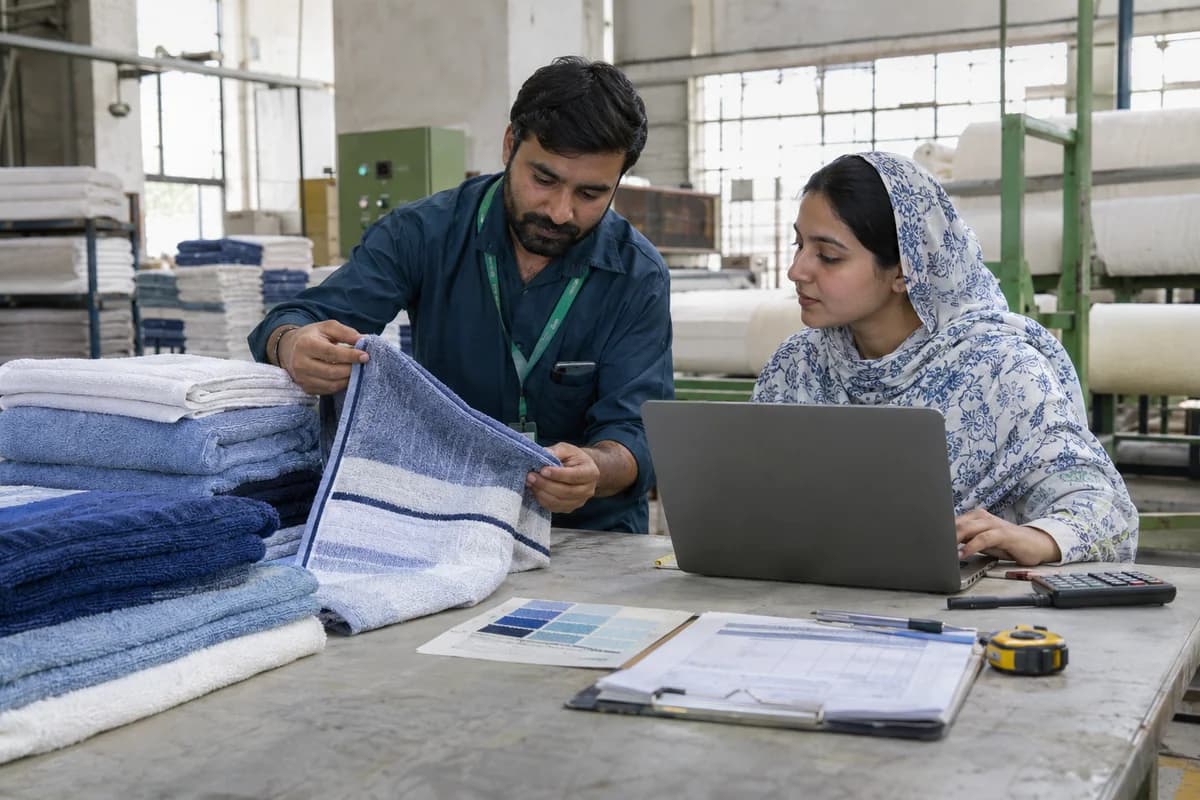
Working with a team in India from Pakistan.
Cotton sets the calendar. Ginners, spinners, weavers and stitchers hand a bale along a chain that ends at a shop in Europe or North America. A late dye lot at one step delays the whole container, and the buyer rarely accepts the excuse.
Pakistan is served from Nagarbhavi in Bengaluru. Nobody of ours is stationed there. No Pakistani customers or partners are named on this site because we have none, and a quote opens with that fact.
What changes when your business is in Pakistan.
Hours, money, language and data are decided with you at the start, not discovered later.
What the software has to fit.
The filing cycles, payment habits and licences a small business there already works around.
Trades we write for in Pakistan.
Products that fit them.
Capabilities often asked for.
Cities we write software for in Pakistan.
What we would build for Pakistan businesses.
Usually in this order, starting with whatever the audit ranks first.
ERP, CRM and Business Software Implementation
One record of stock, orders, customers and accounts, set up so your team opens it every day.
Learn moreAPI and System Integration
Connections between existing tools, with record ownership, duplicate handling and reconciliation agreed for each flow.
Learn moreGlobal Compliance and Localisation
Software has to change for each country. Currency tables, VAT and sales tax codes, invoice layouts, translation files, storage regions and consent records are built as configuration that your team can edit without code changes. The legal question stays with your adviser.
Learn moreData Migration and Moving Off Spreadsheets
Data migration and spreadsheet replacement covers auditing existing files, cleaning and deduplicating records, loading them into a new system and reconciling the loaded result against known totals. Both systems then run side by side before cutover. Originals stay untouched.
Learn moreMake the scope specific to your business.
Work through a real example from your operation and agree the handoffs, controls and support the project needs.
Sales tax and electronic invoices
Can you explain the balance from its original documents?
Select a partly settled example in “Sales tax and electronic invoices”. Ask for the invoice, allocated receipts and remaining balance to be shown together before agreeing the opening figures.
Background reading: ERPNext: outstanding invoices
Microfinance and small lenders
Does the schedule match the agreed terms and actual release of funds?
For “Microfinance and small lenders”, use a sample already checked by your finance team. Compare due dates and the principal and interest split before relying on the resulting balance.
Background reading: Frappe Lending: repayment schedules
Questions from businesses in Pakistan.
Do you have an office in Pakistan?
No. Everyone here works in Bengaluru, with no exceptions. Where a job truly needs hands on site, we say so on the first call.
Can the screens show Urdu text?
Yes. Screens and printed papers can be set in Urdu, English or both, with Urdu laid out from right to left. A Pakistani colleague of yours should read the text before it goes live.
Can a small workshop in Sialkot use this?
The first step is small, such as tracking batches or replacing the order notebook. That piece is quoted in writing. Whether to go further is your decision.
Can you connect to the tax board’s electronic invoicing?
We can connect to the system your accountant names, once the format and dates are confirmed. Tax rulings remain with the accountant.
How do we meet when our offices are in Pakistan and India?
By scheduled video calls inside your normal working day, with written notes after each one so that nothing agreed on the phone is lost. Questions between calls go by email or WhatsApp. Urgent faults are answered the same day.
Can rice mills track lots from paddy to bag?
Paddy received is recorded by supplier and moisture reading. Milling runs link to the finished bags and their grade, so an export buyer can ask about one bag and get the lot behind it. Husk and broken rice are tracked as by-products.
Can microfinance field staff record repayments on phones?
The entry reaches the ledger when the phone has signal. We plan for weak signal. Limits are stated up front.
Tell us what you run.
Share your requirements and an engineer will read them before getting in touch, at an hour that suits your day.
What happens after you share your requirements
- We review your brief and the systems you already use.
- We clarify the workflow, missing information and the work to consider first.
- The proposed scope sets out the deliverables, responsibilities and dependencies.
- Review the scope and commercial terms before deciding whether to proceed.
Start with your requirements
Describe your current process, the people involved and the change you need. Start with the details you know; we can clarify the rest together.
Share your requirements