Business software for Philippine schools, resorts, mills and lenders, with Viber, Messenger and GCash in mind.
Philippine businesses sell across islands, in Filipino and English, to customers who chat on Messenger and Viber and pay with GCash or Maya. Firms register with the SEC or DTI, deal with the BIR and keep a long list of local permits. Support comes remotely from Bengaluru, with software for bookings, billing and records.
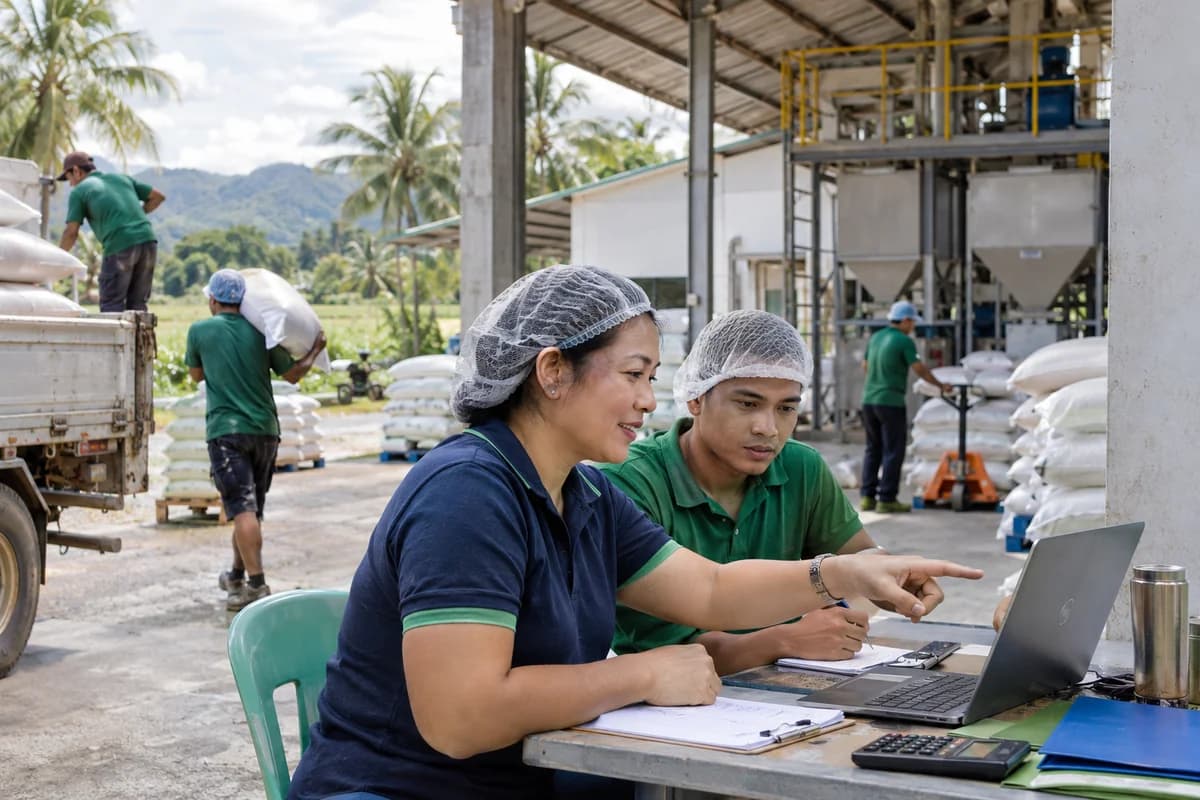
Working with a team in India from the Philippines.
A Philippine family business may have a few branches in different cities or islands. A resort in Palawan, a rice mill in Nueva Ecija and a lending office in Cebu share one problem. The owner is rarely on site. Records must be trusted from afar.
Bengaluru is our base, and the Philippines has no office of ours. Sessions run on video, email and WhatsApp, or Viber if your team prefers it, whichever suits the staff at the counter and in the back office. No customer there is named, and no local licence is held. You get plain, well-built software and honest support.
What changes when your business is in the Philippines.
Hours, money, language and data are decided with you at the start, not discovered later.
What the software has to fit.
The filing cycles, payment habits and licences a small business there already works around.
Trades we write for in the Philippines.
Products that fit them.
Cities we write software for in the Philippines.
What we would build for Philippines businesses.
Usually in this order, starting with whatever the audit ranks first.
API and System Integration
Connections between existing tools, with record ownership, duplicate handling and reconciliation agreed for each flow.
Learn moreBusiness Process Automation
Approvals, reminders and reports triggered by agreed rules, with exceptions assigned to a responsible person.
Learn moreGlobal Compliance and Localisation
Software has to change for each country. Currency tables, VAT and sales tax codes, invoice layouts, translation files, storage regions and consent records are built as configuration that your team can edit without code changes. The legal question stays with your adviser.
Learn moreTraining and Adoption
Adoption work starts after launch. Each role is trained at its own screen on its own tasks, such as billing returns, goods receipts or closing job cards. Support stands on the floor at go-live. Afterwards the records are reviewed to find which steps staff skip, which fields stay blank and why the stores or field team still reach for a notebook. Share your requirements and we will plan it with you.
Learn moreMake the scope specific to your business.
Work through a real example from your operation and agree the handoffs, controls and support the project needs.
BIR registration, VAT and invoices
Can you explain the balance from its original documents?
Select a partly settled example in “BIR registration, VAT and invoices”. Ask for the invoice, allocated receipts and remaining balance to be shown together before agreeing the opening figures.
Background reading: ERPNext: outstanding invoices
Peso, VAT and receipts
Can the same receipt be allocated without counting the money twice?
Take an unallocated amount in “Peso, VAT and receipts” and apply it to the intended balance. Review the remaining amount and the original receipt reference together.
Background reading: ERPNext: payment allocation
Questions from businesses in the Philippines.
Can the system print receipts the way the BIR expects?
The layout and fields your accountant specifies are built, including the TIN. Deciding what the rules require is not our job. Ask your accountant first. Then we match the answer.
Do you work in Filipino and Taglish?
Screens and messages can be set up in English and Filipino, and you write or approve the Filipino wording, since the project team talks in English.
Can customers pay through GCash or Maya?
Payments can be matched by reference once the money lands in your account, but connecting a payment gateway is a separate decision made with your bank or provider. We scope that after we see your setup.
Will the time difference cause problems?
It is small, about two and a half hours. Most of your working day overlaps with ours, and holidays and typhoon days are marked on the shared calendar.
Do you have anyone in the Philippines?
No. Our team is in Bengaluru and serves you remotely, and you only need to name one decision-maker on your team to approve each stage.
Where would our data be kept?
Hosting is settled at the outset. A region near the Philippines can be requested, and your adviser goes through privacy duties with us before launch.
Can branch staff work from phones?
Screens can be sized for phones, so a collector on a market round or a front desk clerk at a resort can enter a payment or a booking on the spot. A weak signal is planned for. Entries wait until the phone reconnects.
Can a lender record collections by group?
Yes, a group sheet lists each borrower with the amount due and the amount paid, and the loan officer marks it during the round. Missed payments reach a follow-up list.
Tell us what you run.
Share your requirements and an engineer will read them before getting in touch, at an hour that suits your day.
What happens after you share your requirements
- We review your brief and the systems you already use.
- We clarify the workflow, missing information and the work to consider first.
- The proposed scope sets out the deliverables, responsibilities and dependencies.
- Review the scope and commercial terms before deciding whether to proceed.
Start with your requirements
Describe your current process, the people involved and the change you need. Start with the details you know; we can clarify the rest together.
Share your requirements