Run each packaging job from artwork approval to dispatch, with every reel, sheet and lot accounted for.
Corrugated, flexible, rigid, folding carton, label, food, industrial and film makers all convert kraft liner, resin or film into printed, creased and finished packs. It follows each job from its specification through material issue, press and finishing, and on to the delivery note and the invoice you send.
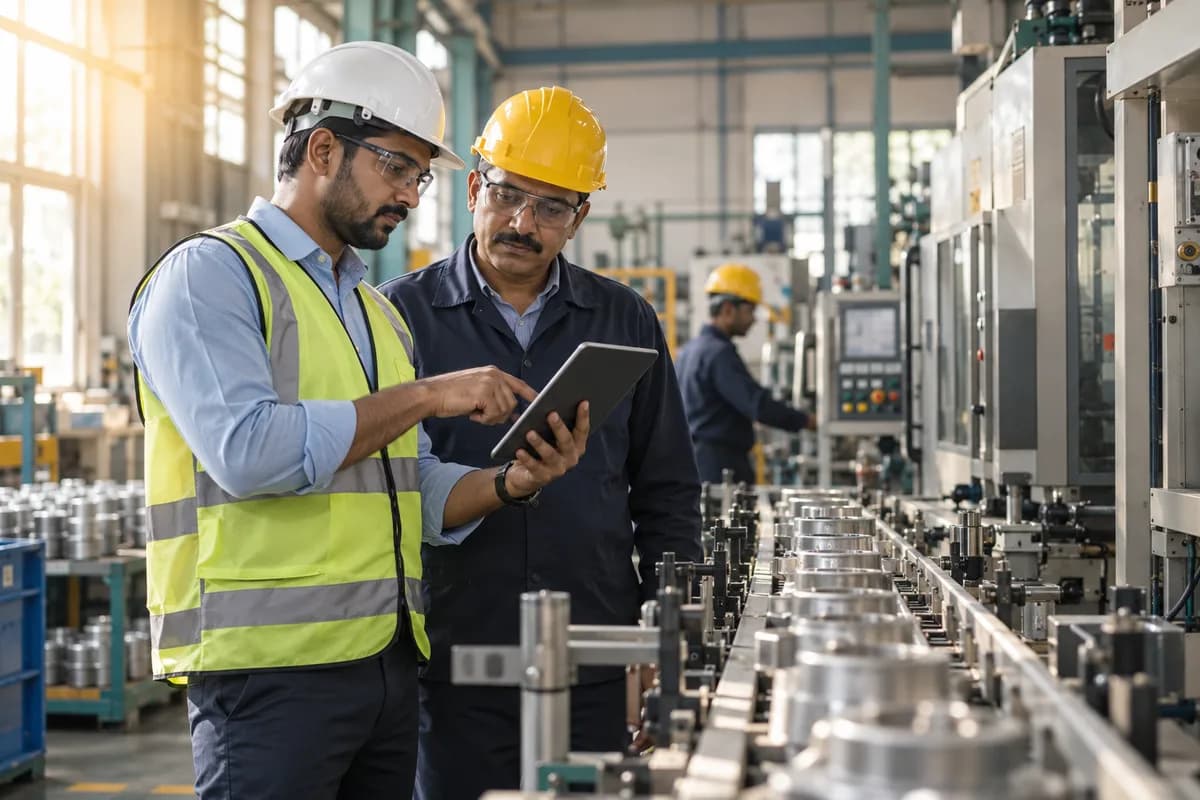
Packaging is made to a customer’s specification, so every job begins with a spec. A corrugated box maker records flute profile, board grade and die-cut, while a folding carton shop adds Pantone references, varnish and a cutting die. A label converter works with face stock, adhesive and a repeat length. Flexible packaging and film makers work in laminate structures, micron gauges and web widths, then slit and rewind to the customer’s core size. The job record carries all of it to the end. Nothing drops out.
Material is the main cost. It is also the main source of loss. Reels, sheets, granules, solvent inks and adhesives are bought in bulk, issued to the flexo press or laminator, and returned as trim, start-up waste and cores. Rigid and industrial makers add injection moulds, blow pins, pallets and drums, each with its own wear and its own place in the schedule. Food packaging adds lot records so a pouch can be traced to its resin, its ink and its adhesive through every conversion step. Small losses compound. Waste adds up across a week of long runs and short changeovers, and it rarely shows until the board or resin invoice arrives.
Repeat orders dominate. A buyer reorders the same carton or pouch with the same artwork and a new quantity. The shop needs the approved dieline and colour proof at hand, and then needs call-offs, delivery schedules and invoices to follow from it. Speed matters. Accuracy matters more, because a pallet of cartons printed in the wrong colour or counted wrong costs far more than the hours saved by rushing the job.
Software for each kind of packaging Manufacturing business.
Corrugated box manufacturers
Corrugated box plants turn kraft liner and fluting medium into board, then into die-cut and printed boxes for packers and exporters. The corrugated box manufacturer software holds each box specification, the reels behind a board run, the converting route and the strength tests. Orders are planned by board width, and dispatch follows the bundle count the buyer expects.
Learn moreFolding carton manufacturers
Folding carton plants print, coat and die-cut paperboard into cartons for medicines, food, cosmetics and consumer goods. The folding carton manufacturer software holds each carton specification, the artwork version and proof, the board lots, the cutting dies and the gluing and inspection records. Orders are planned by press, die cutter and folder-gluer, and dispatch follows the case count the packer expects.
Learn moreLabel manufacturers
Label manufacturers print self-adhesive labels on reels for food, drink, chemical, logistics and retail customers. The label manufacturer software holds each label specification, the face stock and adhesive lots, the rotary dies and the print proofs. Jobs are planned by press, and each roll is counted, wound and labelled for the customer’s applicator.
Learn moreFlexible packaging manufacturers
Flexible packaging converters print and laminate BOPP, PET, aluminium foil and kraft paper into rollstock, stand-up pouches and sachets for snack, detergent and shampoo brands. The software holds each structure, the film and ink lots behind a job, the gravure cylinders and the seal tests. Orders are planned by press and laminator, and dispatch follows the roll counts the packer expects.
Learn morePackaging film manufacturers
Packaging film makers extrude, treat and slit plastic film that converters later print and form into packs. The software holds each recipe, resin and masterbatch lot, gauge profile, treatment level and roll weight against the extrusion run. Slitting plans, regrind returns and customer specifications sit beside them. A roll tag opens its whole history on one screen.
Learn moreRigid packaging manufacturers
Rigid packaging plants mould PET bottles, HDPE jugs, polypropylene tubs and screw caps for food, drink, cosmetics and household goods. The software holds each container specification, the preform and resin lots, the moulds with their live cavities, and the top-load and cap fit tests. Orders are planned by machine and mould, and dispatch follows the tier and slip-sheet pattern the filler expects.
Learn moreIndustrial packaging manufacturers
Industrial packaging makers build steel drums, plastic pails and woven bulk bags that carry chemicals, paint, minerals and ingredients. The software holds each customer’s container specification, the coil, resin or fabric lot behind it, and the leak, drop and lift tests run on the batch. Orders are planned by line, and delivery follows the pallet count the filler expects.
Learn moreFood packaging manufacturers
Food packaging converters gravure-print, laminate, slit and form material that ends up touching someone’s dinner, so each reel and each pallet must be traceable. The food packaging manufacturer software holds artwork approvals, film structures, solventless adhesive and ink lots, hygiene checks and customer specifications against every job. Reels are followed from receipt to finished goods. Migration test reports and declarations are filed with the order that needed them.
Learn moreWhere these businesses lose time and money.
What we build across packaging Manufacturing.
Ready products that fit packaging Manufacturing.
Each one is adapted to how your business works before it goes live, and anything your trade needs that it lacks is added then. You are not paying to build the basics again.
Corrugated Box Manufacturer Management Software
Box specifications, liner and medium reels, corrugator planning, die and plate register, burst and compression tests, bundles and invoices for corrugated box plants.
Learn moreLabel Manufacturer Management Software
Label specifications, artwork and data proofs, face stock and adhesive lots, press queues, rotary dies, inspection records, roll winding and invoices for label printers.
Learn moreFlexible Packaging Manufacturer Management Software
Film structures, BOPP and PET reel lots, gravure cylinders, laminating and curing, slitting, pouch lines, bond and seal tests and invoices for flexible packaging converters.
Learn moreThe services behind it.
ERP, CRM and Business Software Implementation
One record of stock, orders, customers and accounts, set up so your team opens it every day.
Learn moreBusiness Process Automation
Approvals, reminders, follow-ups and reports that run on their own instead of on someone remembering.
Learn moreData Migration and Moving Off Spreadsheets
Data migration and spreadsheet replacement covers auditing existing files, cleaning and deduplicating records, loading them into a new system and reconciling the loaded result against known totals. Both systems then run side by side before cutover. Originals stay untouched.
Learn moreIoT and Edge Computing
Machines, meters and sensors feeding the same system your office uses, even when the network drops.
Learn moreData Engineering and Business Intelligence
Dashboards that answer the owner’s Monday questions without anyone building an Excel sheet first.
Learn moreWritten for packaging Manufacturing.
Practical notes on running the business, not product marketing.
Packaging Manufacturing Software: A Buyer’s Guide to the Job Flow
Buying software for a packaging converter? Follow one job from specification and material through press, finishing and delivery note, and check each stage.
Learn moreCorrugated Box Specification: What to Record So Repeat Orders Match
A template for what to record on a corrugated box specification, from flute and board grade to die and print, so repeat orders match the first run.
Learn moreWhy Artwork Approval Drags and How to Track Each Proof
Find where packaging proofs stall between customer, designer and press, and how version history and sign-off stop old artwork being printed again.
Learn moreMeasuring Press Make-Ready Waste Before It Is Written Off
Separate make-ready, trim and reject waste per job on a press or converting line, so spoilage is seen while the job runs and not at month end.
Learn moreQuestions packaging Manufacturing businesses ask.
Does one product suit every packaging trade?
No. Corrugated, label and flexible packaging makers each have a product built around their process. Other packaging trades start from the closest one and are adjusted to their own machines, dies and records.
Can it handle artwork and proofs?
It stores approved artwork and colour proofs against the product and records who signed off. Plate making stays in your prepress tools.
Can it read counts from presses and converters?
Some machines allow it. A link is scoped per machine once the controller is known. Otherwise operators key counts and waste in at the press or converter.
Does it cover food safety certification?
No. It keeps batch, material and inspection records that an auditor may ask to see. A plant’s certification is settled by the certifying body. The software has no say.
Tell us how your business runs today.
A few lines on your spreadsheets, software and WhatsApp groups is enough. We reply the same working day.
- No obligation
- A reply within one business day
- Your details stay private
Start with your requirements
Seven short steps that tell us what you need. An engineer reads them before getting in touch.
Share your requirements