Herb and Preparation Register for Ayurveda Clinics
Clinics that prepare some of their own oils, ghritas and choornams record the raw herbs bought and the quantity used in each preparation. The finished batch then enters dispensary or therapy room stock.
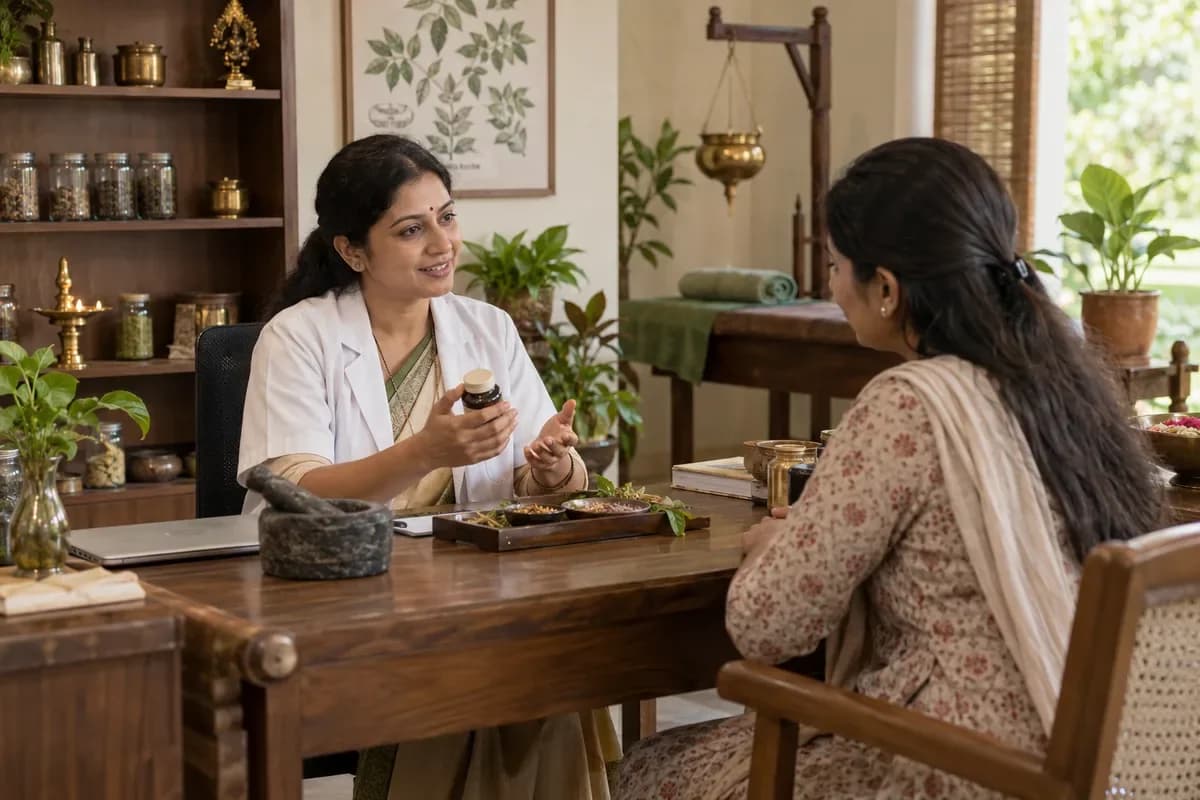
From raw herb to finished batch
Not every clinic prepares its own medicine. Those that do carry a heavier record burden, and have the least time for it. Entries must be quick, with few fields, because the register is meant for the vaidya or assistant who stands at the vessel.
Why a register earns its keep in a small preparation room
Herbs arrive in sacks, shrink as they dry and are cooked down in large vessels. Without a record, nobody can say what a litre of oil really took. Loss becomes a feeling, not a number.
Who keeps the register
Whoever prepares medicine in the clinic enters the preparation. The dispensary in-charge checks stock afterwards. The owner reads the gap between herbs bought and medicine made, and asks about any large difference.
Cost of a batch
The cost of a batch is worked from the rates of the herbs entered, so a clinic can see what a litre of oil took to make. Whether to cost preparations this way is a matter for the clinic and its accountant.
Labels, batches and licences
Ayurvedic drugs made for sale carry labelling under India’s Drugs and Cosmetics Rules, including the batch number and manufacture date, and published shelf lives for ghrita and taila differ between sources. Even a clinic preparing only for its own patients should ask its advisor what applies.
- Which preparations count as made for the clinic’s own patients
- Whether any licence is needed for what the clinic prepares
- The shelf life the clinic assigns to each oil and ghrita
- What goes on the label of a bottle handed to a patient
- How long preparation records are kept
Seasonal buying and drying losses
Fresh herbs lose weight as they dry, and some are only available for a few weeks. Buying by the season hides what a dried herb really costs, so the register has to show it. Storage conditions decide how long herbs stay usable. Damp, light and pests ruin stock faster than a slow season. The register cannot fix a leaking store, but it does show which sacks sat longest, so the shelf can be cleared before loss grows.
What the client decides
Whatever the clinic enters is recorded. Classical formulas and judgements of herb quality are not held.
- Which preparations the clinic records
- Recipe quantities and the units used
- How batches are numbered
- How wastage and loss are entered
- Who may enter or change a preparation
- Any licence the clinic holds for preparing medicines, which stays its own matter
The preparation room from purchase to shelf
A clinic that prepares its own oils and choornams works in small batches. The herbs come in raw, a batch is made and the finished product moves to the shelf. Four moments show who writes what in the register along the way. Start at the door.
Agree the evidence before signing off this part.
Use a representative scenario to decide what this part of the system must show and where review is still needed.
From raw herb to finished batch
What happens to movements entered while a count is being checked?
For “From raw herb to finished batch”, choose a count date and trace the movements around it. Agree who investigates a difference before an adjustment changes the available balance.
Background reading: ERPNext: stock reconciliation
Traceability
Can you follow a suspect input through to the affected deliveries?
Pick one real record from “Traceability”. Ask the team to trace its origin and identify the later work or deliveries it affected, including any split quantities.
Background reading: ERPNext: forward and backward traceability
Frequently asked questions
Do we have to record every herb?
No. A clinic can record only the herbs and bases that matter for cost or traceability, and add more later.
Can a recipe be saved and reused?
Yes. A recipe the clinic has entered can be reused for the next batch, with quantities scaled to the amount being made.
Does it tell us the right formula for a medicine?
No. It holds the recipes the clinic enters. The formula and its source remain the vaidya’s decision.
Can therapy oil be tracked per patient?
Yes. Each sitting’s oil is booked to the patient and the course, which lets the owner review use later.
How do we record loss during cooking?
Loss is entered as a quantity on the preparation. The register then shows the gap between what went in and what came out.
Can a preparation use an oil that is itself made in house?
Yes. A finished oil from one batch can be listed as an input to another preparation, so the chain stays visible.
How this feature fits the system.
Ayurveda Clinic Management Software: the parts that work with this feature, the trades that use it and the ways to put it in place.
Appointments and token queue
Reception books appointments and walk-ins by vaidya, runs the token queue, and handles reschedules and cancellations from the same list.
Appointment SchedulingTherapy rooms and therapists
Treatment tables, steam rooms and therapists are scheduled together, so the therapy coordinator never books one room for two patients at once.
Resource and Room BookingMedicine dispensary and pharmacy stock
The dispensary issues kashayams, choornams, tablets, arishtams and oils from batches, with expiry dates and reorder levels watched for each item.
Stock Tracking and AlertsTell us what you need.
Tell us what your team does today, where work gets stuck and what you want to change.
What happens after you share your requirements
- We review your brief and the systems you already use.
- We clarify the workflow, missing information and the work to consider first.
- The proposed scope sets out the deliverables, responsibilities and dependencies.
- Review the scope and commercial terms before deciding whether to proceed.
Start with your requirements
Describe your current process, the people involved and the change you need. Start with the details you know; we can clarify the rest together.
Share your requirements