Panchakarma Stay Management Software
Stay management records the room, the stay dates, the meals and the daily therapy of patients who live at the centre. Charges for the stay add up on the same record.
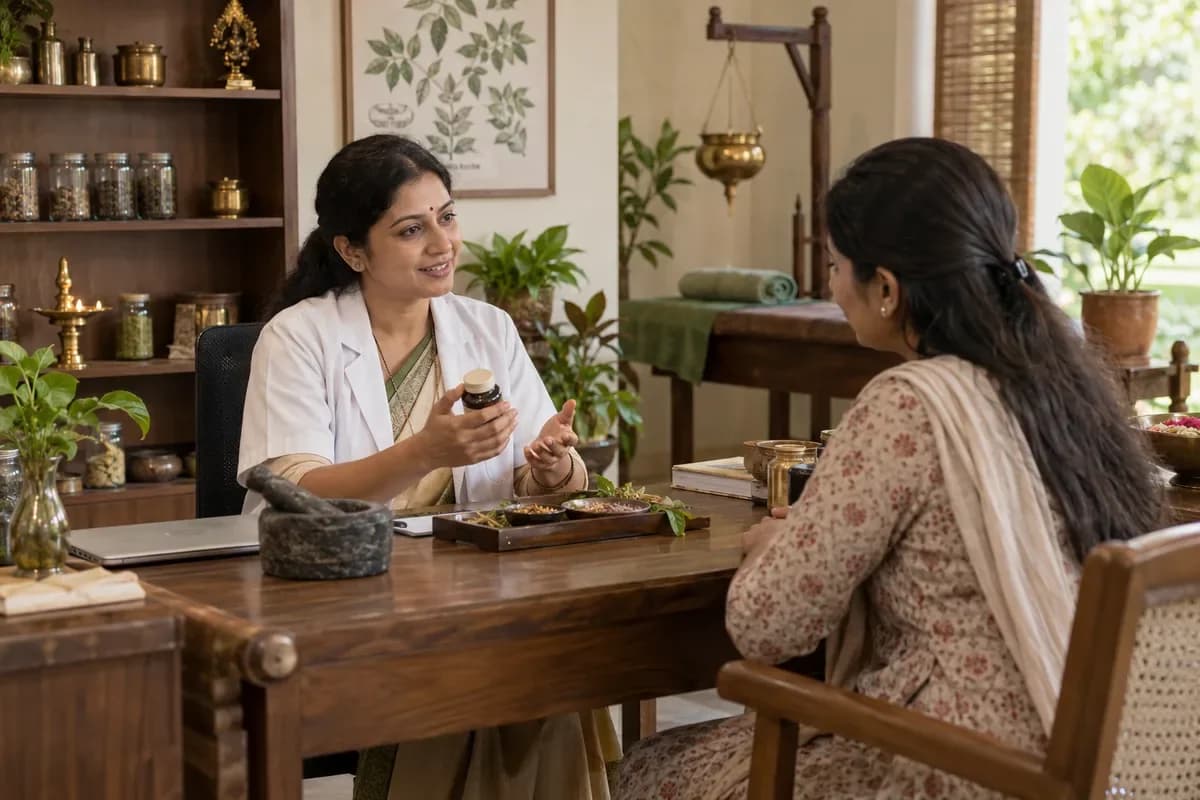
Records for a stay
Centres that admit patients run closer to a small hospital than a clinic. Rooms, meals, therapy and money all move together over a stay of days. One record per stay keeps these four threads in the same hands.
From admission to discharge
A stay opens at admission with a deposit and an expected discharge date. Daily entries add therapy, medicines and any extra service. At discharge the bill is drawn from those entries and the deposit is adjusted. A discharge summary prints with the advice the patient follows at home.
What a residential Panchakarma stay asks of the centre
A stay is a fixed programme with preparation, the main procedures and a period of careful diet afterwards. Government Ayurveda institutes tell patients to follow the diet their Panchakarma physician sets, and a centre has to make that diet possible in its kitchen.
Who uses it
The front desk handles admission, deposits and discharge. Nurses or therapists mark the daily therapy and note how the patient is. Kitchen staff read the meal list. Because everyone opens the same stay record, a change to a procedure or a meal reaches the next shift without a separate message to the ward or kitchen. The vaidya reviews progress and changes the plan.
Questions a centre should settle before go-live
Stays are costly and long, so the rules should be written first.
- How a stay is extended or cut short, and who approves it
- What counts as a day for billing when a patient arrives late
- How the deposit is held, adjusted and refunded
- What attendants may do and whether they are charged for meals
- Who signs the discharge summary
Handling a day when the plan changes
Stays rarely run exactly to plan. A fever, a bad night or a family event moves a procedure. Experienced centres keep a short handover at each shift change. The nurse going off duty reads out the day’s notes, and the next person signs against them. Written notes on screen make that handover quicker and leave a trail for the vaidya’s round.
What the client decides
The software records the stay. It does not monitor a patient’s health or raise clinical alerts.
- The room list and the tariff of each room
- Whether meals are billed apart or included in the package
- Deposit rules and how refunds are handled
- Rules for attendants and visitors
- The layout of the discharge summary
A resident’s day at a Panchakarma centre
A resident at a Panchakarma centre follows a rhythm of therapy, meals and rest. Several people look after that rhythm. Four moments from one stay show how the record keeps each of them in step. Follow one stay from start to finish.
Agree the evidence before signing off this part.
Use a representative scenario to decide what this part of the system must show and where review is still needed.
Recovery and diet
Has recovery been timed using an application the team can actually use?
Use the “Recovery and diet” review to name the business operation that must resume. Compare a witnessed restore with the agreed downtime and data-loss limits.
Background reading: AWS: recovery objectives and tests
Frequently asked questions
Can rooms carry different tariffs?
Yes. Each room or bed has its own tariff, and the stay is charged at the rate of the room used.
Does it record a deposit at admission?
Yes. The deposit is entered at admission and adjusted against the final bill at discharge.
What happens if a patient extends the stay?
The expected discharge date is changed and the room stays held. New days join the daily plan and the bill.
Is a discharge summary printed?
Yes. It carries the course taken and the advice for home, in the layout the centre decides.
Can a patient change rooms during the stay?
The tariff follows the room, so a move needs a clear rule on the date it starts. The centre sets that rule at scoping.
Does the kitchen see allergies and restrictions?
Allergies sit on the case sheet and the meal plan on the kitchen list. Whether the two print together is confirmed at scoping.
How this feature fits the system.
Ayurveda Clinic Management Software: the parts that work with this feature, the trades that use it and the ways to put it in place.
Appointments and token queue
Reception books appointments and walk-ins by vaidya, runs the token queue, and handles reschedules and cancellations from the same list.
Appointment SchedulingTherapy rooms and therapists
Treatment tables, steam rooms and therapists are scheduled together, so the therapy coordinator never books one room for two patients at once.
Resource and Room BookingMedicine dispensary and pharmacy stock
The dispensary issues kashayams, choornams, tablets, arishtams and oils from batches, with expiry dates and reorder levels watched for each item.
Stock Tracking and AlertsTell us what you need.
Tell us what your team does today, where work gets stuck and what you want to change.
What happens after you share your requirements
- We review your brief and the systems you already use.
- We clarify the workflow, missing information and the work to consider first.
- The proposed scope sets out the deliverables, responsibilities and dependencies.
- Review the scope and commercial terms before deciding whether to proceed.
Start with your requirements
Describe your current process, the people involved and the change you need. Start with the details you know; we can clarify the rest together.
Share your requirements