Brisbane · CountriesBrisbane’s builders, miners’ suppliers and cold-chain firms work in a warm, wet and busy state.
Brisbane sits between Queensland’s mines, farms and the Gold Coast, with the Port of Brisbane at Fisherman Islands handling the cargo. Builders race the wet season, which can stop a slab pour for days, equipment hirers serve resource and civil jobs, and cold stores keep produce moving. Software from Bengaluru covers site jobs, hire fleets and temperature logs.
Queensland’s economy pulls hard on Brisbane. Coal and gas projects in the north and west buy services from firms based here, and the city itself keeps building, with Games-related works on the horizon. Weather matters. A storm cuts a week from any programme.
Hire yards, civil contractors and electrical and air-conditioning trades fill the industrial belts around Eagle Farm, Acacia Ridge and Rocklea, and most of them quote jobs from a ute. The Port of Brisbane draws cold stores, importers and trucking firms to the bayside. Fortitude Valley and South Bank carry the hospitality trade, which depends on tourists and on a climate that sends everyone outdoors.
The districts, business parks and markets that matter in Brisbane.
How Brisbane businesses pick and use software.
Owners of hire yards and trade businesses who need to know where each machine is and what it has earned.
Project managers for small and mid-sized builders who run several sites and need costs, variations and progress claims in one record.
Where Brisbane businesses lose time and money.
Hire equipment is lost between jobs
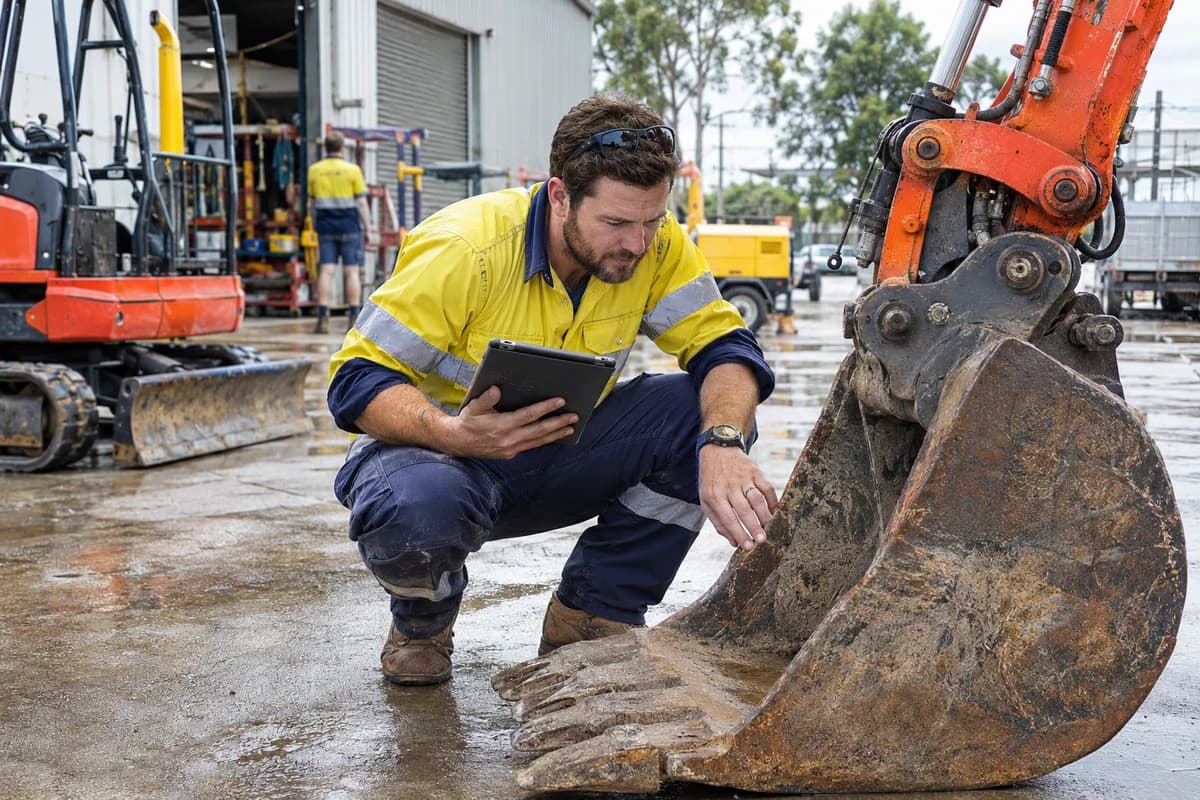
A machine goes out on a docket and comes back a week late with no note of damage. Each item needs a record that follows it out and back. Inspection photos are taken on return.
Variations are agreed on site and billed late
A builder agrees a change with the client in the yard, and the paperwork follows weeks afterwards. By then the client has forgotten the detail. A variation form filled on a phone and signed on the spot, with the date and a photo of the work attached, settles the argument before the invoice is sent.
Cold-store temperature logs sit on clipboards
Auditors want continuous records for chilled and frozen goods. Paper logs get missed on busy days. Sensors that write readings to a system produce the record without anyone remembering.
Wet-season delays are not recorded
A programme slips because of rain, and the contractor cannot prove how many days were lost. A daily site diary with weather and labour notes gives the evidence when a claim is made.
What we would build for Brisbane businesses.
Usually in this order, starting with whatever the audit ranks first.
IoT and Edge Computing
Machine and sensor readings connected to office records, with buffering limits and recovery after a lost connection defined.
Learn moreWeb and Mobile Application Development
Web and mobile apps for customers, field staff and dealers, built to work on ordinary phones.
Learn moreAPI and System Integration
Connections between existing tools, with record ownership, duplicate handling and reconciliation agreed for each flow.
Learn moreSoftware Maintenance, Support and Rescue
Taking over the system your last vendor stopped answering for: fixing it, documenting it and keeping it running.
Learn moreReady products that fit Brisbane businesses.
Each one is adapted to how your business works before it goes live, and anything your trade needs that it lacks is added then. You are not paying to build the basics again.
Construction Project Management Software
Sites and stages, formwork and masonry gangs, bar bender bills, material issue, running bills with retention and site photos for builders and contractors.
Learn moreEquipment Rental Management Software
Machine register, availability, rental contracts, delivery and return checks, workshop jobs, deposits and invoices for equipment rental companies running excavators, lifts, dumpers and generators.
Learn moreHVAC and AC Service Management Software
Customer units, installation jobs, annual service contracts, breakdown calls, technician schedules, spare parts and gas stock, warranty claims and tax billing for HVAC and AC businesses.
Learn moreHow the work runs from Bengaluru for Brisbane.
- 1
The audit, by call
A screen-share and a look at the sheets, accounting reports and WhatsApp groups your team uses. No travel needed.
- 2
A written proposal
Scope, what we build first and the cost, agreed in writing before anything starts.
- 3
Build in short rounds
Working screens shared every few weeks. Your team tests them from your own office.
- 4
Go-live, in person when it helps
For data migration and training we can come to Brisbane. Travel is agreed in advance.
- 5
Support online
Fixes, changes and hosting handled remotely by the same team that built it.
The work we have published.
We don’t claim Brisbane clients we don’t have. These are systems our team built; the way we work is the same wherever you are.
PetSeva: matching owners to the right vet, at any hour
A two-sided veterinary platform where vets are searchable by specialisation and bookable outside clinic hours. It now carries more than 2,000 veterinary doctors.
Read the case study Paying guest accommodationSAM Atithi Pavathi: bed-level occupancy as the source of truth
PG management software where allocation, rates and invoices are derived from bed-level occupancy and not maintained in parallel spreadsheets.
Read the case study School transport servicesSAM Tours: school transport on a single ledger
Registration, fee collection, routing and finance write to the same records, closing the gap between journeys run and fees collected.
Read the case study Microfinance and Self Help GroupsVikasa RDO: making SHG loan recovery auditable
Loan proposals, recoveries and commissions sit on one record, with a person attached to every state change, so a business handling a bank’s money can show where each rupee went.
Read the case studyMake the scope specific to your business.
Work through a real example from your operation and agree the handoffs, controls and support the project needs.
Hire equipment is lost between jobs
Which observation would change the proposed scope?
For “Hire equipment is lost between jobs”, observe someone completing the task with a representative example. Record where they stop, ask another person or re-enter information, then choose the smallest change whose result the team can verify.
Background reading: GOV.UK: researching user needs
Questions Brisbane owners ask before they call.
Can site diaries and variations be filled in on a phone without signal?
Yes. Yes. Entries wait in the handset and go up once a signal returns, which suits rural and remote sites where coverage drops out for hours. We would test it on a site early.
Can temperature sensors feed straight into a log for auditors?
That works if the sensors can send readings over a network. We would check the model you own or plan to buy and whether it exports data in a form we can read.
What happens after I share my requirements?
We review your brief and clarify the work with you. We then look at the software, spreadsheets and WhatsApp groups your business runs on today and write down what works, what slows your team down and what is missing. A demo login, a screen-share or a few screenshots are enough. You get a short written summary ordered by priority, with no obligation to hire us afterwards.
How much will the software cost?
We don’t publish a price, because it depends on what the system has to do. That first review settles the scope, and the cost goes into a written proposal before any work starts.
Industries we build for in Brisbane.
Elsewhere in Australia.
Tell us what your Brisbane business runs on today.
Send a short note on the spreadsheets, software or WhatsApp groups your team depends on. We reply the same working day.
What happens after you share your requirements
- We review your brief and the systems you already use.
- We clarify the workflow, missing information and the work to consider first.
- The proposed scope sets out the deliverables, responsibilities and dependencies.
- Review the scope and commercial terms before deciding whether to proceed.
Start with your requirements
Describe your current process, the people involved and the change you need. Start with the details you know; we can clarify the rest together.
Share your requirements