Hobart · CountriesHobart’s harbour, salmon farms, orchards, distilleries and Saturday market reward careful stock and dates.
Hobart lies on the Derwent River at the foot of kunanyi, Mount Wellington, and serves as the base for Tasmanian fishing, farming and Antarctic supply trades. Salmon farms, apple orchards, distilleries and a busy summer of visitors shape its business year. Invoices here are written in Australian dollars. GullySystem, in Bengaluru, writes order and batch software for such firms remotely.
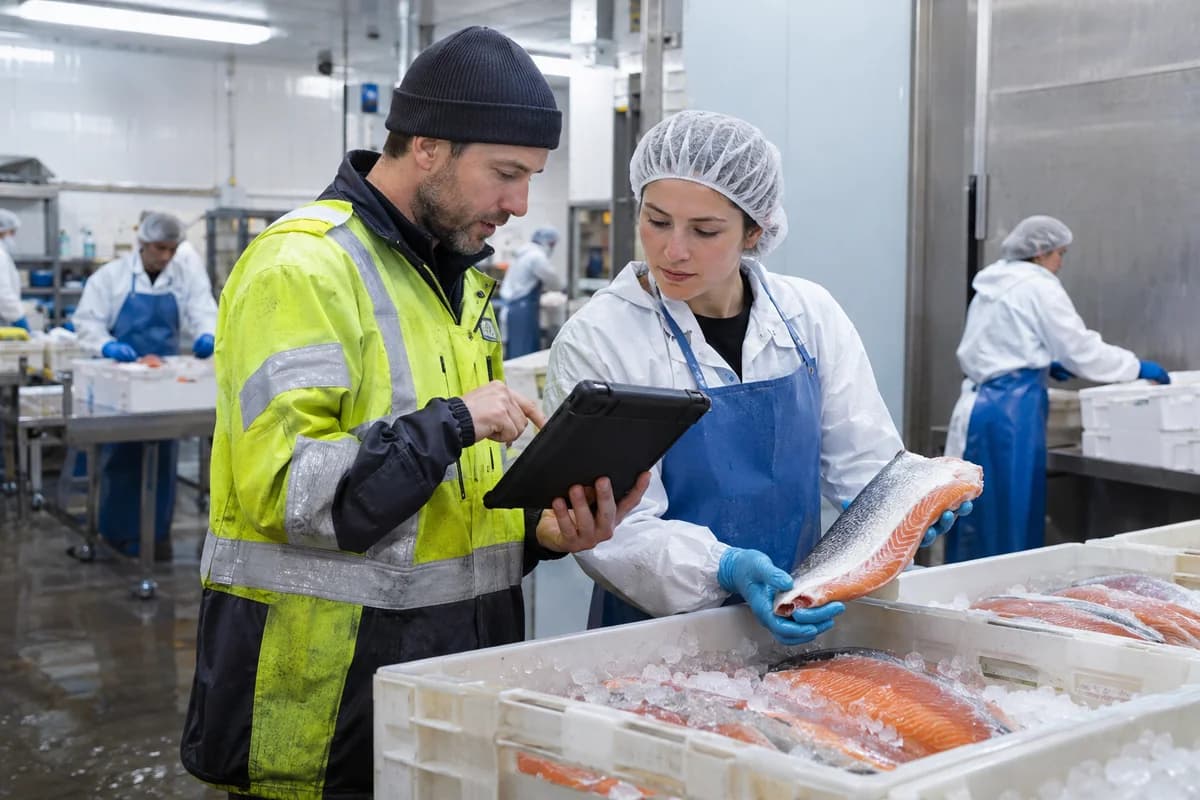
Fish farms line the channels south and east of the city. Their harvests are processed, chilled and flown out through Hobart, so cold storage, fish counts and delivery slots matter far more than office hours. Salmon is farmed here.
Tasmanian whisky, cider, cheese and fruit have grown into a food and drink trade that sells to visitors and mainland shops alike. Salamanca Market runs every Saturday, and the Sydney to Hobart yacht race ends at the docks each December, with the Taste of Tasmania festival following. Whisky casks age for years.
The districts, business parks and markets that matter in Hobart.
How Hobart businesses pick and use software.
Aquaculture managers who match harvest weights to buyers and freight slots.
Orchard and cider owners who track fruit by block, grade and picking date.
Where Hobart businesses lose time and money.
Harvest weights are written twice
Farm crews note weights on the boat and office staff retype them later, so errors enter before invoices are made. A tablet at the pen removes the second step.
Fruit grading is lost in transit
Pickers sort by grade, but the grade disappears once crates reach the packing shed. A crate label that carries the grade solves it.
Tour seats are sold more than once
Small operators sell harbour cruises and food tours by email, and the same seat is promised twice in busy weeks. One manifest fixes it.
What we would build for Hobart businesses.
Usually in this order, starting with whatever the audit ranks first.
Data Migration and Moving Off Spreadsheets
Data migration and spreadsheet replacement covers auditing existing files, cleaning and deduplicating records, loading them into a new system and reconciling the loaded result against known totals. Both systems then run side by side before cutover. Originals stay untouched.
Learn moreIoT and Edge Computing
Machine and sensor readings connected to office records, with buffering limits and recovery after a lost connection defined.
Learn moreWeb and Mobile Application Development
Web and mobile apps for customers, field staff and dealers, built to work on ordinary phones.
Learn moreBusiness Intelligence and Reporting Tools
Business intelligence and reporting work joins accounting vouchers, CRM records and spreadsheet tabs inside Power BI, Metabase or Looker Studio, using metric definitions agreed in writing first. Role dashboards and scheduled packs follow. The model is documented. Your analyst can extend it. Share your requirements and we will say which tool fits.
Learn moreReady products that fit Hobart businesses.
Each one is adapted to how your business works before it goes live, and anything your trade needs that it lacks is added then. You are not paying to build the basics again.
Fisheries and Aquaculture Farm Management Software
Ponds and cages, seed lots, feed rounds, water readings, mortality, treatments, harvest grading and buyer billing for fish and shrimp farms.
Learn moreCrop Farm Management Software
Field plans, input stores, spray logs, machine hours, harvest weighbridge tickets, bin stock and grain contracts for arable crop farms.
Learn moreTour Operator Management Software
Itineraries, group departures, vendor bookings, vouchers, per-passenger costing, guest payments and vendor payables for tour operators running fixed departures and custom trips.
Learn moreHow the work runs from Bengaluru for Hobart.
- 1
The audit, by call
A screen-share and a look at the sheets, accounting reports and WhatsApp groups your team uses. No travel needed.
- 2
A written proposal
Scope, what we build first and the cost, agreed in writing before anything starts.
- 3
Build in short rounds
Working screens shared every few weeks. Your team tests them from your own office.
- 4
Go-live, in person when it helps
For data migration and training we can come to Hobart. Travel is agreed in advance.
- 5
Support online
Fixes, changes and hosting handled remotely by the same team that built it.
The work we have published.
We don’t claim Hobart clients we don’t have. These are systems our team built; the way we work is the same wherever you are.
PetSeva: matching owners to the right vet, at any hour
A two-sided veterinary platform where vets are searchable by specialisation and bookable outside clinic hours. It now carries more than 2,000 veterinary doctors.
Read the case study Paying guest accommodationSAM Atithi Pavathi: bed-level occupancy as the source of truth
PG management software where allocation, rates and invoices are derived from bed-level occupancy and not maintained in parallel spreadsheets.
Read the case study School transport servicesSAM Tours: school transport on a single ledger
Registration, fee collection, routing and finance write to the same records, closing the gap between journeys run and fees collected.
Read the case study Microfinance and Self Help GroupsVikasa RDO: making SHG loan recovery auditable
Loan proposals, recoveries and commissions sit on one record, with a person attached to every state change, so a business handling a bank’s money can show where each rupee went.
Read the case studyMake the scope specific to your business.
Work through a real example from your operation and agree the handoffs, controls and support the project needs.
Harvest weights are written twice
Do purchasing, operating and billing quantities use the same unit?
Check the measurement unit and rounding used in “Harvest weights are written twice”. Compare the result with a known sample before accepting a converted quantity or calculated charge.
Background reading: ERPNext: units of measure
Questions Hobart owners ask before they call.
Can harvest data be entered on a boat with weak signal?
Yes. The screen stores entries on the device and sends them when a connection returns, so a pen-side count is never lost. We would test this on a real jetty before relying on it.
What time zone difference should we expect?
Tasmania’s clock is well in front of ours, and it shifts in summer, so the gap changes by one hour across the year. We state each call time in your local clock.
What happens after I share my requirements?
We review your brief and clarify the work with you. We then look at the software, spreadsheets and WhatsApp groups your business runs on today and write down what works, what slows your team down and what is missing. A demo login, a screen-share or a few screenshots are enough. You get a short written summary ordered by priority, with no obligation to hire us afterwards.
How much will the software cost?
We don’t publish a price, because it depends on what the system has to do. That first review settles the scope, and the cost goes into a written proposal before any work starts.
Industries we build for in Hobart.
Elsewhere in Australia.
Tell us what your Hobart business runs on today.
Send a short note on the spreadsheets, software or WhatsApp groups your team depends on. We reply the same working day.
What happens after you share your requirements
- We review your brief and the systems you already use.
- We clarify the workflow, missing information and the work to consider first.
- The proposed scope sets out the deliverables, responsibilities and dependencies.
- Review the scope and commercial terms before deciding whether to proceed.
Start with your requirements
Describe your current process, the people involved and the change you need. Start with the details you know; we can clarify the rest together.
Share your requirements