Adelaide · CountriesAdelaide’s wine houses, shipyards and food makers share a city that does careful, traceable work.
Adelaide sits near the Barossa Valley and McLaren Vale wine regions, and builds ships and defence electronics at Osborne. Food makers, medical firms and the Central Market complete it. Batch records matter here. Our Bengaluru team builds the software around them and writes down every call.
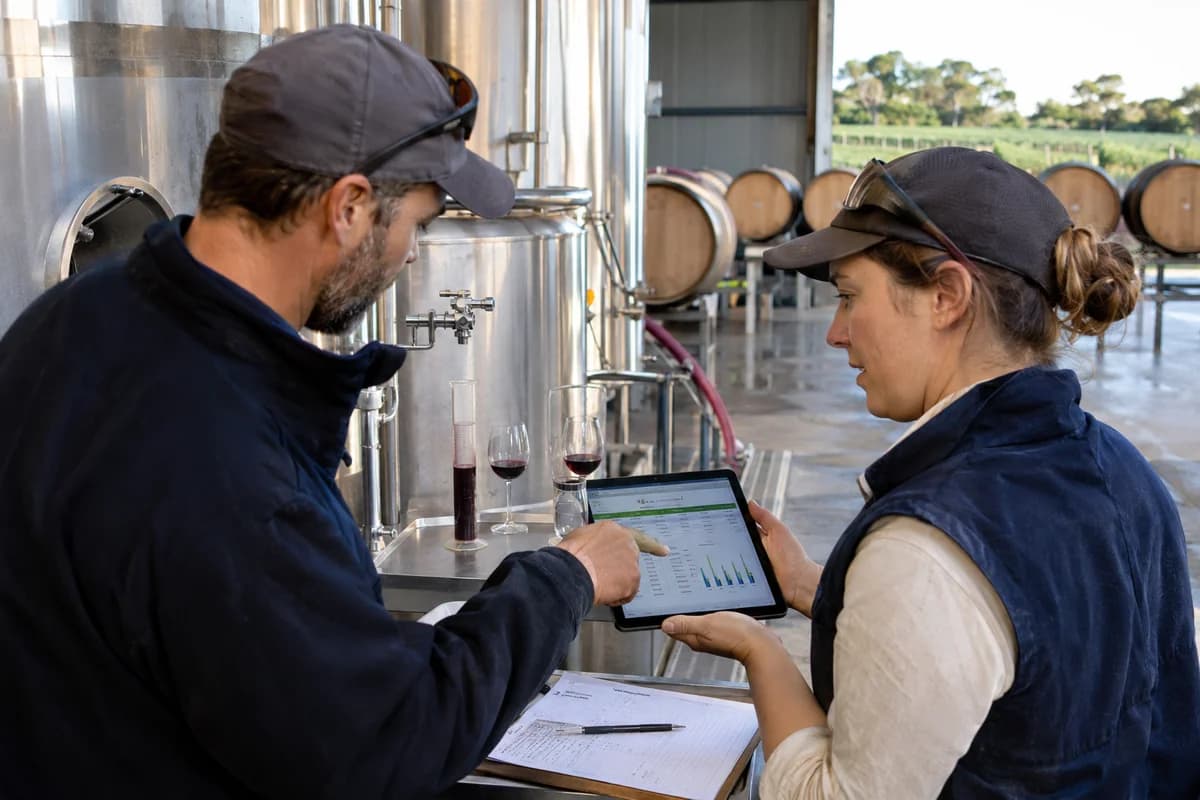
South Australia is wine country. Growers, cellars and distributors in the Barossa, Clare Valley and McLaren Vale handle grape contracts, tank records and export orders, and cellar doors sell to club members who return each year. Vintage is a few frantic weeks. The records must be right in all of them.
In the city, Osborne and Tonsley hold shipbuilding and advanced manufacturing, and defence suppliers follow strict quality rules. Food and beverage makers supply supermarkets, and Adelaide’s hospitals and universities support a medical-device and research sector. The Adelaide Central Market sells to restaurants and households and sets a standard for fresh produce.
The districts, business parks and markets that matter in Adelaide.
How Adelaide businesses pick and use software.
Winery owners who need tank, blend and bottling records that match what the regulator and the export buyer ask to see.
Machining and electronics suppliers to defence primes, who must show inspection and traceability records with each delivery.
Where Adelaide businesses lose time and money.
Blend and tank records live in notebooks
Winemakers write additions, transfers and tests by hand during vintage. Chasing a number means turning pages. A tablet at the tank saves the entry once.
Defence suppliers must prove traceability
A prime contractor asks where a part’s material came from and who inspected it. A job record that carries the material certificate, the heat treatment note and the inspection sign-off makes that a quick answer, even for a part built three years ago.
Export paperwork is typed again for each order
A winery ships to buyers in several countries and each needs its own documents. Storing the buyer’s details and product specifications once avoids retyping, and each shipment pulls the right certificates, labels and declarations for that destination automatically.
Market stalls order from memory
Traders decide what to order from yesterday’s sales and gut feel. A few weeks of sales and waste records show what to buy less of.
What we would build for Adelaide businesses.
Usually in this order, starting with whatever the audit ranks first.
Data Migration and Moving Off Spreadsheets
Data migration and spreadsheet replacement covers auditing existing files, cleaning and deduplicating records, loading them into a new system and reconciling the loaded result against known totals. Both systems then run side by side before cutover. Originals stay untouched.
Learn moreAPI and System Integration
Connections between existing tools, with record ownership, duplicate handling and reconciliation agreed for each flow.
Learn moreQA and Software Testing
Testing on the phones, browsers and patchy networks your customers and staff actually use.
Learn moreCustom Software and Product Engineering
Software built around how your business actually runs, when nothing off the shelf fits without workarounds.
Learn moreReady products that fit Adelaide businesses.
Each one is adapted to how your business works before it goes live, and anything your trade needs that it lacks is added then. You are not paying to build the basics again.
Winery Management Software
Harvest intake, vintage and lot records, tank and barrel register, bottling, cellar stock, cellar door, wine club and trade orders for wineries.
Learn moreDefence Component Manufacturer Management Software
Contract schedules, controlled drawings, free-issue material, customer inspection hold points, serial registers and conformance certificates for defence component makers.
Learn moreHow the work runs from Bengaluru for Adelaide.
- 1
The audit, by call
A screen-share and a look at the sheets, accounting reports and WhatsApp groups your team uses. No travel needed.
- 2
A written proposal
Scope, what we build first and the cost, agreed in writing before anything starts.
- 3
Build in short rounds
Working screens shared every few weeks. Your team tests them from your own office.
- 4
Go-live, in person when it helps
For data migration and training we can come to Adelaide. Travel is agreed in advance.
- 5
Support online
Fixes, changes and hosting handled remotely by the same team that built it.
The work we have published.
We don’t claim Adelaide clients we don’t have. These are systems our team built; the way we work is the same wherever you are.
PetSeva: matching owners to the right vet, at any hour
A two-sided veterinary platform where vets are searchable by specialisation and bookable outside clinic hours. It now carries more than 2,000 veterinary doctors.
Read the case study Paying guest accommodationSAM Atithi Pavathi: bed-level occupancy as the source of truth
PG management software where allocation, rates and invoices are derived from bed-level occupancy and not maintained in parallel spreadsheets.
Read the case study School transport servicesSAM Tours: school transport on a single ledger
Registration, fee collection, routing and finance write to the same records, closing the gap between journeys run and fees collected.
Read the case study Microfinance and Self Help GroupsVikasa RDO: making SHG loan recovery auditable
Loan proposals, recoveries and commissions sit on one record, with a person attached to every state change, so a business handling a bank’s money can show where each rupee went.
Read the case studyMake the scope specific to your business.
Work through a real example from your operation and agree the handoffs, controls and support the project needs.
Defence suppliers must prove traceability
Can you follow a suspect input through to the affected deliveries?
Pick one real record from “Defence suppliers must prove traceability”. Ask the team to trace its origin and identify the later work or deliveries it affected, including any split quantities.
Background reading: ERPNext: forward and backward traceability
Questions Adelaide owners ask before they call.
Can a winery record keep tank additions and also print the regulator’s register?
Yes, in principle. Entries are stored once. The register comes from them. We would agree the exact format with your winemaker before building the print layout.
Will our defence customer accept supplier records held in your system?
That depends on the customer’s rules, and you would need to ask them. We can export records in the formats they name and keep a clear history of every change.
What happens after I share my requirements?
We review your brief and clarify the work with you. We then look at the software, spreadsheets and WhatsApp groups your business runs on today and write down what works, what slows your team down and what is missing. A demo login, a screen-share or a few screenshots are enough. You get a short written summary ordered by priority, with no obligation to hire us afterwards.
How much will the software cost?
We don’t publish a price, because it depends on what the system has to do. That first review settles the scope, and the cost goes into a written proposal before any work starts.
Industries we build for in Adelaide.
Elsewhere in Australia.
Tell us what your Adelaide business runs on today.
Send a short note on the spreadsheets, software or WhatsApp groups your team depends on. We reply the same working day.
What happens after you share your requirements
- We review your brief and the systems you already use.
- We clarify the workflow, missing information and the work to consider first.
- The proposed scope sets out the deliverables, responsibilities and dependencies.
- Review the scope and commercial terms before deciding whether to proceed.
Start with your requirements
Describe your current process, the people involved and the change you need. Start with the details you know; we can clarify the rest together.
Share your requirements