Newcastle · CountriesNewcastle’s coal harbour, university, engineering yards and Hunter wineries run on ship dates and cellar records.
Newcastle sits at the mouth of the Hunter River, where a working port handles coal and bulk cargo. The steelworks closed in 1999, and the city now leans on its university, health services, engineering firms and the vineyards of the Hunter Valley inland. Invoices are issued in Australian dollars. GullySystem writes software for such firms remotely from Bengaluru.
Ships queue off the coast for the harbour. Freight forwarders, stevedores, tug crews and engineering workshops all plan around the vessel schedule, and one late arrival pushes every booking behind it by a day or more. Coal trains reach the docks daily.
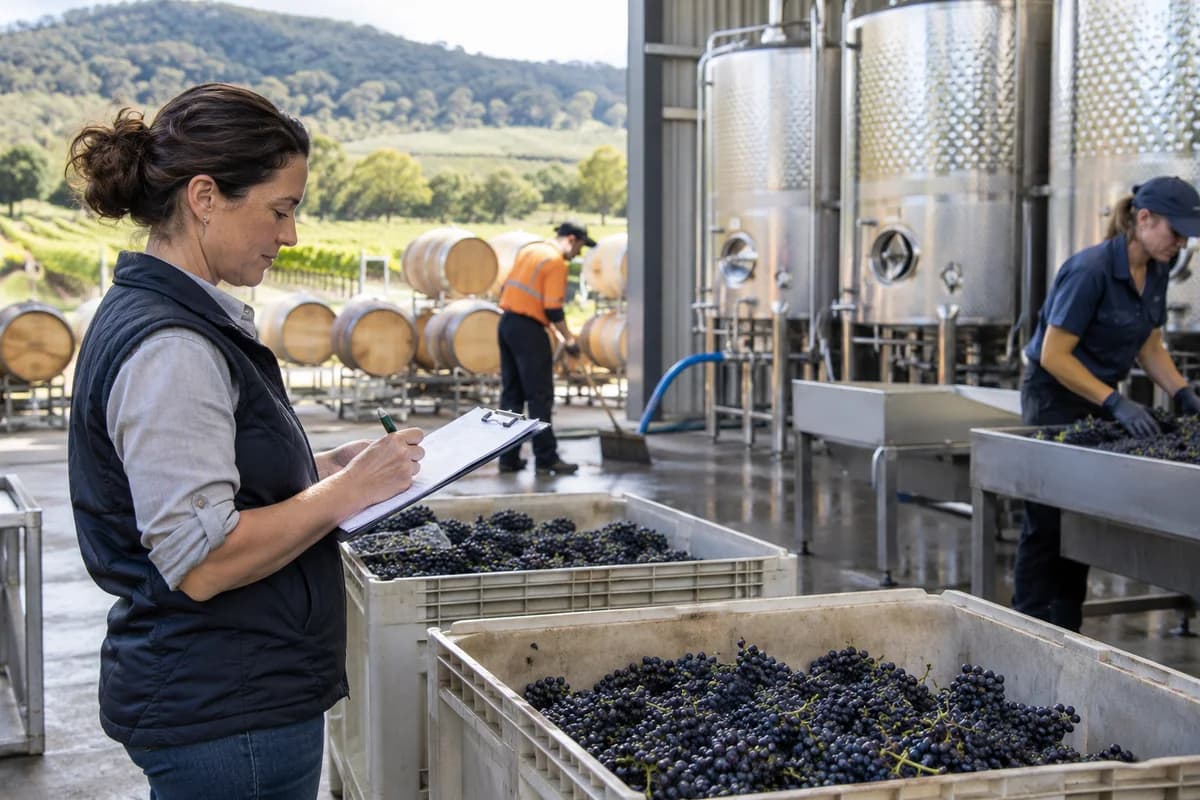
Inland, the Hunter Valley grows grapes, and its cellar doors draw weekend visitors from Sydney and the city itself. The University of Newcastle and the John Hunter Hospital add teaching, research and health work to a city once known only for steel. Harvest starts in January.
The districts, business parks and markets that matter in Newcastle.
How Newcastle businesses pick and use software.
Engineering workshop owners who repair equipment for mining and port clients.
Cellar door managers who sell by the case, by the glass and by club membership.
Where Newcastle businesses lose time and money.
Repair jobs run past their quotes
Workshops price a repair, then add hours and parts as the job opens up, and the final invoice surprises the client. Job cards with running costs keep both sides informed.
Wine club orders and stock drift apart
Cellar doors sell from the same shelves that feed club shipments, so a popular vintage vanishes before the quarterly mailing goes out. A shared stock count prevents that.
Freight bookings change with the tide
Vessel delays reshuffle pickups and storage days, and clerks rewrite plans by phone. A shipment list that updates itself saves repeated calls.
What we would build for Newcastle businesses.
Usually in this order, starting with whatever the audit ranks first.
ERP, CRM and Business Software Implementation
One record of stock, orders, customers and accounts, set up so your team opens it every day.
Learn moreData Engineering and Business Intelligence
Dashboards that answer the owner’s Monday questions without anyone building an Excel sheet first.
Learn moreBusiness Process Automation
Approvals, reminders and reports triggered by agreed rules, with exceptions assigned to a responsible person.
Learn moreCustom Software and Product Engineering
Software built around how your business actually runs, when nothing off the shelf fits without workarounds.
Learn moreReady products that fit Newcastle businesses.
Each one is adapted to how your business works before it goes live, and anything your trade needs that it lacks is added then. You are not paying to build the basics again.
Winery Management Software
Harvest intake, vintage and lot records, tank and barrel register, bottling, cellar stock, cellar door, wine club and trade orders for wineries.
Learn moreMining Company Management Software
Shift output, haul log, equipment hours, maintenance, fuel and spares, weighbridge dispatch, contractors and invoices for mining and quarry operators.
Learn moreFreight Forwarder Management Software
Rate sheets, quotations, job files, house bill drafts, milestones, buying and selling charges, vendor bills and agent statements for freight forwarders.
Learn moreHow the work runs from Bengaluru for Newcastle.
- 1
The audit, by call
A screen-share and a look at the sheets, accounting reports and WhatsApp groups your team uses. No travel needed.
- 2
A written proposal
Scope, what we build first and the cost, agreed in writing before anything starts.
- 3
Build in short rounds
Working screens shared every few weeks. Your team tests them from your own office.
- 4
Go-live, in person when it helps
For data migration and training we can come to Newcastle. Travel is agreed in advance.
- 5
Support online
Fixes, changes and hosting handled remotely by the same team that built it.
The work we have published.
We don’t claim Newcastle clients we don’t have. These are systems our team built; the way we work is the same wherever you are.
PetSeva: matching owners to the right vet, at any hour
A two-sided veterinary platform where vets are searchable by specialisation and bookable outside clinic hours. It now carries more than 2,000 veterinary doctors.
Read the case study Paying guest accommodationSAM Atithi Pavathi: bed-level occupancy as the source of truth
PG management software where allocation, rates and invoices are derived from bed-level occupancy and not maintained in parallel spreadsheets.
Read the case study School transport servicesSAM Tours: school transport on a single ledger
Registration, fee collection, routing and finance write to the same records, closing the gap between journeys run and fees collected.
Read the case study Microfinance and Self Help GroupsVikasa RDO: making SHG loan recovery auditable
Loan proposals, recoveries and commissions sit on one record, with a person attached to every state change, so a business handling a bank’s money can show where each rupee went.
Read the case studyMake the scope specific to your business.
Work through a real example from your operation and agree the handoffs, controls and support the project needs.
Wine club orders and stock drift apart
What happens to movements entered while a count is being checked?
For “Wine club orders and stock drift apart”, choose a count date and trace the movements around it. Agree who investigates a difference before an adjustment changes the available balance.
Background reading: ERPNext: stock reconciliation
Freight bookings change with the tide
What becomes available when a booking is moved or cancelled?
Use “Freight bookings change with the tide” to move a booking, then cancel a second example. Check the released slot, the person or resource still assigned, and any amount left to settle before accepting the revised schedule.
Background reading: ERPNext: appointment records
Questions Newcastle owners ask before they call.
Can a winery track tanks, barrels and club orders together?
Yes. Each tank and barrel carries a vintage and a volume, and finished stock feeds the cellar door and the club list from one count. We would copy your current harvest sheet first so the first season needs no retyping.
Is the support team awake when we need it?
Sydney and Newcastle clocks are well past ours, so your morning sits in our mid-day. Urgent faults get an answer on the same working day.
What happens after I share my requirements?
We review your brief and clarify the work with you. We then look at the software, spreadsheets and WhatsApp groups your business runs on today and write down what works, what slows your team down and what is missing. A demo login, a screen-share or a few screenshots are enough. You get a short written summary ordered by priority, with no obligation to hire us afterwards.
How much will the software cost?
We don’t publish a price, because it depends on what the system has to do. That first review settles the scope, and the cost goes into a written proposal before any work starts.
Industries we build for in Newcastle.
Elsewhere in Australia.
Tell us what your Newcastle business runs on today.
Send a short note on the spreadsheets, software or WhatsApp groups your team depends on. We reply the same working day.
What happens after you share your requirements
- We review your brief and the systems you already use.
- We clarify the workflow, missing information and the work to consider first.
- The proposed scope sets out the deliverables, responsibilities and dependencies.
- Review the scope and commercial terms before deciding whether to proceed.
Start with your requirements
Describe your current process, the people involved and the change you need. Start with the details you know; we can clarify the rest together.
Share your requirements