Bremen · CountriesBremen unites a seaport, aircraft and steel plants, coffee roasters and a brewing tradition.
Bremen and Bremerhaven form a state with a long seafaring record. Container terminals, car export yards and coffee warehouses line the water, and the quay cranes work through the night when a ship has to catch its tide. Aircraft parts, steel and packaged food are made inland. Customs papers, batch records and shipment tracking need exact data, and our Bengaluru team builds such systems remotely.
Ships shape the business year. Cargo arrives as containers, cars and bulk, and forwarders, customs agents and truckers handle each leg, so a single missing document can hold a box on the quay for days.
Industry stands beside the port. Aircraft structures, steel and food products are made in and around the city, and coffee has been roasted here for generations. Bremen’s mornings meet our afternoon. Reviews can happen the same day.
The districts, business parks and markets that matter in Bremen.
How Bremen businesses pick and use software.
Forwarders and customs agents who prepare declarations for each container and answer to the carrier, the importer and the port authority at once.
Quality managers at aerospace and food suppliers who must trace every batch, from the raw alloy or green bean to the pallet that leaves the gate.
Where Bremen businesses lose time and money.
Customs papers are retyped
An agent copies invoice lines into a declaration, then copies them again for the carrier. Typos hold cargo at the gate, and each hour of delay is paid for in storage fees and missed trucks. Entering the data once and reusing it removes the repeat work.
Part traceability sits in binders
Aircraft part makers file material certificates on paper. Finding the origin of one bracket takes an afternoon of pulling binders, and an auditor who asks about ten brackets takes the whole week. A digital batch record answers in seconds.
Roasted batches get mixed up
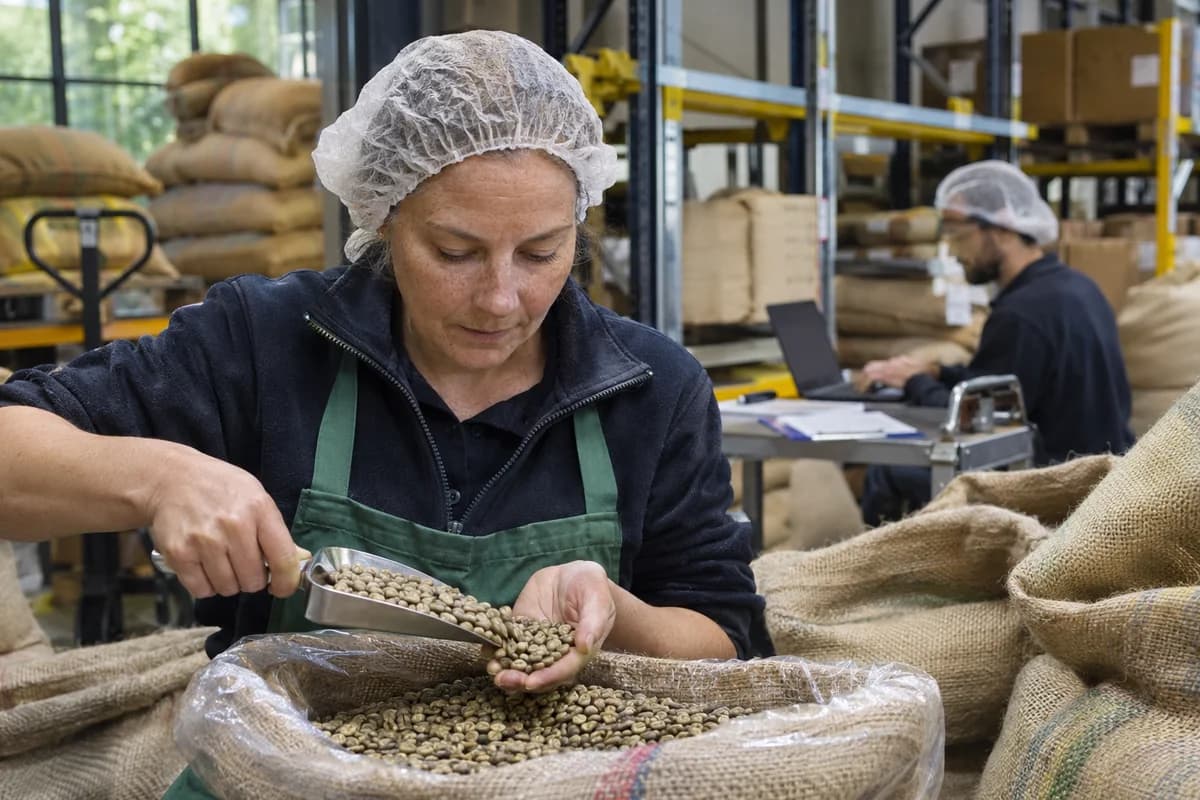
Coffee and food packers blend lots by the week. When a complaint arrives, tracing the green coffee lot behind one bag is slow, because the record of the blend sits on a clipboard by the roaster. A batch record linking raw lots to packed goods solves it.
What we would build for Bremen businesses.
Usually in this order, starting with whatever the audit ranks first.
IoT and Edge Computing
Machine and sensor readings connected to office records, with buffering limits and recovery after a lost connection defined.
Learn moreERP, CRM and Business Software Implementation
One record of stock, orders, customers and accounts, set up so your team opens it every day.
Learn moreAPI and System Integration
Connections between existing tools, with record ownership, duplicate handling and reconciliation agreed for each flow.
Learn moreData Engineering and Business Intelligence
Dashboards that answer the owner’s Monday questions without anyone building an Excel sheet first.
Learn moreReady products that fit Bremen businesses.
Each one is adapted to how your business works before it goes live, and anything your trade needs that it lacks is added then. You are not paying to build the basics again.
Aerospace Fabrication Company Management Software
Sheet certificates, nesting, forming steps, welder qualification, joint inspection, rivet records and build packs for aerospace sheet metal and welded assembly makers.
Learn morePackaged Food Manufacturer Management Software
Ingredient lots, recipes, batch records, line checks, allergen data, pack coding, shelf life and customer dispatch for packaged food makers.
Learn moreSteel Mill Management Software
Orders, raw material, heat and lot traceability, test certificates, yard stock, dispatch and receivables for steel mills and re-rollers.
Learn moreHow the work runs from Bengaluru for Bremen.
- 1
The audit, by call
A screen-share and a look at the sheets, accounting reports and WhatsApp groups your team uses. No travel needed.
- 2
A written proposal
Scope, what we build first and the cost, agreed in writing before anything starts.
- 3
Build in short rounds
Working screens shared every few weeks. Your team tests them from your own office.
- 4
Go-live, in person when it helps
For data migration and training we can come to Bremen. Travel is agreed in advance.
- 5
Support online
Fixes, changes and hosting handled remotely by the same team that built it.
The work we have published.
We don’t claim Bremen clients we don’t have. These are systems our team built; the way we work is the same wherever you are.
PetSeva: matching owners to the right vet, at any hour
A two-sided veterinary platform where vets are searchable by specialisation and bookable outside clinic hours. It now carries more than 2,000 veterinary doctors.
Read the case study Paying guest accommodationSAM Atithi Pavathi: bed-level occupancy as the source of truth
PG management software where allocation, rates and invoices are derived from bed-level occupancy and not maintained in parallel spreadsheets.
Read the case study School transport servicesSAM Tours: school transport on a single ledger
Registration, fee collection, routing and finance write to the same records, closing the gap between journeys run and fees collected.
Read the case study Microfinance and Self Help GroupsVikasa RDO: making SHG loan recovery auditable
Loan proposals, recoveries and commissions sit on one record, with a person attached to every state change, so a business handling a bank’s money can show where each rupee went.
Read the case studyMake the scope specific to your business.
Work through a real example from your operation and agree the handoffs, controls and support the project needs.
Part traceability sits in binders
Can you follow a suspect input through to the affected deliveries?
Pick one real record from “Part traceability sits in binders”. Ask the team to trace its origin and identify the later work or deliveries it affected, including any split quantities.
Background reading: ERPNext: forward and backward traceability
Questions Bremen owners ask before they call.
Can you connect to customs systems?
We can read the public interface documentation and build connectors for declarations and status messages. Filing remains with your licensed agent, since we hold no customs authorisation in Germany.
Can you use our shipping line’s data feeds?
Usually. Carriers that offer tracking data by file or interface can be connected, and we check each format before quoting.
What happens after I share my requirements?
We review your brief and clarify the work with you. We then look at the software, spreadsheets and WhatsApp groups your business runs on today and write down what works, what slows your team down and what is missing. A demo login, a screen-share or a few screenshots are enough. You get a short written summary ordered by priority, with no obligation to hire us afterwards.
How much will the software cost?
We don’t publish a price, because it depends on what the system has to do. That first review settles the scope, and the cost goes into a written proposal before any work starts.
Industries we build for in Bremen.
Tell us what your Bremen business runs on today.
Send a short note on the spreadsheets, software or WhatsApp groups your team depends on. We reply the same working day.
What happens after you share your requirements
- We review your brief and the systems you already use.
- We clarify the workflow, missing information and the work to consider first.
- The proposed scope sets out the deliverables, responsibilities and dependencies.
- Review the scope and commercial terms before deciding whether to proceed.
Start with your requirements
Describe your current process, the people involved and the change you need. Start with the details you know; we can clarify the rest together.
Share your requirements