Software for Sri Lankan tea estates, hotels, garment makers and tour firms, on the same clock as India.
Sri Lanka earns from tea, apparel, spices and tourism, and most firms work in Sinhala, Tamil and English. They charge VAT, deal with the Inland Revenue Department and take payment by card, bank transfer and QR. Our Bengaluru team supports them from a distance with software for estates, bookings, stock and invoices.
Working with a team in India from Sri Lanka.
A Sri Lankan business can span very different places. A tea company runs hill estates and a Colombo office. A guesthouse in Ella sells rooms through travel sites, and a garment maker in the free trade zones ships to buyers abroad. Each has its own records. They sit on paper or in separate sheets.
Our company is in Bengaluru, with no Sri Lankan office, and no project has been delivered there yet. Work happens over video, email and WhatsApp. The two countries share one time zone, so calls need no planning around a gap, even at short notice.
What changes when your business is in Sri Lanka.
Hours, money, language and data are decided with you at the start, not discovered later.
What the software has to fit.
The filing cycles, payment habits and licences a small business there already works around.
Trades we write for in Sri Lanka.
Products that fit them.
Capabilities often asked for.
What we would build for Sri Lanka businesses.
Usually in this order, starting with whatever the audit ranks first.
WhatsApp Business API and Chatbots
WhatsApp Business API work covers number onboarding, template approval, opt-in records and a chatbot with human handover, all set up under the client’s own Meta account. It connects WhatsApp to a CRM, billing or booking system, so every message is sent from an existing record and every reply is written back. It suits businesses that already take orders, payments or bookings in chat.
Learn moreERP, CRM and Business Software Implementation
One record of stock, orders, customers and accounts, set up so your team opens it every day.
Learn moreBusiness Process Automation
Approvals, reminders and reports triggered by agreed rules, with exceptions assigned to a responsible person.
Learn moreData Migration and Moving Off Spreadsheets
Data migration and spreadsheet replacement covers auditing existing files, cleaning and deduplicating records, loading them into a new system and reconciling the loaded result against known totals. Both systems then run side by side before cutover. Originals stay untouched.
Learn moreMake the scope specific to your business.
Work through a real example from your operation and agree the handoffs, controls and support the project needs.
Currency, tax and invoices
Can you explain the balance from its original documents?
Select a partly settled example in “Currency, tax and invoices”. Ask for the invoice, allocated receipts and remaining balance to be shown together before agreeing the opening figures.
Background reading: ERPNext: outstanding invoices
Tourism that follows the seasons
What becomes available when a booking is moved or cancelled?
Use “Tourism that follows the seasons” to move a booking, then cancel a second example. Check the released slot, the person or resource still assigned, and any amount left to settle before accepting the revised schedule.
Background reading: ERPNext: appointment records
Questions from businesses in Sri Lanka.
Do you have a team in Colombo?
No. Everything happens from Bengaluru, and no office or partner exists in Sri Lanka. Sessions run by video with shared screens. Someone at your firm should own decisions and review each stage.
Does the time difference matter?
None. Sri Lanka and India share the same clock, so calls fit anywhere in your working day. Your weekend and Poya days are built into the plan.
Can the software print Sinhala and Tamil?
Yes, on invoices, booking vouchers and messages, alongside English. We test the fonts and layouts on your own documents first, before a single page is sent. Sinhala and Tamil wording comes from you, or is signed off by you.
Can it handle VAT and dollar invoices together?
Tax settings and currency pairs are held per company and checked with your accountant. Exchange-rate handling is agreed before launch. Filing is not part of the software.
We have patchy internet on our estate. Is that a problem?
It is a known case. We scope what must work offline, such as weighing and attendance, and what can wait for a connection, then agree and test that plan before go live. Weak signal is normal on estates.
How is a price set?
We read your scope, show screens on your own records, and then write a quotation with a figure against each part, so you can see what every piece costs. Nothing is priced before that. Any part can be removed.
What do we keep if we part ways?
The code and all the data. Everything exports as plain files. Hosting stays where it was agreed, and the builders carry on with support for as long as you want it.
Can the system track tea leaf weights at the weighing shed?
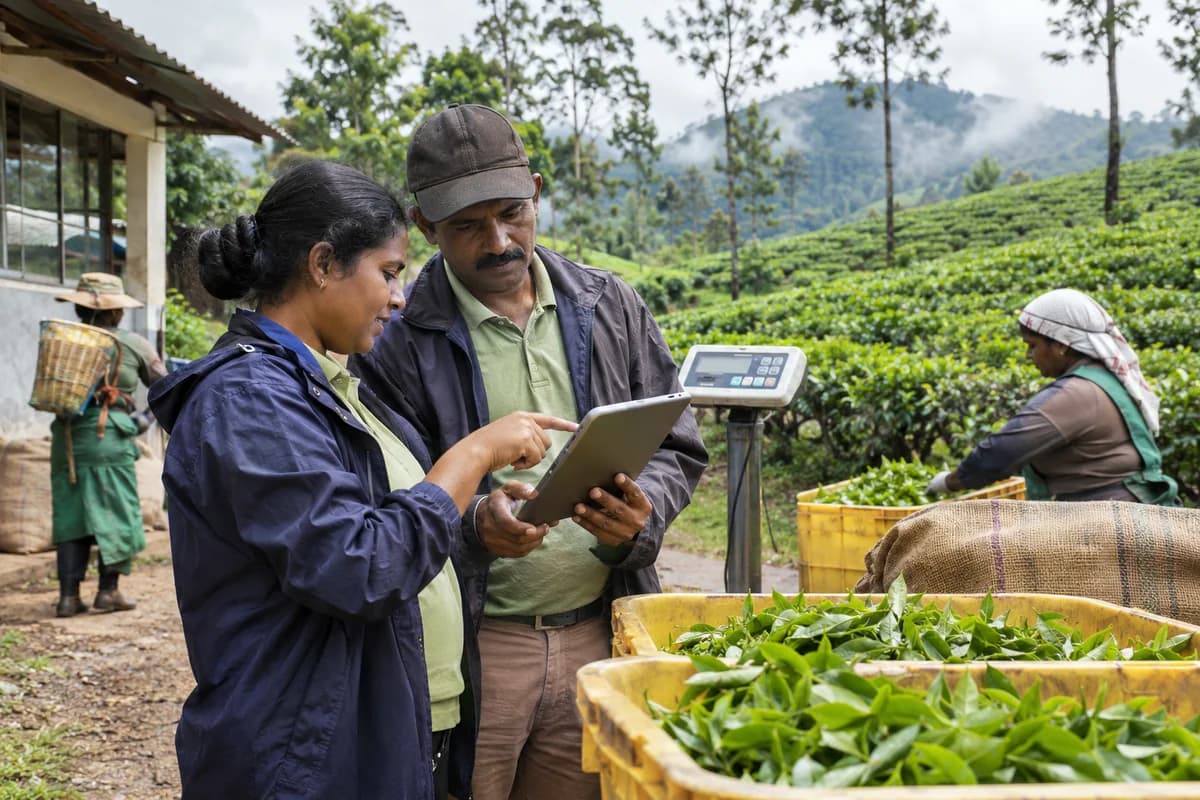
A clerk weighs each plucker’s leaf at the shed. Daily totals by field appear at once. Pay is worked out from those entries, and any plucker can be shown the record behind a figure, with the field, the day and the weight on one line.
Tell us what you run.
Share your requirements and an engineer will read them before getting in touch, at an hour that suits your day.
What happens after you share your requirements
- We review your brief and the systems you already use.
- We clarify the workflow, missing information and the work to consider first.
- The proposed scope sets out the deliverables, responsibilities and dependencies.
- Review the scope and commercial terms before deciding whether to proceed.
Start with your requirements
Describe your current process, the people involved and the change you need. Start with the details you know; we can clarify the rest together.
Share your requirements