Business software for Emirates companies that trade in Arabic and English and live on WhatsApp.
Companies in the Emirates may sit in a free zone or on the mainland. Most renew a trade licence each year, charge VAT, and talk to customers on WhatsApp in Arabic and English. GullySystem, based in Bengaluru, supports them remotely with software for jobs, contracts, tenancies, bookings and invoices.
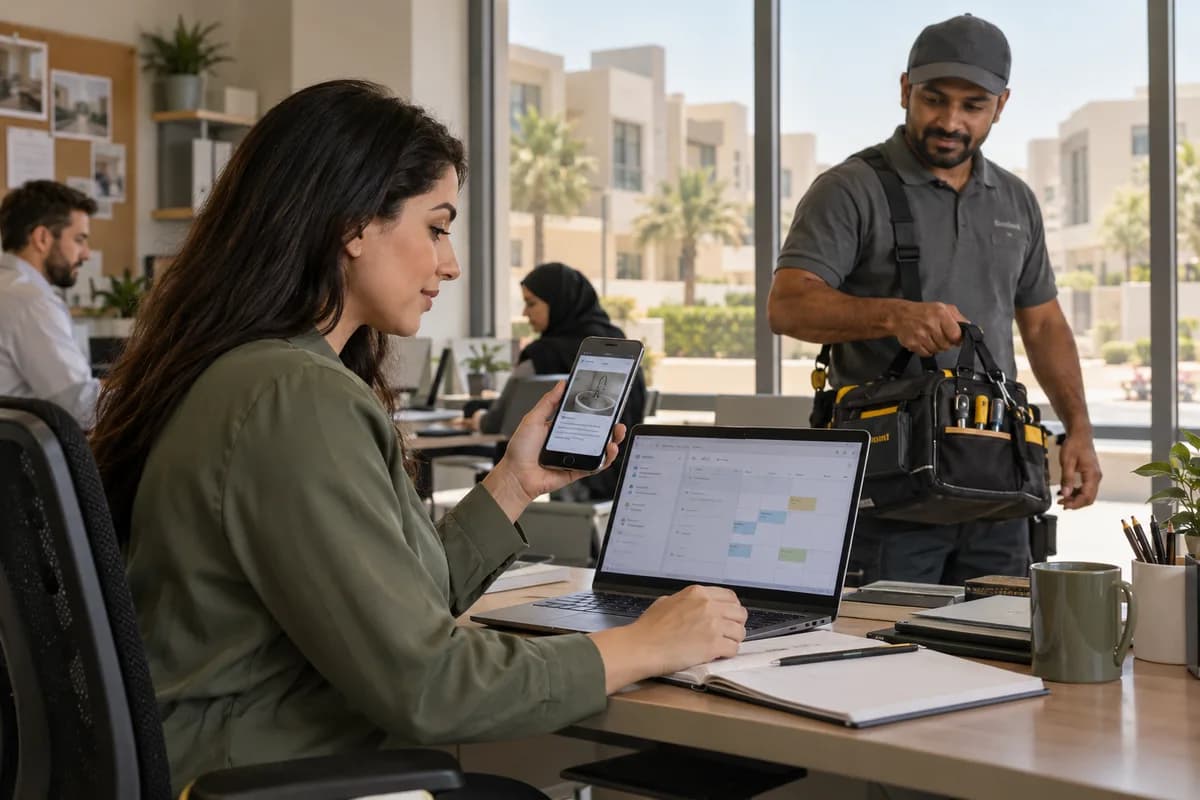
Working with a team in India from the United Arab Emirates.
The Emirates economy mixes developers, property managers, hotels, logistics firms and a large number of small trading companies. Owners lead teams drawn from different countries, and they read invoices in Arabic, English or both. Records need to be clear to a mixed team.
India and the Emirates are close on the clock and close in business habit. We work from Bengaluru with no office in the Gulf; every session happens over video, and the working days overlap almost fully.
What changes when your business is in the United Arab Emirates.
Hours, money, language and data are decided with you at the start, not discovered later.
What the software has to fit.
The filing cycles, payment habits and licences a small business there already works around.
Trades we write for in the United Arab Emirates.
Products that fit them.
Capabilities often asked for.
What we would build for United Arab Emirates businesses.
Usually in this order, starting with whatever the audit ranks first.
WhatsApp Business API and Chatbots
WhatsApp Business API work covers number onboarding, template approval, opt-in records and a chatbot with human handover, all set up under the client’s own Meta account. It connects WhatsApp to a CRM, billing or booking system, so every message is sent from an existing record and every reply is written back. It suits businesses that already take orders, payments or bookings in chat.
Learn moreERP, CRM and Business Software Implementation
One record of stock, orders, customers and accounts, set up so your team opens it every day.
Learn moreAPI and System Integration
Connections between existing tools, with record ownership, duplicate handling and reconciliation agreed for each flow.
Learn moreBusiness Process Automation
Approvals, reminders and reports triggered by agreed rules, with exceptions assigned to a responsible person.
Learn moreMake the scope specific to your business.
Work through a real example from your operation and agree the handoffs, controls and support the project needs.
Currency, tax and invoices
Can you explain the balance from its original documents?
Select a partly settled example in “Currency, tax and invoices”. Ask for the invoice, allocated receipts and remaining balance to be shown together before agreeing the opening figures.
Background reading: ERPNext: outstanding invoices
Yearly trade licence renewal
What happens to existing dues when the next renewal is stopped?
For “Yearly trade licence renewal”, test a cancellation near the renewal date. Agree the last service period and how any existing balance is handled before recurring work starts.
Background reading: ERPNext: recurring billing
Questions from businesses in the United Arab Emirates.
Do you work in Arabic?
Documents and customer messages can be set up in Arabic and English, including right-to-left layout, with print layouts tested on the invoice and the contract before anything is sent. Our project team works in English. Any Arabic wording is supplied or approved by you.
Does the time difference cause problems?
It is small. Most of your working day overlaps with ours, and calls can sit in either half of the day; your weekend is respected when sessions are scheduled.
Can it handle VAT and our trade licence renewals?
VAT settings are held per company and checked with your accountant, including how zero-rated exports and mixed supplies are coded on each invoice line. Licence, visa and tenancy dates are stored per entity and per person, with reminders to the people you name; the software does not file anything for you.
We have no meeting room in Dubai for you. Is that a problem?
Everything runs by video and shared screen. No visit is needed. Contracts are signed electronically and scoped per project. If a handover benefits from a visit, we agree that separately.
How is pricing settled, in dirhams or another currency?
Either, as agreed at the start. The scope is read first, then screens are shown on your own quotations and receipts. A quotation follows with a price against each part. Nothing is priced before that point.
What determines the delivery schedule in the Emirates?
The modules in the opening release, the Arabic and English layouts to test, and the systems to connect. How fast your people reply and check screens matters as much. Your weekend is built into the plan. The proposal commits to dates.
What do we hold on to after the engagement?
Code and data both. Plain files carry the records into whatever comes next. Hosting continues in the Gulf regional centre or wherever was mapped at the start. Support is provided by those who built the system.
Tell us what you run.
Share your requirements and an engineer will read them before getting in touch, at an hour that suits your day.
What happens after you share your requirements
- We review your brief and the systems you already use.
- We clarify the workflow, missing information and the work to consider first.
- The proposed scope sets out the deliverables, responsibilities and dependencies.
- Review the scope and commercial terms before deciding whether to proceed.
Start with your requirements
Describe your current process, the people involved and the change you need. Start with the details you know; we can clarify the rest together.
Share your requirements