Hathras · LocationsAsafoetida processing, spice packing and rail-side wholesale for Hathras’s hing makers and traders.
Hathras is best known for hing, or asafoetida, which is imported as raw resin, processed and packed here for sale across India. Grain and potato traders, a busy rail junction, and a cluster of small units making brassware and printed cloth add to the trade. Batches, stock and dealer credit are tracked on software from Bengaluru.
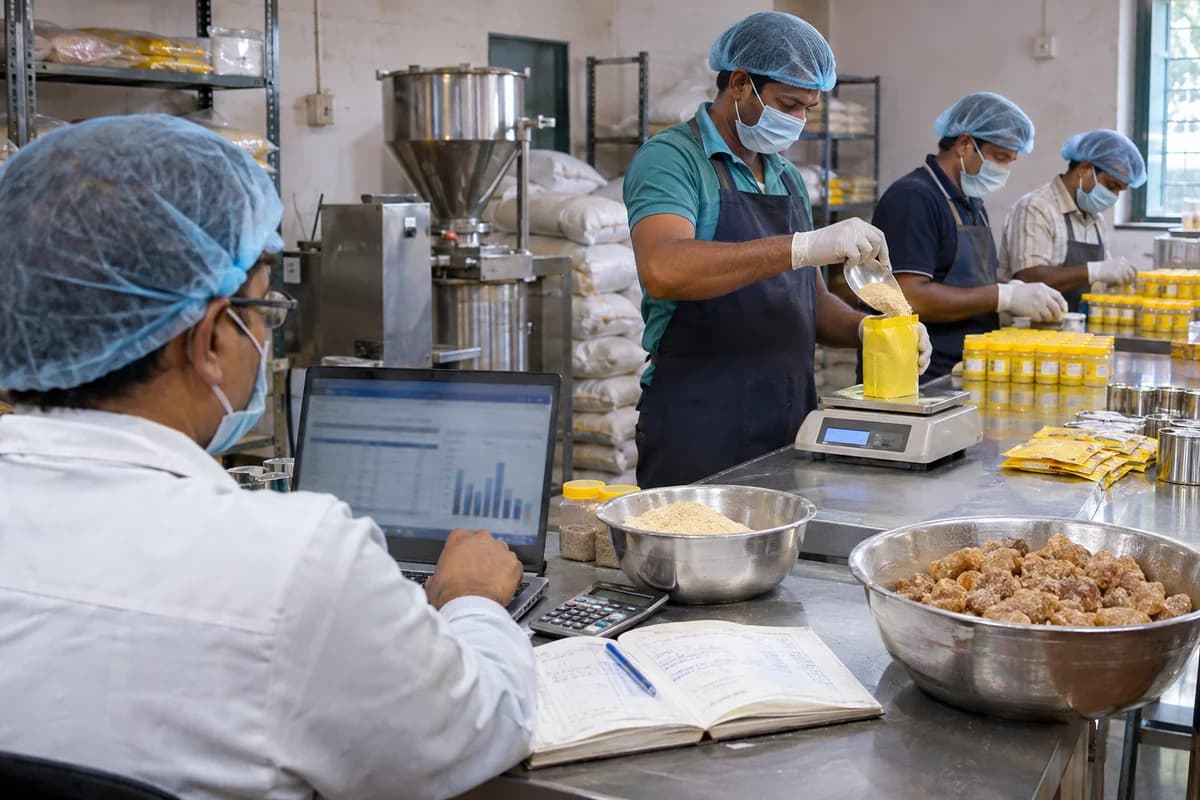
Hing makers buy raw resin, blend it with fillers and compounding agents, and pack it for retail in tins, jars and pouches. Batch notes are kept in the maker’s head. Buyers across India ask for specific strengths. Every lot must match the last one, which is hard to promise from memory.
The railway junction brings wholesale trade in grain and spices, and the Aligarh and Agra roads connect to markets within an hour or two. Hathras also hosts small units producing brassware and cloth printing. The annual fair crowds the town, and local shops stay open late.
The areas, estates and markets that matter in Hathras.
How Hathras businesses pick and use software.
Hing manufacturers want batch records that capture a recipe without exposing it to every worker. The secret must stay secret.
Wholesalers want stock, dealer credit and dispatches on one page. They also want it on the road.
Where Hathras businesses lose time and money.
Recipes live in one head
The blend for a strong pack is known to the owner and one trusted hand. If either is away, output changes, and nobody can say why customers complain. Complaints follow.
Dealer outstanding is chased by memory
A manufacturer sells to dozens of dealers across states, and the ledger shows balances, but follow-up calls depend on who remembers which dealer promised what, and when, and to whom. Old dues quietly age.
Small packs multiply stock lines
A single product comes in a range of pack sizes and labels. The godown count and the bill book rarely agree on how many of each pack are left, and the gap is found only when an order cannot be filled.
What we would build for Hathras businesses.
Usually in this order, starting with whatever the audit ranks first.
ERP, CRM and Business Software Implementation
One record of stock, orders, customers and accounts, set up so your team opens it every day.
Learn moreBusiness Process Automation
Approvals, reminders and reports triggered by agreed rules, with exceptions assigned to a responsible person.
Learn moreData Engineering and Business Intelligence
Dashboards that answer the owner’s Monday questions without anyone building an Excel sheet first.
Learn moreWeb and Mobile Application Development
Web and mobile apps for customers, field staff and dealers, built to work on ordinary phones.
Learn moreHow the work runs from Bengaluru for Hathras.
- 1
The audit, by call
A screen-share and a look at the sheets, accounting reports and WhatsApp groups your team uses. No travel needed.
- 2
A written proposal
Scope, what we build first and the cost, agreed in writing before anything starts.
- 3
Build in short rounds
Working screens shared every few weeks. Your team tests them from your own office.
- 4
Go-live, in person when it helps
For data migration and training we can come to Hathras. Travel is agreed in advance.
- 5
Support online
Fixes, changes and hosting handled remotely by the same team that built it.
The work we have published.
We don’t claim Hathras clients we don’t have. These are systems our team built; the way we work is the same wherever you are.
PetSeva: matching owners to the right vet, at any hour
A two-sided veterinary platform where vets are searchable by specialisation and bookable outside clinic hours. It now carries more than 2,000 veterinary doctors.
Read the case study Paying guest accommodationSAM Atithi Pavathi: bed-level occupancy as the source of truth
PG management software where allocation, rates and invoices are derived from bed-level occupancy and not maintained in parallel spreadsheets.
Read the case study School transport servicesSAM Tours: school transport on a single ledger
Registration, fee collection, routing and finance write to the same records, closing the gap between journeys run and fees collected.
Read the case study Microfinance and Self Help GroupsVikasa RDO: making SHG loan recovery auditable
Loan proposals, recoveries and commissions sit on one record, with a person attached to every state change, so a business handling a bank’s money can show where each rupee went.
Read the case studyMake the scope specific to your business.
Work through a real example from your operation and agree the handoffs, controls and support the project needs.
Recipes live in one head
What changes when a component or quantity is substituted?
Take one entry from “Recipes live in one head” and change an input in a test copy. Review the resulting material requirement and cost with the person who approves production.
Background reading: ERPNext: bills of materials
Small packs multiply stock lines
What happens to movements entered while a count is being checked?
For “Small packs multiply stock lines”, choose a count date and trace the movements around it. Agree who investigates a difference before an adjustment changes the available balance.
Background reading: ERPNext: stock reconciliation
Questions Hathras owners ask before they call.
Can a hing manufacturer record batches without every worker seeing the recipe?
Yes. Access can be set by role, so a packer sees only quantities and a supervisor sees what is needed. The owner keeps the blend sheet private. Each batch gets a number you can trace back, even months after the pack has been sold.
Can pack sizes and labels be tracked separately in stock?
Yes. Each pack size is its own item, linked to the bulk batch it came from. A stock count then matches the bill book more easily. Gaps show up on the same day, not at year end.
What happens after I share my requirements?
We review your brief and clarify the work with you. We then look at the software, spreadsheets and WhatsApp groups your business runs on today and write down what works, what slows your team down and what is missing. A demo login, a screen-share or a few screenshots are enough. You get a short written summary ordered by priority, with no obligation to hire us afterwards.
How much will the software cost?
We don’t publish a price, because it depends on what the system has to do. That first review settles the scope, and the cost goes into a written proposal before any work starts.
Industries we build for in Hathras.
Elsewhere in Uttar Pradesh.
Tell us what your Hathras business runs on today.
Send a short note on the spreadsheets, software or WhatsApp groups your team depends on. We reply the same working day.
What happens after you share your requirements
- We review your brief and the systems you already use.
- We clarify the workflow, missing information and the work to consider first.
- The proposed scope sets out the deliverables, responsibilities and dependencies.
- Review the scope and commercial terms before deciding whether to proceed.
Start with your requirements
Describe your current process, the people involved and the change you need. Start with the details you know; we can clarify the rest together.
Share your requirements