Sitapur · LocationsEye hospital patients, dari weaving orders and Naimisharanya pilgrims for Sitapur’s clinics, weavers and lodges.
Sitapur is known for its eye hospital, which draws patients from far beyond the district, and for dari weaving done on pit looms. Naimisharanya, a pilgrimage site close by, adds a flow of visitors. Clinics, weavers and lodges keep records and bookings on a phone with software built in Bengaluru.
Patients and attendants arrive from several states for eye care, and they need somewhere to stay and eat for days. Lodges, small hotels and tiffin sellers near the hospital depend on them. Opticians and pharmacies in the area also serve this steady flow.
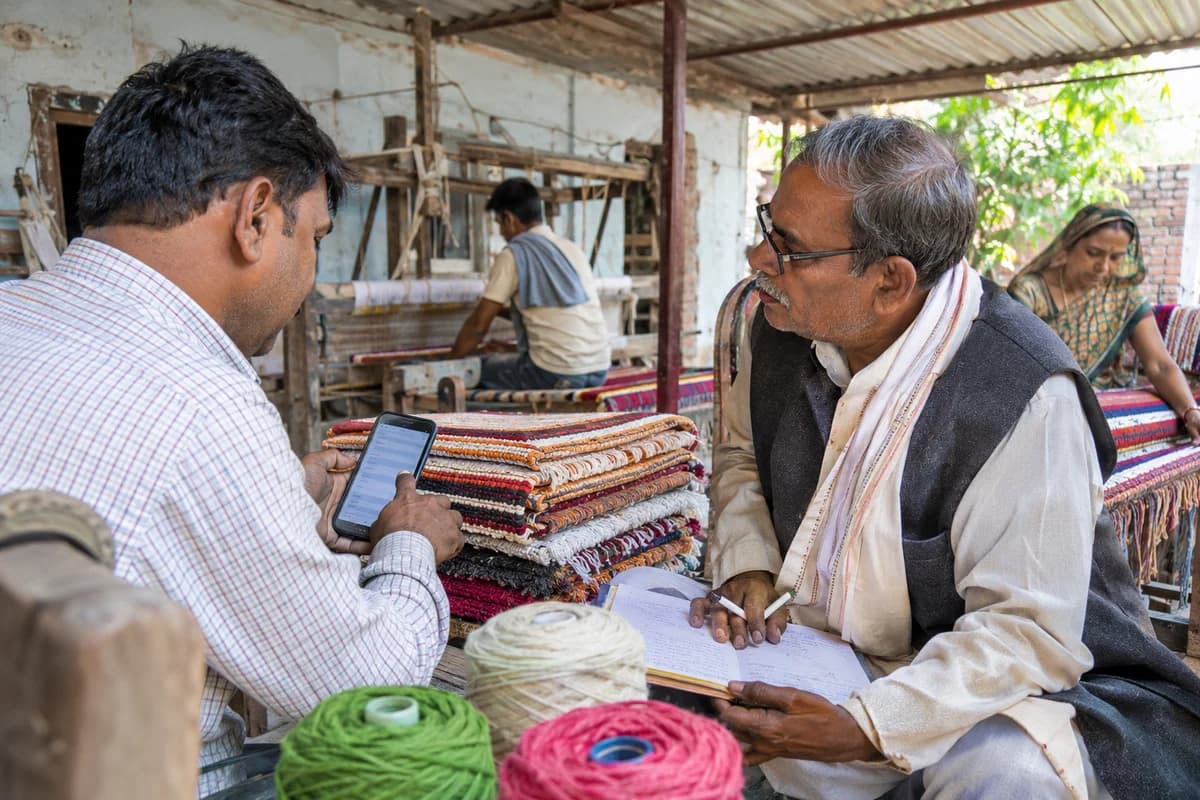
Dari weavers, mostly working at home or in small sheds, make cotton floor rugs for traders. Orders arrive for sizes and colours, and payments are by the piece. Naimisharanya, a short drive away, has temples and ashrams that receive pilgrims in busy weeks, and around them farmers grow wheat, paddy and sugarcane.
The areas, estates and markets that matter in Sitapur.
How Sitapur businesses pick and use software.
Lodge owners near the hospital want to know which rooms free up each morning. They want a clean bill on departure with every extra listed, so that no family argues at the desk. Quick checkout.
Dari traders want to know how many rugs are with which weaver. They also want to know when each is due.
Where Sitapur businesses lose time and money.
Families look for rooms on foot
A relative of a patient walks from lodge to lodge with luggage. Owners know their own vacancy but not their neighbour’s, and a shared list does not exist. Families keep walking.
Yarn issued to dari weavers goes unrecorded
A trader hands yarn to weavers for rugs of a given size. When the piece returns light, there is no record to check it against. Disputes end in a shrug and a small loss.
Pilgrim donations and room fees mix in one receipt book
An ashram collects offerings, room rent and meal charges, and at the end of a busy week, the books cannot easily say which money belongs to which head. Trustees ask. Clerks scramble.
What we would build for Sitapur businesses.
Usually in this order, starting with whatever the audit ranks first.
Web and Mobile Application Development
Web and mobile apps for customers, field staff and dealers, built to work on ordinary phones.
Learn moreBusiness Process Automation
Approvals, reminders and reports triggered by agreed rules, with exceptions assigned to a responsible person.
Learn moreERP, CRM and Business Software Implementation
One record of stock, orders, customers and accounts, set up so your team opens it every day.
Learn moreE-Commerce and Digital Commerce
An online store or B2B order portal wired to your stock, billing and dispatch.
Learn moreReady products that fit Sitapur businesses.
Each one is adapted to how your business works before it goes live, and anything your trade needs that it lacks is added then. You are not paying to build the basics again.
Homestays and Guesthouse Management Software
Room and bed calendar, enquiries, guest register, deposits, meals, extras, housekeeping and bills for homestays and guesthouses.
Learn moreTemple Management Software
Pooja and seva bookings, donations with numbered PDF receipts, devotees, events, priests and a temple website with your own domain.
Learn moreHow the work runs from Bengaluru for Sitapur.
- 1
The audit, by call
A screen-share and a look at the sheets, accounting reports and WhatsApp groups your team uses. No travel needed.
- 2
A written proposal
Scope, what we build first and the cost, agreed in writing before anything starts.
- 3
Build in short rounds
Working screens shared every few weeks. Your team tests them from your own office.
- 4
Go-live, in person when it helps
For data migration and training we can come to Sitapur. Travel is agreed in advance.
- 5
Support online
Fixes, changes and hosting handled remotely by the same team that built it.
The work we have published.
We don’t claim Sitapur clients we don’t have. These are systems our team built; the way we work is the same wherever you are.
PetSeva: matching owners to the right vet, at any hour
A two-sided veterinary platform where vets are searchable by specialisation and bookable outside clinic hours. It now carries more than 2,000 veterinary doctors.
Read the case study Paying guest accommodationSAM Atithi Pavathi: bed-level occupancy as the source of truth
PG management software where allocation, rates and invoices are derived from bed-level occupancy and not maintained in parallel spreadsheets.
Read the case study School transport servicesSAM Tours: school transport on a single ledger
Registration, fee collection, routing and finance write to the same records, closing the gap between journeys run and fees collected.
Read the case study Microfinance and Self Help GroupsVikasa RDO: making SHG loan recovery auditable
Loan proposals, recoveries and commissions sit on one record, with a person attached to every state change, so a business handling a bank’s money can show where each rupee went.
Read the case studyMake the scope specific to your business.
Work through a real example from your operation and agree the handoffs, controls and support the project needs.
Pilgrim donations and room fees mix in one receipt book
Does each receipt retain its agreed purpose?
For “Pilgrim donations and room fees mix in one receipt book”, compare an unrestricted receipt with one assigned to a named purpose. Ask the trustees to confirm the reporting category before combining the totals.
Background reading: ERPNext: nonprofit operations
Questions Sitapur owners ask before they call.
Can a lodge near the hospital show live room availability?
Yes. The room chart updates with every booking, and a simple page can show what is free tonight. Bills print at departure with all charges in one place. Staff learn it fast.
Can a dari trader record yarn given and rugs returned for each weaver?
Yes. Each weaver has an account with yarn issued, rugs due and wage owed. Weight on return is noted. Short pieces are flagged at once. The trader pays only for what came back.
What happens after I share my requirements?
We review your brief and clarify the work with you. We then look at the software, spreadsheets and WhatsApp groups your business runs on today and write down what works, what slows your team down and what is missing. A demo login, a screen-share or a few screenshots are enough. You get a short written summary ordered by priority, with no obligation to hire us afterwards.
How much will the software cost?
We don’t publish a price, because it depends on what the system has to do. That first review settles the scope, and the cost goes into a written proposal before any work starts.
Industries we build for in Sitapur.
Elsewhere in Uttar Pradesh.
Tell us what your Sitapur business runs on today.
Send a short note on the spreadsheets, software or WhatsApp groups your team depends on. We reply the same working day.
What happens after you share your requirements
- We review your brief and the systems you already use.
- We clarify the workflow, missing information and the work to consider first.
- The proposed scope sets out the deliverables, responsibilities and dependencies.
- Review the scope and commercial terms before deciding whether to proceed.
Start with your requirements
Describe your current process, the people involved and the change you need. Start with the details you know; we can clarify the rest together.
Share your requirements