Ayodhya · LocationsPilgrim rooms, prasad counters and temple trust records for Ayodhya’s guest houses, sweet shops and sevadars.
Ayodhya’s trade follows the pilgrim. Dharamshalas, guest houses and hotels fill by the day. Sweet shops sell prasad from morning till night, and flower and puja sellers work along the lanes near the temples. Room bookings, prasad counters and donation records run on software built in Nagarbhavi, Bengaluru, and used on a phone.
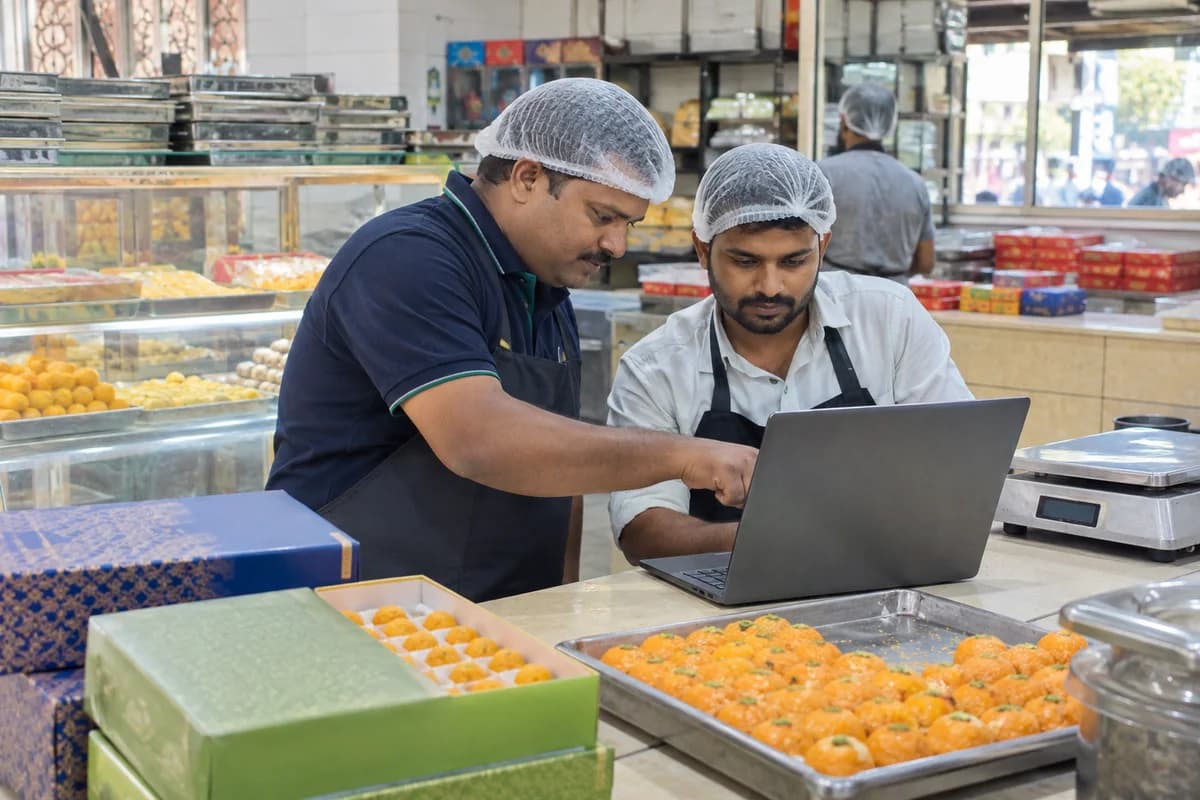
Visitors arrive by train, bus and the new airport, and some come for a single day’s darshan. Crowds peak around festivals and fall in between. A guest house that books rooms on a paper chart ends up guessing, because nobody can say on Tuesday what the weekend will bring. Faizabad, the older commercial town next door, supplies most of the shops and wholesale goods.
Temples and trusts here receive offerings in cash, online and in kind, and each needs a record that can be shown to a trustee or an auditor. Our team sits in Bengaluru and joins your calls on video or WhatsApp. Ayodhya has no GullySystem office, and customer names stay private.
The areas, estates and markets that matter in Ayodhya.
How Ayodhya businesses pick and use software.
Guest house owners are families who started with a few rooms and added floors as the town grew. They want one screen showing tonight’s availability and what each guest owes.
Trustees and temple managers answer to devotees and to auditors. They want receipts that print the same way every time. No surprises.
Where Ayodhya businesses lose time and money.
Festival week bookings clash
Rooms are promised on the phone, on a travel site and at the counter, and by evening two families hold the same room. A shared chart, updated on every booking, ends that.
Prasad sold by weight is hard to reconcile
A shop makes peda in the morning and sells by the kilo until closing, but what was made, sold and spoiled is rarely written down. Margin on festival days is a guess.
Offerings arrive in many forms
Cash at the counter, UPI, cheques and goods all land in one trust. A single receipt book cannot show which seva each rupee belongs to, and that gap shows up when the accountant sits down at year end.
What we would build for Ayodhya businesses.
Usually in this order, starting with whatever the audit ranks first.
Web and Mobile Application Development
Web and mobile apps for customers, field staff and dealers, built to work on ordinary phones.
Learn moreERP, CRM and Business Software Implementation
One record of stock, orders, customers and accounts, set up so your team opens it every day.
Learn moreBusiness Process Automation
Approvals, reminders and reports triggered by agreed rules, with exceptions assigned to a responsible person.
Learn moreAPI and System Integration
Connections between existing tools, with record ownership, duplicate handling and reconciliation agreed for each flow.
Learn moreReady products that fit Ayodhya businesses.
Each one is adapted to how your business works before it goes live, and anything your trade needs that it lacks is added then. You are not paying to build the basics again.
Temple Management Software
Pooja and seva bookings, donations with numbered PDF receipts, devotees, events, priests and a temple website with your own domain.
Learn moreHomestays and Guesthouse Management Software
Room and bed calendar, enquiries, guest register, deposits, meals, extras, housekeeping and bills for homestays and guesthouses.
Learn moreSweet Shop Management Software
Weighing and billing, festival advance orders, gift boxes, kitchen production plans, shelf life and branch stock for sweet and confectionery shops.
Learn moreHow the work runs from Bengaluru for Ayodhya.
- 1
The audit, by call
A screen-share and a look at the sheets, accounting reports and WhatsApp groups your team uses. No travel needed.
- 2
A written proposal
Scope, what we build first and the cost, agreed in writing before anything starts.
- 3
Build in short rounds
Working screens shared every few weeks. Your team tests them from your own office.
- 4
Go-live, in person when it helps
For data migration and training we can come to Ayodhya. Travel is agreed in advance.
- 5
Support online
Fixes, changes and hosting handled remotely by the same team that built it.
The work we have published.
We don’t claim Ayodhya clients we don’t have. These are systems our team built; the way we work is the same wherever you are.
PetSeva: matching owners to the right vet, at any hour
A two-sided veterinary platform where vets are searchable by specialisation and bookable outside clinic hours. It now carries more than 2,000 veterinary doctors.
Read the case study Paying guest accommodationSAM Atithi Pavathi: bed-level occupancy as the source of truth
PG management software where allocation, rates and invoices are derived from bed-level occupancy and not maintained in parallel spreadsheets.
Read the case study School transport servicesSAM Tours: school transport on a single ledger
Registration, fee collection, routing and finance write to the same records, closing the gap between journeys run and fees collected.
Read the case study Microfinance and Self Help GroupsVikasa RDO: making SHG loan recovery auditable
Loan proposals, recoveries and commissions sit on one record, with a person attached to every state change, so a business handling a bank’s money can show where each rupee went.
Read the case studyMake the scope specific to your business.
Work through a real example from your operation and agree the handoffs, controls and support the project needs.
Festival week bookings clash
What becomes available when a booking is moved or cancelled?
Use “Festival week bookings clash” to move a booking, then cancel a second example. Check the released slot, the person or resource still assigned, and any amount left to settle before accepting the revised schedule.
Background reading: ERPNext: appointment records
Prasad sold by weight is hard to reconcile
Do purchasing, operating and billing quantities use the same unit?
Check the measurement unit and rounding used in “Prasad sold by weight is hard to reconcile”. Compare the result with a known sample before accepting a converted quantity or calculated charge.
Background reading: ERPNext: units of measure
Questions Ayodhya owners ask before they call.
Can a temple trust issue receipts for donations and sevas from one system?
Yes. Each donation or seva is recorded with its head and mode of payment, and the receipt prints with a running number. Trustees see daily and monthly totals. The accountant exports the figures to Tally.
Can a guest house in Ayodhya connect its online bookings to one room chart?
Yes, if the booking sites you use work with a channel manager. We would check which ones you rely on first. The chart then updates for walk ins, phone calls and online bookings together.
What happens after I share my requirements?
We review your brief and clarify the work with you. We then look at the software, spreadsheets and WhatsApp groups your business runs on today and write down what works, what slows your team down and what is missing. A demo login, a screen-share or a few screenshots are enough. You get a short written summary ordered by priority, with no obligation to hire us afterwards.
How much will the software cost?
We don’t publish a price, because it depends on what the system has to do. That first review settles the scope, and the cost goes into a written proposal before any work starts.
Industries we build for in Ayodhya.
Elsewhere in Uttar Pradesh.
Tell us what your Ayodhya business runs on today.
Send a short note on the spreadsheets, software or WhatsApp groups your team depends on. We reply the same working day.
What happens after you share your requirements
- We review your brief and the systems you already use.
- We clarify the workflow, missing information and the work to consider first.
- The proposed scope sets out the deliverables, responsibilities and dependencies.
- Review the scope and commercial terms before deciding whether to proceed.
Start with your requirements
Describe your current process, the people involved and the change you need. Start with the details you know; we can clarify the rest together.
Share your requirements