One connected system for variant stock, season buying, shop sales and dealer orders.
Manage outdoor gear from the first purchase order to the final sale in one system. Each product carries its sizes, colours, brand, barcode and serial numbers, from Gore-Tex shells and fleece to rucksacks, crampons and canister stoves. Shop counters, the web store and dealers draw on one stock count. Buyers plan each season from past sales.
- Items, sizes, colours and brands entered the way you stock them
- Supplier lists, open orders and dealer balances migrated
- Changes to price lists and item fields made by GullySystem staff when asked
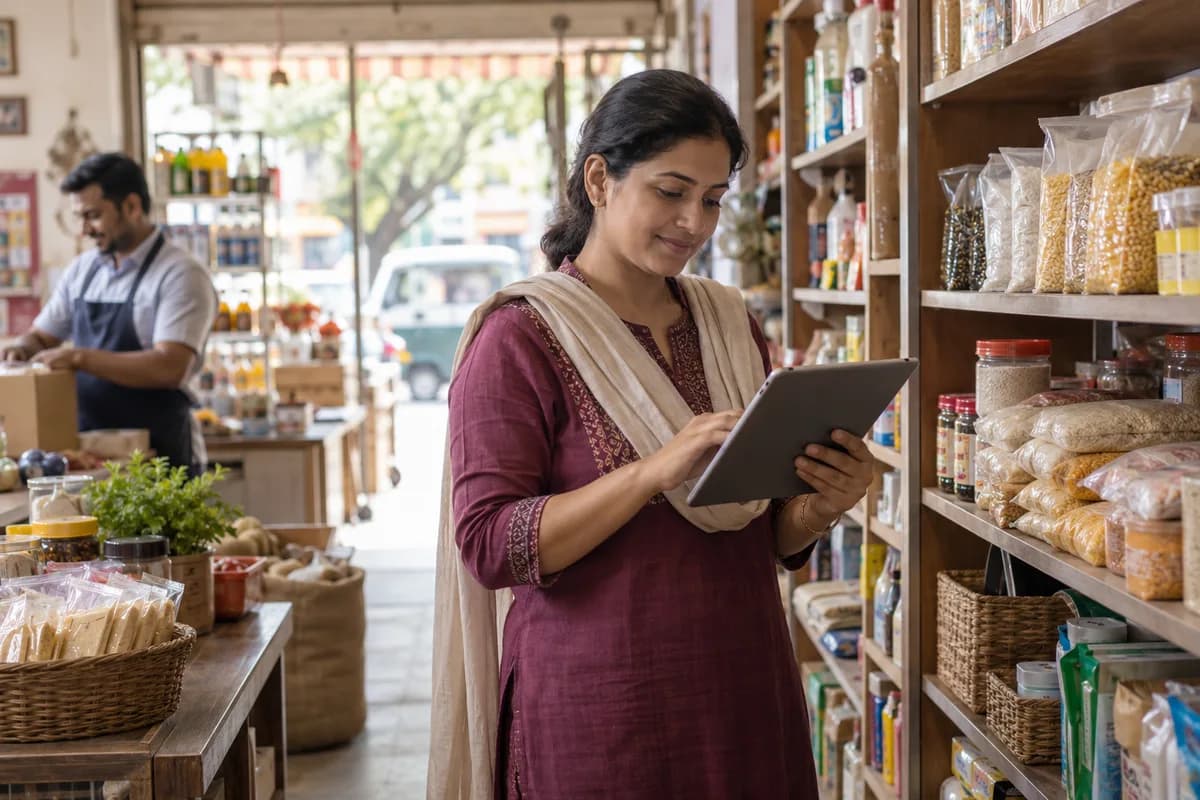
Outdoor Product Business Management Software, configured by GullySystem, runs stock, sales and buying for sellers of tents, rucksacks, boots, waterproofs and climbing or fishing tackle. Each item carries its sizes, colours and serial numbers. Shop, web and dealer orders share one count. Season purchases and warranty claims follow from the same record.
What goes wrong before the software.
How the work flows through it, step by step.
- 1
Season plan
Buyers review past sales by variant and plan orders by brand, with each supplier’s minimums and delivery windows for pre-season stock.
- 2
Purchase and receipt
Purchase orders go to suppliers. Cartons are checked against the invoice on arrival and each variant is added to stock.
- 3
Labels and shelves
Barcodes and labels are printed for each variant. Stock is placed on the shop wall, in the stockroom or on the web store’s shelf.
- 4
Sale
The counter, the web store and dealers sell from one count. Serial numbers are recorded for tents, stoves, headtorches and other warranty items.
- 5
Exchange and claim
Exchanges and returns are taken against the original sale. Faulty items, such as a tent with a failed zip or a lantern that will not light, go back to the brand with a claim.
- 6
Season end
Slow variants are marked down, clearance offers are run by brand, and the results feed next season’s plan.
What is inside.
Every module can be switched on, left out or changed to match how your team already works.
The business modules it is built from.
Each one is also available on its own, or inside a system built for you.
- Product Management
Each product holds its brand, sizes, colours and price, and every variant gets its own code so stock is counted at the exact size.
- Barcodes and Labels
Barcodes and shelf labels are printed per variant and scanned at receipt and at the counter, then reprinted whenever a price changes.
- Multi-Outlet Stock
The shop, stockroom and web shelf keep separate counts that each location can see, so a boot size sold in one place is visible everywhere.
- Point of Sale Billing
Counter staff scan the label, take the payment and print the bill, and an exchange is taken against the original sale.
- Purchase Order Management
Purchase orders go to each brand with quantities by size and colour, and what arrives is compared with what was ordered.
- Batch and Serial Tracking
Serial numbers on tents and canister stoves are recorded at sale, so a claim to the brand traces back to one invoice and one buyer.
- Shipping Integration for Order Fulfillment
Web orders are picked and packed from variant stock and handed to the courier, with the tracking details stored on the order.
- Credit Limits and Control
Each dealer carries a credit limit and payment term, and an order that would take the balance past the limit is flagged before packing.
How we would put it in.
Setup, data migration, integrations and anything built on top.
Tools it connects to.
Each connection is scoped for your own account, one data flow at a time.
One system, each person sees their part.
For owners
Read sales by brand, season and channel, the value of stock, dealer balances and what is on markdown.
For buyers
Plan orders by variant, raise purchase orders and track delivery against each supplier’s terms.
For counter staff
Bill by scan, take exchanges and check the stock of a boot or jacket size across the shop and stockroom.
For the web team
Pack online orders from variant stock and hand parcels to the carrier.
For dealer accounts
Take dealer orders, check credit and chase balances.
The numbers the owner asks for.
- Sales by brand, category and season
- Stock by variant and location
- Slow and fast sizes and colours
- Purchase orders open and received
- Warranty claims by brand and serial
- Dealer balances and credit use
- Markdown and clearance results by variant
Who this is built for.
- Outdoor shops that sell tents, rucksacks, boots and waterproofs
- Retailers of climbing, camping, hiking, kayak and fishing equipment
- Businesses that sell in a shop, online and to dealers
- Importers that distribute outdoor brands to other shops
- Specialist stores where size and colour variants drive stock
When it is not the right choice.
- A market stall with a few items can run on a notebook and a card reader.
- Businesses that mainly hire out gear by the day will find Equipment Rental Management Software closer.
Adapted to your business before it goes live.
You are not handed a login and left to it. The product is set up around your records, your people and the tools you already use.
Works alongside
- Web store
- Courier services
- Payment gateway
- Barcode scanners
- Accounting export
- Email and SMS
Questions owners ask before a demo.
Can sizes and colours be tracked as separate variants?
Yes. Each product holds its variants, and each variant has its own barcode, price and stock count. The counter scans a label and sees the exact boot or jacket size.
Does the web store use the same stock as the shop?
Yes. Both draw from the same count by variant. Stock can be reserved for a channel, and the link to your web store is scoped during implementation.
How does season buying work?
Buyers read past sales by variant and brand, then raise purchase orders against each supplier’s minimums and delivery windows for the pre-season. Orders are compared with what arrives.
Can serial numbers be recorded for warranty items?
Yes. Tents, stoves, headtorches and similar items are scanned with their serial at sale. A claim to the brand then carries the serial, the invoice and the fault.
Can dealers have their own prices and credit limits?
Yes. A dealer sees its own price list and has a credit limit. An order over the limit is flagged before it is packed.
How are exchanges handled at the counter?
An exchange is taken against the original sale. The returned variant goes back into stock, and the new one is issued with any difference settled.
Can end of season markdowns be planned?
Yes. Slow variants are marked down by brand or category, clearance bundles are priced, and the report shows what each markdown sold.
Can existing stock and supplier lists be loaded?
Yes. Your sheets of items, stock counts, suppliers and dealer balances are imported, and the stockroom manager counts a few shelves of boots and tents against the screen before trading on it.
Do we keep our data?
Yes. The records belong to your business, and the quotation names how items, sales and suppliers can be exported before any work begins.
How is it priced?
Users, shops and sales channels shape the price. We open with a demonstration using tents and boots, then send a quotation in writing.
Wondering what it costs? Six questions give you a written scope and the buckets any quote should separate.
Businesses that use this.
See Outdoor Goods Store Management Software with your own data.
Tell us how you run things today. We’ll show you the parts that matter to you and say plainly what would need changing.
- No obligation
- A reply within one business day
- Your details stay private
Start with your requirements
Seven short steps that tell us what you need. An engineer reads them before getting in touch.
Share your requirements