One system for apparel stock by size and colour, billing, alterations and exchanges.
Run a clothing store from one system. Stock is held by style, size and colour, with every piece labelled and read at the counter by barcode. Alteration slips go to the tailor and come back against the bill. Exchanges and credit notes are recorded against the original invoice, season buying is planned from what sold last year, and bills carry GST.
- Styles, sizes, colours and MRP tags entered the way your racks already read
- Customer list, mobile numbers and unused credit notes migrated
- Label formats and price changes handled by our staff when you ask
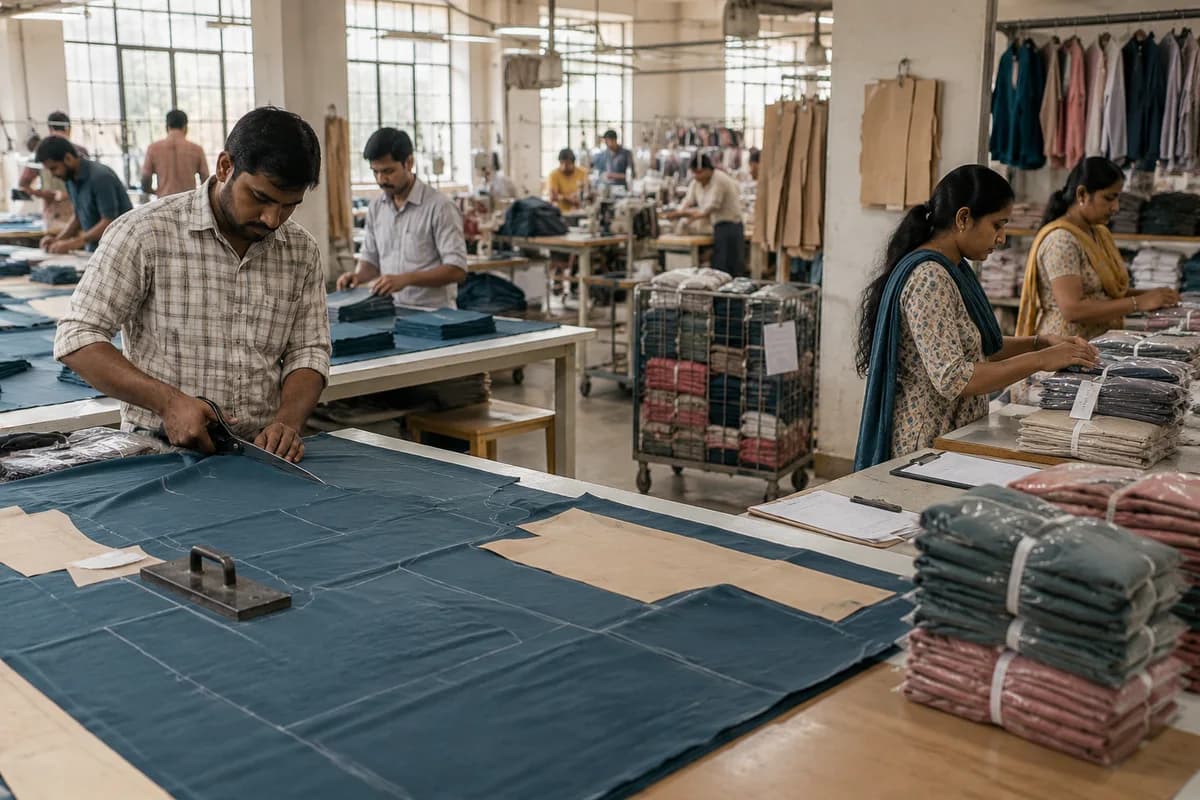
Clothing Store Management Software runs an apparel shop from one screen, set up for you by GullySystem. Owners, counter staff and the in-house tailor work on it together. It holds stock by style, size and colour, barcode tags, alteration slips, exchanges and credit notes. The size grid is yours to set.
What goes wrong before the software.
How the work flows through it, step by step.
- 1
Walk-in
A customer asks for a style, a size or a price range. Staff read the rack and the size grid for the colours actually on the floor.
- 2
Trial room
Pieces go into the trial room and are counted back out. What fitted, what did not and what was left behind stay noted against the counter.
- 3
Alteration
Length, sleeve or waist work opens a slip for the tailor, with measurements and a promised date. The piece is held against the bill.
- 4
Billing
The tag is scanned, any discount applied and a GST bill printed. Payment comes by card, UPI or cash, and a credit note can cover part of it.
- 5
Exchange
A piece returned inside your window is read from the bill number or the mobile number. Another size goes out, or a credit note is issued for later.
- 6
Follow-up
Altered pieces ready for collection, festive offers and new arrivals reach the mobile number on the bill, by WhatsApp or by SMS.
What is inside.
Every module can be switched on, left out or changed to match how your team already works.
Stock by style, size and colour
Hold every style with its sizes, colours, fabric and rack position, in a size grid the counter can read at a glance.
Learn moreBarcode tags and price labels
Print a tag for each piece carrying style code, size, colour and MRP, and reprint one that is torn or missing.
Learn moreCounter billing and day close
Scan pieces, apply a discount, print a GST bill, take cash, UPI or card, and close each counter at shutter time.
Learn morePurchase orders and supplier records
Raise orders on wholesalers and brand distributors, receive lots against them, check the sizes that arrived and keep each supplier ledger.
Learn moreAlteration and tailoring slips
Open a slip for length, sleeve, waist or blouse fitting with measurements, the tailor named on it and a date promised.
Learn moreExchanges, returns and credit notes
Read the original bill, take a piece back into stock, send another size out and issue or settle a credit note.
Learn moreSeason buying and markdowns
See what each style, size and colour did last season, plan the next buy, and mark down pieces that have stopped moving.
Learn moreCustomer records and offers
Keep mobile numbers, sizes bought, family occasions and past bills, and send new-arrival or festive messages from that same list.
Learn moreStock counts and outlet transfers
Count the floor and the godown by style and size, record the difference, and move pieces between outlets on a transfer note.
Learn moreCounter staff and commission
Record which salesperson billed each piece, keep shifts and attendance, and work out commission on the basis your shop follows.
Learn moreThe business modules it is built from.
Each one is also available on its own, or inside a system built for you.
- Barcodes and Labels
A tag prints for each piece carrying style code, size, colour and MRP, and a torn or missing tag is reprinted.
- Point of Sale Billing
Counter staff scan pieces, apply a discount, print a GST bill, take cash, UPI or card, and close each counter at shutter time.
- Purchase Order Management
Orders go to wholesalers and brand distributors, lots are received against them with sizes checked, and each supplier ledger is kept.
- Sales Returns and Credit Notes
The original bill is read, a returned piece goes back into stock, another size goes out, and the credit note is issued or settled.
- Loyalty and Offers
Mobile numbers, sizes bought, family occasions and past bills sit in one list that new-arrival and festive messages are sent from.
- Multi-Outlet Stock
The floor and the godown are counted by style and size, differences recorded, and pieces move between outlets on a transfer note.
- Commission and Incentives
Each piece records the salesperson who billed it, and commission is worked out on whichever basis the shop follows.
- Product Management
Every style is held with sizes, colours, fabric and rack position in a size grid the counter can read at a glance.
How we would put it in.
Setup, data migration, integrations and anything built on top.
Topics beyond the modules.
Each page covers one part of how the system is used, connected or controlled.
Clothing Store Software Views for Owners, Counter and Tailors
Owners, counter staff, the buyer and the tailor each open their own part of the record.
Learn moreReports for Clothing Store Owners and Managers
Bills, size-wise stock, alteration slips and exchanges roll up into the figures an owner reads.
Learn moreClothing Store Software Links to WhatsApp, Tally and UPI
Messages, payments and accounting tools link to the records a clothing counter already keeps.
Learn moreOne system, each person sees their part.
For owners
Read sales by style, size and colour, stock value on the floor, exchanges taken, pieces not moving and what each counter billed.
For the billing counter
Scan tags, apply discounts, print bills, take payment, open alteration slips and settle an exchange against the original bill.
For floor and trial-room staff
Check which sizes and colours hang on the rack, count trial-room pieces back, and raise an alteration slip for a customer.
For the buyer and store keeper
Receive lots from wholesalers, check sizes against the order, print tags, run stock counts and watch the size gaps.
For tailors
See the alteration slips assigned to you, the measurements written on each one, and the dates promised to customers.
The numbers the owner asks for.
- Sales by style, size and colour
- Size and colour gaps on the floor
- Pieces that have not moved this season
- Exchanges, returns and credit notes outstanding
- Alteration slips pending with each tailor
- Sales by counter staff and shift
- Purchases and ledger by wholesaler
Who this is built for.
- Single-counter shops selling readymade garments off the rack
- Family stores holding men’s, women’s and kids wear together
- Ethnic wear and saree shops with a tailor in house
- Boutiques selling their own styles beside bought stock
- Clothing stores with a godown behind the shop floor
- Clothing retailers running more than one outlet
When it is not the right choice.
- A tailoring unit that stitches to measure and keeps no rack stock will not need a size grid.
- A garment wholesaler selling in lots to other shops will find Wholesale and B2B Ordering Software closer.
Adapted to your business before it goes live.
You are not handed a login and left to it. The product is set up around your records, your people and the tools you already use.
Works alongside
- SMS
- UPI and card payments
- Tally export
- Barcode scanner and label printer
- Thermal bill printer
Questions owners ask before a demo.
Is it meant only for a clothing store?
Yes. Stock, billing, alterations and exchanges are built around garments held by style, size and colour. A jewellery or grocery counter is a separate product.
Can stock be kept by size and colour?
Yes. Every style carries its own size and colour grid, and a size that empties on the floor shows on the owner’s screen.
Can we print our own barcode tags?
Yes. A tag carries the style code, size, colour and MRP, and a torn tag is reprinted at the counter.
How are alterations handled?
A slip opens against the bill with measurements, the tailor and a promised date. What you charge for the work is decided with you.
Can an exchange be tied to the original bill?
Yes. The bill is found by number or mobile number, the piece returns to stock, and a credit note holds any balance.
Does it help with season buying?
It shows what each style, size and colour did last season. What to buy, and from which wholesaler, stays the owner’s call.
Can two outlets share one customer list?
Yes. Customers, credit notes and style codes are shared, and each outlet can read what the other holds.
Can we see which salesperson sold a piece?
Yes. The bill records the counter staff, and commission is worked out on the basis your shop already follows.
How do the figures get into Tally?
Not built in. Sales and purchase figures are read inside GullySystem. Once your accountant settles how the ledgers should sit, we price a Tally export file.
Do we need this for a very small shop?
Perhaps not. Hold a few styles and bill by hand, and a notebook may still do. A free technology audit will say so plainly.
Wondering what it costs? Six questions give you a written scope and the buckets any quote should separate.
Businesses that use this.
Related products.
Selling these goods online as well?
These e-commerce pages describe the online side: the storefront, dealer ordering and the connections to a system like this one.
- Clothing & Apparel: the business
- Clothing & Apparel: the software
- Fashion Accessories: the business
- Fashion Accessories: the software
- Baby Products: the business
- Baby Products: the software
- Maternity Products: the business
- Maternity Products: the software
- Motorcycle Gear: the business
- Motorcycle Gear: the software
See Clothing Store Management Software with your own data.
Tell us how you run things today. We’ll show you the parts that matter to you and say plainly what would need changing.
- No obligation
- A reply within one business day
- Your details stay private