Farm, textile and call-centre software for Guatemalan firms, built and supported remotely from Bengaluru.
Guatemala grows coffee, sugar cane, bananas and cardamom, and its highland towns draw visitors to volcanoes, lakes and colonial streets. Sewing plants and call centres employ people around the capital. Invoices are in Spanish and carry the IVA. Each is certified electronically and reported to the tax office, the SAT. GullySystem is a Bengaluru firm and works remotely only, with no staff or customers in the country.
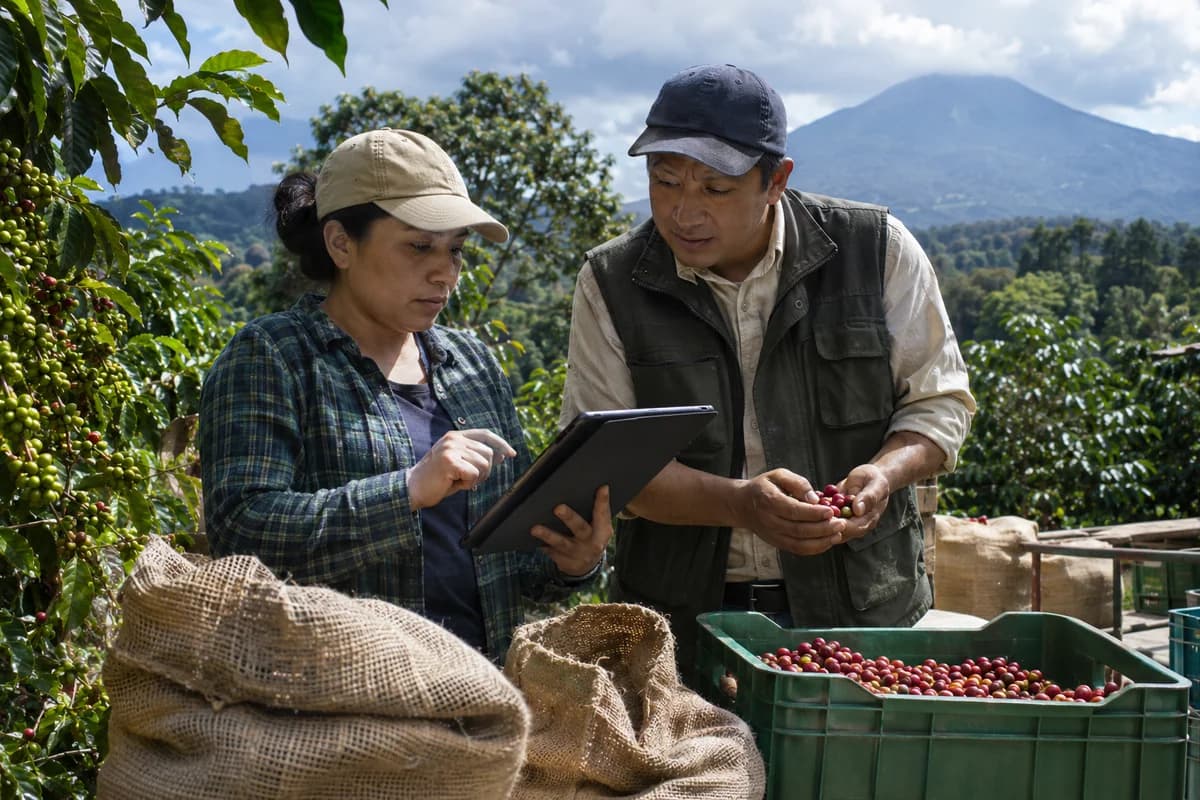
Working with a team in India from Guatemala.
A coffee estate in the western highlands, a sewing plant on the edge of the capital and a guesthouse in Antigua rarely share a tool. The paperwork follows one pattern. It is rarely tidy. Harvest lots, cut orders, bookings and invoices sit in separate sheets, and the owner joins them at night. Mistakes show up late, when a buyer or a guest queries a total and nobody can trace it to the lot, the order or the booking.
Our base is Nagarbhavi, Bengaluru. Nobody of ours lives in Guatemala, and we hold no licence or customer there. All work is done from India. Nothing is on site. Your working morning meets our evening, so calls are placed in that overlap. A coffee farm in the highlands, a sewing plant near the capital and a guesthouse by a lake keep separate books, so routines are written singly. Harvest weeks differ from quiet ones.
What changes when your business is in Guatemala.
Hours, money, language and data are decided with you at the start, not discovered later.
What the software has to fit.
The filing cycles, payment habits and licences a small business there already works around.
Trades we write for in Guatemala.
Products that fit them.
Capabilities often asked for.
Cities we write software for in Guatemala.
What we would build for Guatemala businesses.
Usually in this order, starting with whatever the audit ranks first.
ERP, CRM and Business Software Implementation
One record of stock, orders, customers and accounts, set up so your team opens it every day.
Learn moreCustom Software and Product Engineering
Software built around how your business actually runs, when nothing off the shelf fits without workarounds.
Learn moreGlobal Compliance and Localisation
Software has to change for each country. Currency tables, VAT and sales tax codes, invoice layouts, translation files, storage regions and consent records are built as configuration that your team can edit without code changes. The legal question stays with your adviser.
Learn moreData Migration and Moving Off Spreadsheets
Data migration and spreadsheet replacement covers auditing existing files, cleaning and deduplicating records, loading them into a new system and reconciling the loaded result against known totals. Both systems then run side by side before cutover. Originals stay untouched.
Learn moreMake the scope specific to your business.
Work through a real example from your operation and agree the handoffs, controls and support the project needs.
IVA and electronic invoices
Can you explain the balance from its original documents?
Select a partly settled example in “IVA and electronic invoices”. Ask for the invoice, allocated receipts and remaining balance to be shown together before agreeing the opening figures.
Background reading: ERPNext: outstanding invoices
Ports and exports
Do purchasing, operating and billing quantities use the same unit?
Check the measurement unit and rounding used in “Ports and exports”. Compare the result with a known sample before accepting a converted quantity or calculated charge.
Background reading: ERPNext: units of measure
Questions from businesses in Guatemala.
Does GullySystem have staff in Guatemala?
No. Our people work in Bengaluru and join you on screen and by email. If your project needs someone on site, that comes up at the first call.
Can invoices follow the SAT’s FEL rules?
Invoice fields and layouts follow the format your accountant gives us. Whether you certify through the SAT’s own service or a private certifier is a choice to make with your contador before the build starts.
Can screens run in Spanish?
Yes. Screens, receipts and reports can be Spanish, English or both, and a fluent reader on your staff checks each template before it goes live. Names matter.
Can one system hold quetzales and dollars?
Yes. A quote or invoice can carry both amounts with the exchange rate used that day. Your accountant decides which figure goes into the books.
Who owns the software after delivery?
You do, together with your data. Exports are available on request in open formats, so another supplier can take over later.
Can a farm record pickers and weights by plot?
Each picker gets a number, each weighing is entered against a plot and a lot, and the day’s sheet totals itself, so piecework pay follows from those weights. The foreman checks them on paper first. Disputes get settled at the scale.
Can a sewing plant follow each cut order?
Every order carries styles, sizes, cut counts and ship date, and each line reports pieces sewn and packed, so a floor manager sees which order is falling behind. Late orders show first. Shipping can then be planned.
Tell us what you run.
Share your requirements and an engineer will read them before getting in touch, at an hour that suits your day.
What happens after you share your requirements
- We review your brief and the systems you already use.
- We clarify the workflow, missing information and the work to consider first.
- The proposed scope sets out the deliverables, responsibilities and dependencies.
- Review the scope and commercial terms before deciding whether to proceed.
Start with your requirements
Describe your current process, the people involved and the change you need. Start with the details you know; we can clarify the rest together.
Share your requirements