Portland · CountriesPortland brews, roasts and designs outdoor gear.
Portland, Oregon, is known for breweries, coffee roasters and bakeries. Outdoor clothing and shoe companies have offices here too. Small makers dominate, and they sell online as well as through their own shops. The Willamette Valley with its vineyards lies to the south. Oregon has no state sales tax.
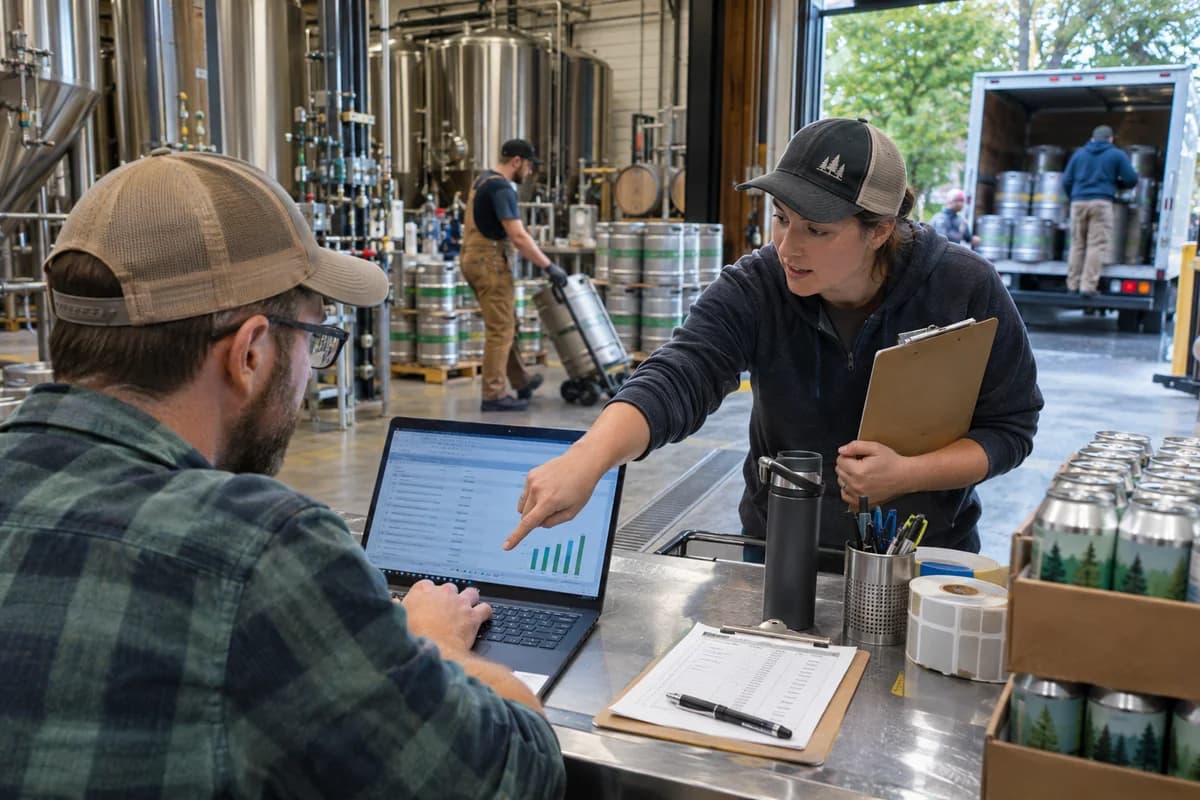
The Pearl District and the east side are dotted with taprooms. Brewers sell kegs to bars, cans to shops and pints at the counter, and each channel keeps its own records. Roasters and bakers run the same mix of wholesale and retail.
Footwear and apparel brands have designers, buyers and sourcing staff across the metro area. Production happens overseas, so the paperwork is about samples, purchase orders and shipments. Smaller labels hold stock for online stores that ship nationwide, and a single missed count can turn a good week into a pile of refunds. Rain keeps people indoors and orders online.
The districts, business parks and markets that matter in Portland.
How Portland businesses pick and use software.
Craft brewers want kegs, cans and taproom sales tracked together, so the brewer knows how much beer is in the cellar, how much is at customers and how much is owed.
Apparel labels need sample, order and stock records that tie to online sales, so the buyer, the warehouse and the web store all work from one count of every style and size.
Roasters and bakers want wholesale orders and route sheets handled in one tool, so the Friday cutoff holds and Monday’s delivery run starts from a correct list.
Where Portland businesses lose time and money.
Kegs that never come back
A keg goes out to a bar and is not seen again. A deposit and return log by account ends the guessing.
Online and shop stock disagree
A shirt sells twice because shelves and website differ, and one shared stock count stops it.
Wholesale orders by text
A cafe texts its order on Friday and the roaster misses it, so an order form with a cutoff catches it.
Seasonal lines planned in sheets
Buyers lose track of which sample became which order, and linked sample and order records make it clear.
What we would build for Portland businesses.
Usually in this order, starting with whatever the audit ranks first.
E-Commerce and Digital Commerce
An online store or B2B order portal wired to your stock, billing and dispatch.
Learn moreWeb and Mobile Application Development
Web and mobile apps for customers, field staff and dealers, built to work on ordinary phones.
Learn moreUI/UX Design and Prototyping
Prototypes tested with the people doing the work, including corrections, missing information and everyday devices.
Learn moreBusiness Process Automation
Approvals, reminders and reports triggered by agreed rules, with exceptions assigned to a responsible person.
Learn moreReady products that fit Portland businesses.
Each one is adapted to how your business works before it goes live, and anything your trade needs that it lacks is added then. You are not paying to build the basics again.
Apparel Manufacturer Management Software
Purchase orders by colour and size, fabric and trims, cutting lays, bundle tickets, sewing lines, outside processing, piece-rate pay and packing for garment makers.
Learn moreFootwear Store Management Software
Style, size and width stock, bench billing, fit returns, branch transfers, odd pairs and season orders for footwear stores.
Learn moreBrewery Management Software
Recipes, tank schedules, batch records, ingredient stock, packaging runs, keg tracking, taproom sales and trade orders for breweries.
Learn moreHow the work runs from Bengaluru for Portland.
- 1
The audit, by call
A screen-share and a look at the sheets, accounting reports and WhatsApp groups your team uses. No travel needed.
- 2
A written proposal
Scope, what we build first and the cost, agreed in writing before anything starts.
- 3
Build in short rounds
Working screens shared every few weeks. Your team tests them from your own office.
- 4
Go-live, in person when it helps
For data migration and training we can come to Portland. Travel is agreed in advance.
- 5
Support online
Fixes, changes and hosting handled remotely by the same team that built it.
The work we have published.
We don’t claim Portland clients we don’t have. These are systems our team built; the way we work is the same wherever you are.
PetSeva: matching owners to the right vet, at any hour
A two-sided veterinary platform where vets are searchable by specialisation and bookable outside clinic hours. It now carries more than 2,000 veterinary doctors.
Read the case study Paying guest accommodationSAM Atithi Pavathi: bed-level occupancy as the source of truth
PG management software where allocation, rates and invoices are derived from bed-level occupancy and not maintained in parallel spreadsheets.
Read the case study School transport servicesSAM Tours: school transport on a single ledger
Registration, fee collection, routing and finance write to the same records, closing the gap between journeys run and fees collected.
Read the case study Microfinance and Self Help GroupsVikasa RDO: making SHG loan recovery auditable
Loan proposals, recoveries and commissions sit on one record, with a person attached to every state change, so a business handling a bank’s money can show where each rupee went.
Read the case studyMake the scope specific to your business.
Work through a real example from your operation and agree the handoffs, controls and support the project needs.
Online and shop stock disagree
What happens to movements entered while a count is being checked?
For “Online and shop stock disagree”, choose a count date and trace the movements around it. Agree who investigates a difference before an adjustment changes the available balance.
Background reading: ERPNext: stock reconciliation
Questions Portland owners ask before they call.
Can one stock count cover a taproom and wholesale?
Yes. Each sales channel draws from the same inventory, and kegs and cans are counted separately. Reports show where product went.
What time of day suits a call from Bengaluru?
Pacific mornings arrive as the Indian night. We meet in the Portland morning and keep the rest of the work asynchronous.
What happens after I share my requirements?
We review your brief and clarify the work with you. We then look at the software, spreadsheets and WhatsApp groups your business runs on today and write down what works, what slows your team down and what is missing. A demo login, a screen-share or a few screenshots are enough. You get a short written summary ordered by priority, with no obligation to hire us afterwards.
How much will the software cost?
We don’t publish a price, because it depends on what the system has to do. That first review settles the scope, and the cost goes into a written proposal before any work starts.
Industries we build for in Portland.
Tell us what your Portland business runs on today.
Send a short note on the spreadsheets, software or WhatsApp groups your team depends on. We reply the same working day.
What happens after you share your requirements
- We review your brief and the systems you already use.
- We clarify the workflow, missing information and the work to consider first.
- The proposed scope sets out the deliverables, responsibilities and dependencies.
- Review the scope and commercial terms before deciding whether to proceed.
Start with your requirements
Describe your current process, the people involved and the change you need. Start with the details you know; we can clarify the rest together.
Share your requirements