Run estimates, dispatch, job invoices and state sales tax for American service businesses in one system.
Small and mid-size American businesses take payment by card, ACH, cheque and Zelle. They charge sales tax that differs from state to state, and tradespeople among them need licences, permits and inspections. GullySystem, based in Bengaluru, supports them remotely. Software covers estimates, scheduling, invoicing and customer follow-up.
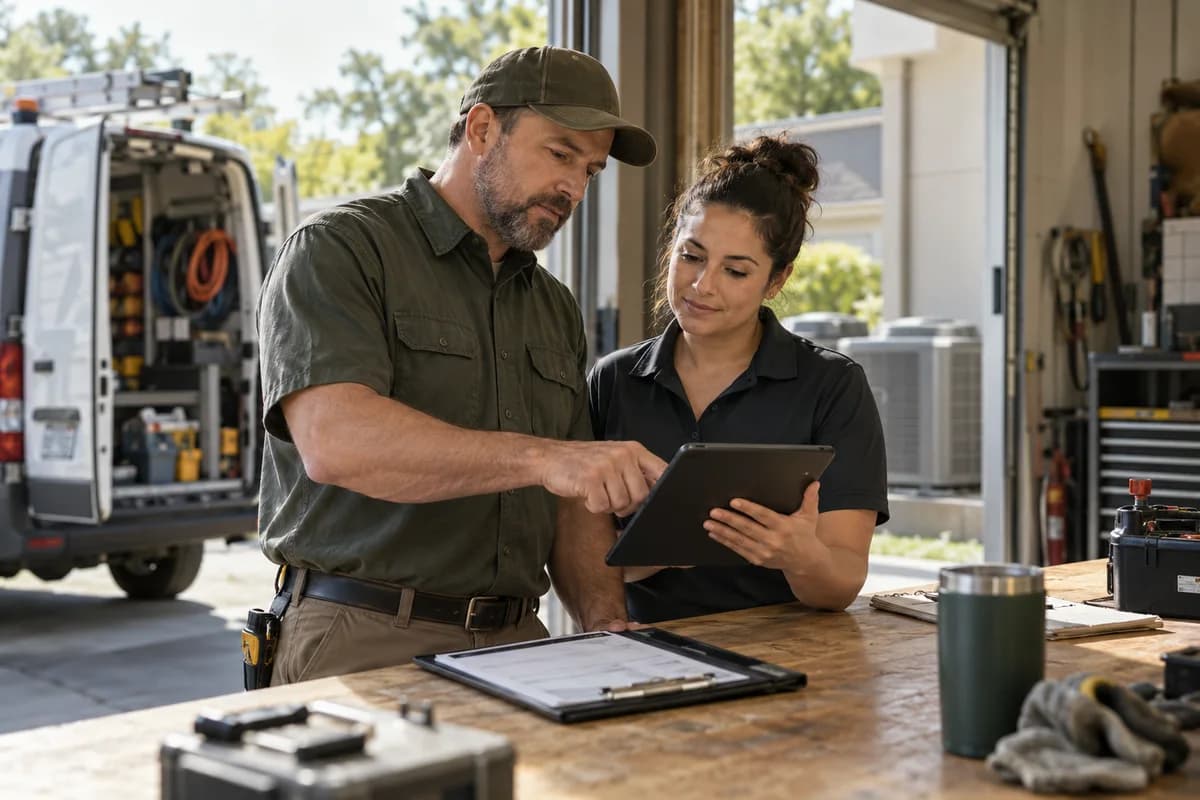
Working with a team in India from the United States.
An American contractor or clinic rarely works in one tax jurisdiction. Rates change at state, county and city level, and an item taxable in one place can be exempt a short drive away. Software has to hold that per business, per location and per type of work, because a setting copied from one state fails when a customer queries a total. One national setting will not do.
Our team works from Bengaluru and has no office in the country. Delivery runs over video calls and shared screens, with written notes after each session covering what was decided, who owns each open item. Most owners prefer that to a visiting consultant who needs a desk and a coffee, because the notes then reach the bookkeeper without a retype.
What changes when your business is in the United States.
Hours, money, language and data are decided with you at the start, not discovered later.
What the software has to fit.
The filing cycles, payment habits and licences a small business there already works around.
Trades we write for in the United States.
Products that fit them.
Capabilities often asked for.
Cities we write software for in the United States.
What we would build for United States businesses.
Usually in this order, starting with whatever the audit ranks first.
ERP, CRM and Business Software Implementation
One record of stock, orders, customers and accounts, set up so your team opens it every day.
Learn moreAPI and System Integration
Connections between existing tools, with record ownership, duplicate handling and reconciliation agreed for each flow.
Learn moreData Migration and Moving Off Spreadsheets
Data migration and spreadsheet replacement covers auditing existing files, cleaning and deduplicating records, loading them into a new system and reconciling the loaded result against known totals. Both systems then run side by side before cutover. Originals stay untouched.
Learn moreTraining and Adoption
Adoption work starts after launch. Each role is trained at its own screen on its own tasks, such as billing returns, goods receipts or closing job cards. Support stands on the floor at go-live. Afterwards the records are reviewed to find which steps staff skip, which fields stay blank and why the stores or field team still reach for a notebook. Share your requirements and we will plan it with you.
Learn moreMake the scope specific to your business.
Work through a real example from your operation and agree the handoffs, controls and support the project needs.
Licences, permits and inspections
Who decides whether a failed result blocks the next step?
For “Licences, permits and inspections”, bring an accepted result and a failed one. Agree who can authorise an exception and what evidence must accompany that decision.
Background reading: ERPNext: inspection criteria
Currency, tax and invoices
Can you explain the balance from its original documents?
Select a partly settled example in “Currency, tax and invoices”. Ask for the invoice, allocated receipts and remaining balance to be shown together before agreeing the opening figures.
Background reading: ERPNext: outstanding invoices
Questions from businesses in the United States.
Can you support us during American business hours?
Partly. Live calls happen in the Indian evening. That is the American morning or afternoon, depending on your coast. Urgent questions sent late in your day are picked up by the team in India as it starts work.
Where do our US records sit?
Wherever you choose, within the cloud regions available for your project. Regions differ by provider, so the exact options are confirmed before you sign. Customers choose a United States region or another from the provider’s list. Some ask for two. The choice and the list of people who may open each record are written down before go-live.
Will it handle sales tax and work with QuickBooks?
Tax rates and taxable items are set up per business, and your adviser goes through them with you, line by line, before the first live invoice leaves the building. Invoices and payments can be sent into QuickBooks if you already use it, with customer names, class codes and payment methods matched to your existing accounts first. The link is scoped for each project.
How do we sign and pay when you have no American office?
Contracts are signed electronically and scoped per project. Net days and deposit rules appear in the signed contract. Nothing needs a visit. If your own procurement team needs extra documents, send the list at the start.
How is the quote built, and is it in US dollars?
Invoices are in US dollars when that is agreed up front. The quote itself is written after scoping and after screens have been shown on your own jobs and invoices. Each part has a price beside it. Take a part out and the total drops.
What drives the timeline for an American customer?
The parts in the opening release, plus any QuickBooks or sales tax setup your CPA must review. Prompt answers from your office matter. Work continues in India while your team sleeps. The proposal records the dates.
If we cancel, what belongs to us?
All of it. The source code and every record are yours, and plain-file exports are standard. The United States region chosen before go-live keeps hosting them. Support continues from the team that built the system.
Tell us what you run.
Share your requirements and an engineer will read them before getting in touch, at an hour that suits your day.
What happens after you share your requirements
- We review your brief and the systems you already use.
- We clarify the workflow, missing information and the work to consider first.
- The proposed scope sets out the deliverables, responsibilities and dependencies.
- Review the scope and commercial terms before deciding whether to proceed.
Start with your requirements
Describe your current process, the people involved and the change you need. Start with the details you know; we can clarify the rest together.
Share your requirements