Pittsburgh · CountriesPittsburgh swapped smokestacks for robots and research.
Pittsburgh was built on steel, and fabricators and metal works still operate along its rivers. Carnegie Mellon and the University of Pittsburgh now feed a robotics and health sector. Hospitals form one of the biggest employers. Pennsylvania treats sales tax differently by product, which adds checks to invoices.
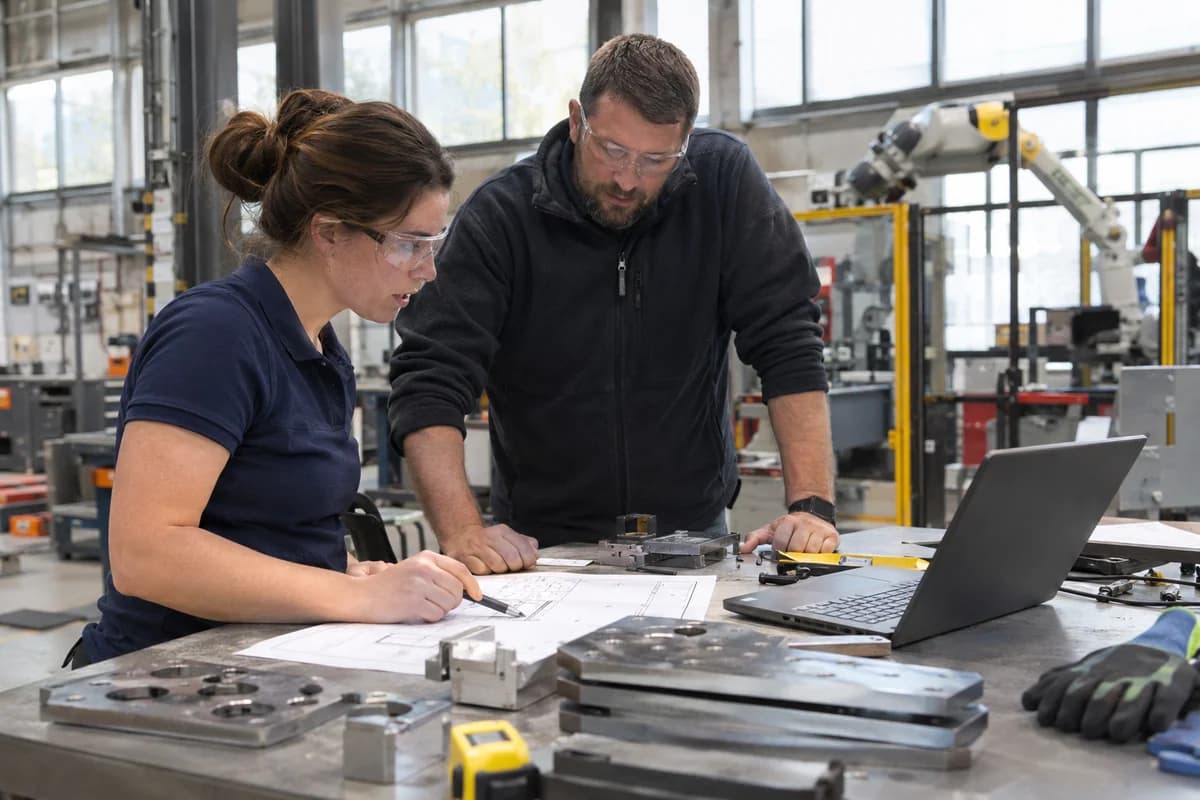
Mills once lined the Monongahela, and the steel trade has shrunk and changed since. Fabricators, foundries and machine shops remain, making parts for bridges, plants and power equipment, and their order books follow large projects that run for months.
Two universities sit in the Oakland district beside the city’s big medical centres. Robotics labs, autonomous vehicle teams and device start-ups grew from that mix. They are young companies with real engineering depth but thin back offices. Bills, grants and purchase orders pile up fast, and no one person owns them.
The districts, business parks and markets that matter in Pittsburgh.
How Pittsburgh businesses pick and use software.
Steel fabricators want job costing and drawing revisions tied to each project, so the shop floor always cuts from the current drawing and the office sees margin before the job ships.
Robotics integrators need project milestones, parts lists and field service records together, since a machine installed in a customer’s plant needs support long after the contract closes.
Hospital groups and clinics want staff scheduling and referral tracking that suits busy departments.
Where Pittsburgh businesses lose time and money.
Drawing revisions out of sync
The shop cuts to an old revision and a section is scrapped, and revision control linked to the job order prevents it.
Prototype parts not tracked
An engineering team builds three versions and loses which parts went where, so a build record per unit solves it.
Grant spending reported late
A funder asks for a statement and finance rebuilds it by hand, and project codes on every purchase save the effort.
Service visits logged after the fact
A field engineer returns from a site and writes notes from memory, so a mobile form at the machine is more accurate.
What we would build for Pittsburgh businesses.
Usually in this order, starting with whatever the audit ranks first.
IoT and Edge Computing
Machine and sensor readings connected to office records, with buffering limits and recovery after a lost connection defined.
Learn moreQA and Software Testing
Testing on the phones, browsers and patchy networks your customers and staff actually use.
Learn moreAI and Intelligent Automation
Reading invoices, sorting enquiries and drafting replies, with a person approving anything that matters.
Learn moreCybersecurity and Application Security
Access, data exposure and recovery reviewed, including what happens when someone leaves or loses a device.
Learn moreReady products that fit Pittsburgh businesses.
Each one is adapted to how your business works before it goes live, and anything your trade needs that it lacks is added then. You are not paying to build the basics again.
Robotic Systems Integrator Management Software
Robot cell quotes, scope changes, kit tracking, positioner and frame build, programme backups, FAT and SAT sheets and commissioning hours for robotic systems integrators.
Learn moreStructural Steel Fabricator Management Software
Piece mark lists, drawing revisions, heat traceability, fabrication stages, erection sequence loading, loose items and tonnage bills for steel fabricators.
Learn moreMachine Vision Company Management Software
Feasibility studies, camera and lens lists, image sets and model versions, line trials, retraining jobs and support contracts for machine vision companies.
Learn moreHow the work runs from Bengaluru for Pittsburgh.
- 1
The audit, by call
A screen-share and a look at the sheets, accounting reports and WhatsApp groups your team uses. No travel needed.
- 2
A written proposal
Scope, what we build first and the cost, agreed in writing before anything starts.
- 3
Build in short rounds
Working screens shared every few weeks. Your team tests them from your own office.
- 4
Go-live, in person when it helps
For data migration and training we can come to Pittsburgh. Travel is agreed in advance.
- 5
Support online
Fixes, changes and hosting handled remotely by the same team that built it.
The work we have published.
We don’t claim Pittsburgh clients we don’t have. These are systems our team built; the way we work is the same wherever you are.
PetSeva: matching owners to the right vet, at any hour
A two-sided veterinary platform where vets are searchable by specialisation and bookable outside clinic hours. It now carries more than 2,000 veterinary doctors.
Read the case study Paying guest accommodationSAM Atithi Pavathi: bed-level occupancy as the source of truth
PG management software where allocation, rates and invoices are derived from bed-level occupancy and not maintained in parallel spreadsheets.
Read the case study School transport servicesSAM Tours: school transport on a single ledger
Registration, fee collection, routing and finance write to the same records, closing the gap between journeys run and fees collected.
Read the case study Microfinance and Self Help GroupsVikasa RDO: making SHG loan recovery auditable
Loan proposals, recoveries and commissions sit on one record, with a person attached to every state change, so a business handling a bank’s money can show where each rupee went.
Read the case studyMake the scope specific to your business.
Work through a real example from your operation and agree the handoffs, controls and support the project needs.
Drawing revisions out of sync
Which version applies to work that has already started?
Use a revised example from “Drawing revisions out of sync” during a scoped walkthrough. Identify work still using the earlier version before deciding which jobs should change.
Background reading: Odoo: controlled product changes
Prototype parts not tracked
Can someone correct a mistake without losing their earlier work?
Use “Prototype parts not tracked” to test an incomplete submission with keyboard-only input. Check the error wording and retained values before signing off the screen.
Background reading: W3C: usable form validation
Questions Pittsburgh owners ask before they call.
Can job costing follow a steel project across revisions?
Yes. Drawing revisions are filed under the job, and the shop floor sees only the current one. Costs roll up per job.
How do you schedule work around Pittsburgh hours?
Pittsburgh mornings are the Indian evening. We keep a fixed weekly slot and send a summary after each call.
What happens after I share my requirements?
We review your brief and clarify the work with you. We then look at the software, spreadsheets and WhatsApp groups your business runs on today and write down what works, what slows your team down and what is missing. A demo login, a screen-share or a few screenshots are enough. You get a short written summary ordered by priority, with no obligation to hire us afterwards.
How much will the software cost?
We don’t publish a price, because it depends on what the system has to do. That first review settles the scope, and the cost goes into a written proposal before any work starts.
Industries we build for in Pittsburgh.
Tell us what your Pittsburgh business runs on today.
Send a short note on the spreadsheets, software or WhatsApp groups your team depends on. We reply the same working day.
What happens after you share your requirements
- We review your brief and the systems you already use.
- We clarify the workflow, missing information and the work to consider first.
- The proposed scope sets out the deliverables, responsibilities and dependencies.
- Review the scope and commercial terms before deciding whether to proceed.
Start with your requirements
Describe your current process, the people involved and the change you need. Start with the details you know; we can clarify the rest together.
Share your requirements