Bagalkot · LocationsBagalkot’s sugar growers, Ilkal weavers and heritage tour operators work with seasons and credit.
Bagalkot district holds Badami, Aihole and Pattadakal, three centres of early Chalukya temples. Farmers grow sugarcane along the Krishna and Malaprabha rivers, and sugar mills crush it every winter. Ilkal is known for its sarees. A horticulture university sits in town. Support for Bagalkot clients runs from Bengaluru, on calls and chat.
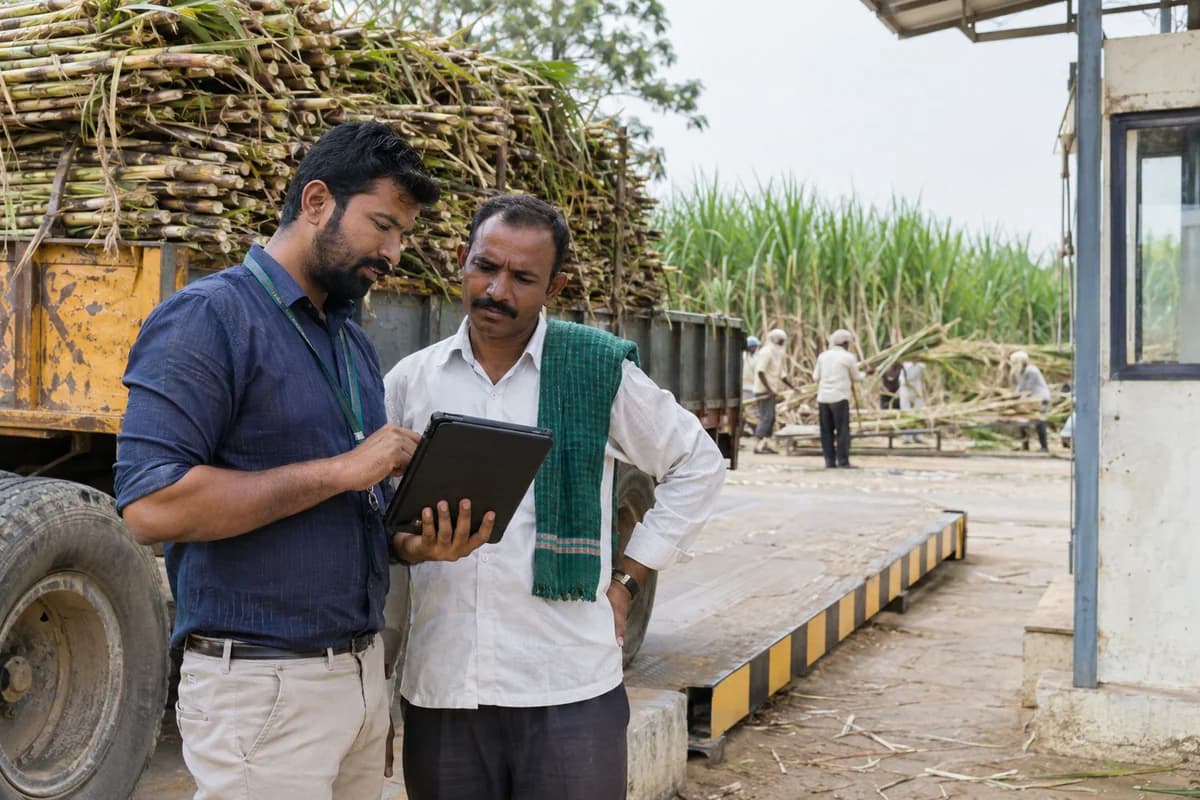
Cane cutting begins after the monsoon. Mills send harvesting gangs and trucks to farms, and farmers are paid in instalments after the cane is weighed, which leaves growers waiting weeks for the last part of the money. Delays and weight disputes are common.
Ilkal weavers use cotton and art silk, with borders in a distinct style. Tourists and school groups visit Badami and Aihole through the cooler months, so guides, lodges and vehicle owners are busy then and idle in summer.
The areas, estates and markets that matter in Bagalkot.
How Bagalkot businesses pick and use software.
A cane farmer wants to see tonnage cut, rate and payments in one place, while a mill supplier wants the reverse, grower by grower, with every weighment and instalment listed.
Weavers work on advances from traders. Both sides need to see yarn issued and cloth returned.
Where Bagalkot businesses lose time and money.
Cane payments are tracked by the farmer
Gangs cut, trucks haul. Weighments are noted on a slip. When the instalment is short, a farmer has little to show.
Yarn and cloth are exchanged on trust
A trader gives yarn, takes cloth and settles at intervals. Neither side holds a full ledger of what went where.
Guides and lodges clash on dates
Group bookings made on the phone are noted on a calendar page. Peak weeks bring overlaps at the door.
What we would build for Bagalkot businesses.
Usually in this order, starting with whatever the audit ranks first.
Web and Mobile Application Development
Web and mobile apps for customers, field staff and dealers, built to work on ordinary phones.
Learn moreBusiness Process Automation
Approvals, reminders and reports triggered by agreed rules, with exceptions assigned to a responsible person.
Learn moreERP, CRM and Business Software Implementation
One record of stock, orders, customers and accounts, set up so your team opens it every day.
Learn moreData Engineering and Business Intelligence
Dashboards that answer the owner’s Monday questions without anyone building an Excel sheet first.
Learn moreReady products that fit Bagalkot businesses.
Each one is adapted to how your business works before it goes live, and anything your trade needs that it lacks is added then. You are not paying to build the basics again.
Textile Processor Management Software
Grey lots, process routes, dye recipes, machine batches, shrinkage and loss, rework, chemicals and process billing for textile processing houses.
Learn moreTour Operator Management Software
Itineraries, group departures, vendor bookings, vouchers, per-passenger costing, guest payments and vendor payables for tour operators running fixed departures and custom trips.
Learn moreHotel Management Software
A property management system for room bookings, the reservation chart, front desk, housekeeping, rate plans, guest folios and banquet hall bookings in hotels and resorts.
Learn moreHow the work runs from Bengaluru for Bagalkot.
- 1
The audit, by call
A screen-share and a look at the sheets, accounting reports and WhatsApp groups your team uses. No travel needed.
- 2
A written proposal
Scope, what we build first and the cost, agreed in writing before anything starts.
- 3
Build in short rounds
Working screens shared every few weeks. Your team tests them from your own office.
- 4
Go-live, in person when it helps
For data migration and training we can come to Bagalkot. Travel is agreed in advance.
- 5
Support online
Fixes, changes and hosting handled remotely by the same team that built it.
The work we have published.
We don’t claim Bagalkot clients we don’t have. These are systems our team built; the way we work is the same wherever you are.
PetSeva: matching owners to the right vet, at any hour
A two-sided veterinary platform where vets are searchable by specialisation and bookable outside clinic hours. It now carries more than 2,000 veterinary doctors.
Read the case study Paying guest accommodationSAM Atithi Pavathi: bed-level occupancy as the source of truth
PG management software where allocation, rates and invoices are derived from bed-level occupancy and not maintained in parallel spreadsheets.
Read the case study School transport servicesSAM Tours: school transport on a single ledger
Registration, fee collection, routing and finance write to the same records, closing the gap between journeys run and fees collected.
Read the case study Microfinance and Self Help GroupsVikasa RDO: making SHG loan recovery auditable
Loan proposals, recoveries and commissions sit on one record, with a person attached to every state change, so a business handling a bank’s money can show where each rupee went.
Read the case studyMake the scope specific to your business.
Work through a real example from your operation and agree the handoffs, controls and support the project needs.
Cane payments are tracked by the farmer
Can the same receipt be allocated without counting the money twice?
Take an unallocated amount in “Cane payments are tracked by the farmer” and apply it to the intended balance. Review the remaining amount and the original receipt reference together.
Background reading: ERPNext: payment allocation
Questions Bagalkot owners ask before they call.
Can yarn issued and cloth returned be tracked for each weaver?
Yes. Each issue and return is recorded against the weaver, with weight, length and the date, so trader and weaver can read the same figures before the next lot goes out. Outstanding yarn is always visible.
Does GullySystem work in Bagalkot?
Only remotely. The team sits in Nagarbhavi, Bengaluru, and reaches Bagalkot through scheduled calls and chat sessions. Screens can use Kannada labels.
What happens after I share my requirements?
We review your brief and clarify the work with you. We then look at the software, spreadsheets and WhatsApp groups your business runs on today and write down what works, what slows your team down and what is missing. A demo login, a screen-share or a few screenshots are enough. You get a short written summary ordered by priority, with no obligation to hire us afterwards.
How much will the software cost?
We don’t publish a price, because it depends on what the system has to do. That first review settles the scope, and the cost goes into a written proposal before any work starts.
Industries we build for in Bagalkot.
Tell us what your Bagalkot business runs on today.
Send a short note on the spreadsheets, software or WhatsApp groups your team depends on. We reply the same working day.
What happens after you share your requirements
- We review your brief and the systems you already use.
- We clarify the workflow, missing information and the work to consider first.
- The proposed scope sets out the deliverables, responsibilities and dependencies.
- Review the scope and commercial terms before deciding whether to proceed.
Start with your requirements
Describe your current process, the people involved and the change you need. Start with the details you know; we can clarify the rest together.
Share your requirements