Trading, mill and grading software for Sri Ganganagar’s mustard, cotton and kinnow businesses.
The canal belt around Sri Ganganagar supports irrigated farming, with mustard oil mills, cotton ginning factories, kinnow orchards and a grain mandi that receives arrivals from across the district. Rate, weight and deduction are the numbers each deal turns on. GullySystem provides trading, mill and grading software for these businesses.
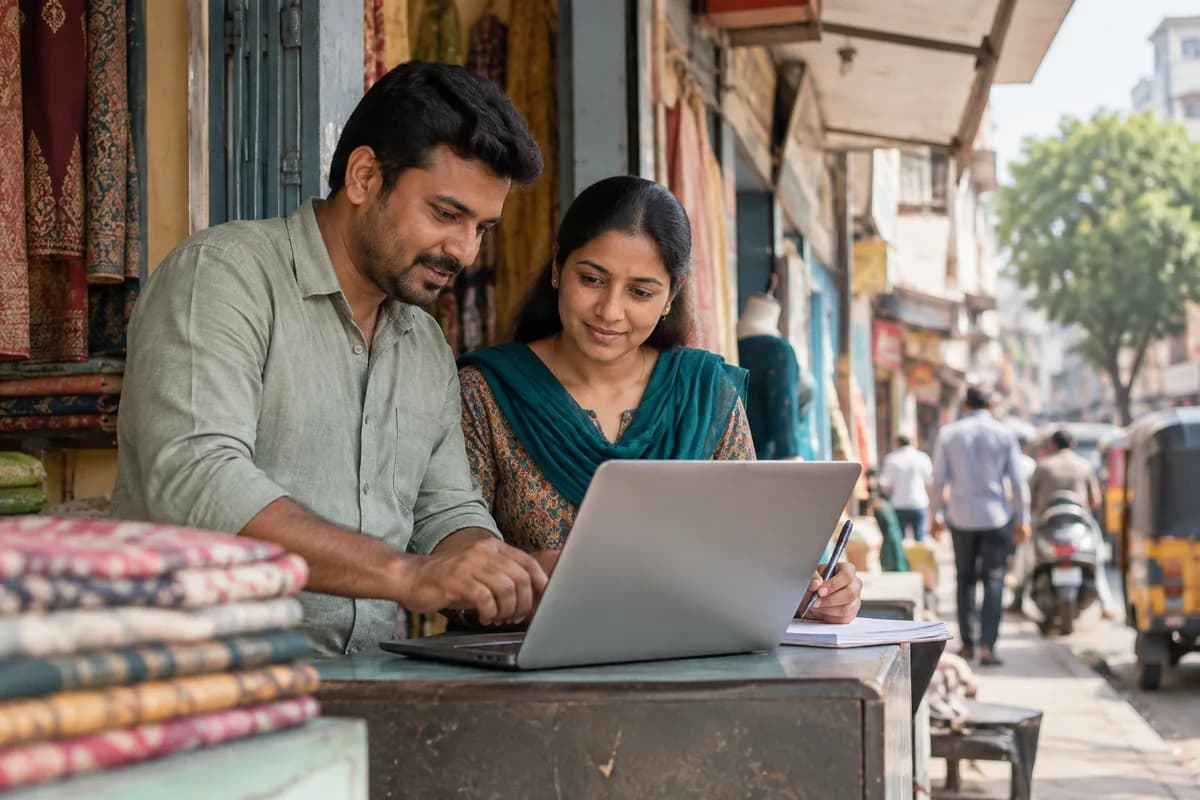
The canal belt around Sri Ganganagar grows mustard, cotton, wheat, guar and kinnow, and the town buys, processes and dispatches those crops. Oil mills, ginning factories and grading units work through the arrival season, keeping weights, grades and advances for each supplier.
Kinnow orchards around Sri Ganganagar and Padampur send fruit to grading and waxing units and then to markets across India. Traders also advance money to farmers through the year, and those advances are settled against arrivals, so purchase, advance and settlement sit in the same accounts. Accounts run for a season.
The areas, estates and markets that matter in Sri Ganganagar.
How Sri Ganganagar businesses pick and use software.
Traders here deal with Punjab and Haryana buyers regularly, and they see the difference when the other side sends a printed account and they send a photograph of a slip. That comparison is often what starts the change.
Most firms are family-run with an accountant who has been there for years, and he takes part in the decision. Vouchers flow into the Tally books he already keeps instead of displacing them, so his month-end close looks the same as before.
The accountant is included from the first call.
Where Sri Ganganagar businesses lose time and money.
Farmer advances and purchases are settled at season close
Money given through the year is adjusted against arrivals, and both sides keep their own count. The two counts differ. An account per farmer showing advances and deliveries brings that settlement forward.
Oil recovery is not compared with lot cost
Mustard is bought by rate and crushed in batches, and recovery is noted loosely. A crushing batch linked to the purchase lot shows the cost of the oil.
Bale weights and moisture are disputed after dispatch
A spinning mill deducts for moisture weeks after the bales have left. Recording weight and moisture at pressing gives the ginner a record of his own.
Kinnow grading results reach the grower late
Fruit is graded and rejections are decided at the unit, and the grower hears a figure days later by phone with nothing written against it. Grade-wise output per lot makes the payment explainable.
What we would build for Sri Ganganagar businesses.
Usually in this order, starting with whatever the audit ranks first.
ERP, CRM and Business Software Implementation
One record of stock, orders, customers and accounts, set up so your team opens it every day.
Learn moreWeb and Mobile Application Development
Web and mobile apps for customers, field staff and dealers, built to work on ordinary phones.
Learn moreBusiness Process Automation
Approvals, reminders, follow-ups and reports that run on their own instead of on someone remembering.
Learn moreIoT and Edge Computing
Machines, meters and sensors feeding the same system your office uses, even when the network drops.
Learn moreHow the work runs from Bengaluru for Sri Ganganagar.
- 1
The audit, by call
A screen-share and a look at the sheets, accounting reports and WhatsApp groups your team uses. No travel needed.
- 2
A written proposal
Scope, what we build first and the cost, agreed in writing before anything starts.
- 3
Build in short rounds
Working screens shared every few weeks. Your team tests them from your own office.
- 4
Go-live, in person when it helps
For data migration and training we can come to Sri Ganganagar. Travel is agreed in advance.
- 5
Support online
Fixes, changes and hosting handled remotely by the same team that built it.
The work we have published.
We don’t claim Sri Ganganagar clients we don’t have. These are systems our team built; the way we work is the same wherever you are.
PetSeva: matching owners to the right vet, at any hour
A two-sided veterinary platform where vets are searchable by specialisation and bookable outside clinic hours. It now carries more than 2,000 veterinary doctors.
Read the case study Paying guest accommodationSAM Atithi Pavathi: bed-level occupancy as the source of truth
PG management software where allocation, rates and invoices are derived from bed-level occupancy and not maintained in parallel spreadsheets.
Read the case study School transport servicesSAM Tours: school transport on a single ledger
Registration, fee collection, routing and finance write to the same records, closing the gap between journeys run and fees collected.
Read the case study Microfinance and Self Help GroupsVikasa RDO: making SHG loan recovery auditable
Loan proposals, recoveries and commissions sit on one record, with a person attached to every state change, so a business handling a bank’s money can show where each rupee went.
Read the case studyQuestions Sri Ganganagar owners ask before they call.
Can a farmer’s advances and his arrivals sit in one account?
Yes. Advances, purchases, deductions and payments sit in one account per farmer, with the balance carried through the season. The patti prints from the same entries, so nothing is reconciled twice.
Can weighbridge and moisture readings come into the purchase entry?
Often, yes. Many weighbridge indicators and moisture meters can feed the entry directly. Where a machine cannot be read, the operator types the reading and it is stored with the lot, so the purchase entry is complete either way. The first step lists which of your machines can be read.
What happens after I share my requirements?
An engineer reads what you send and replies within one business day. We then look at the software, spreadsheets and WhatsApp groups your business runs on today and write down what works, what slows your team down and what is missing. A demo login, a screen-share or a few screenshots are enough. You get a short written summary ordered by priority, with no obligation to hire us afterwards.
How much will the software cost?
We don’t publish a price, because it depends on what the system has to do. That first review settles the scope, and the cost goes into a written proposal before any work starts.
Industries we build for in Sri Ganganagar.
Tell us what your Sri Ganganagar business runs on today.
Send a short note on the spreadsheets, software or WhatsApp groups your team depends on. We reply the same working day.
What happens after you share your requirements
- A senior engineer reads your answers. Nobody phones first.
- Within one business day you get a written note: what we understood, what we would start with, and the questions we still have.
- If it fits, a proposal follows with the order of work, what we need from you and what you receive at each step.
- No call is booked and nothing is paid until you have read the note. Your details stay with us.
Start with your requirements
Seven short steps that tell us what you need. A senior engineer reads them before anyone gets in touch.
Share your requirements