Follow each order from yarn to finished garment, with every lot, bundle and shade on one record.
Yarn spinners, fabric mills, processors, apparel and uniform makers, and home and technical textile producers all turn fibre into sold goods in stages. The software described here carries orders, lots, stages and dispatch on one record. Merchandisers, floor supervisors and store keepers open only the screens that suit their part of the chain.
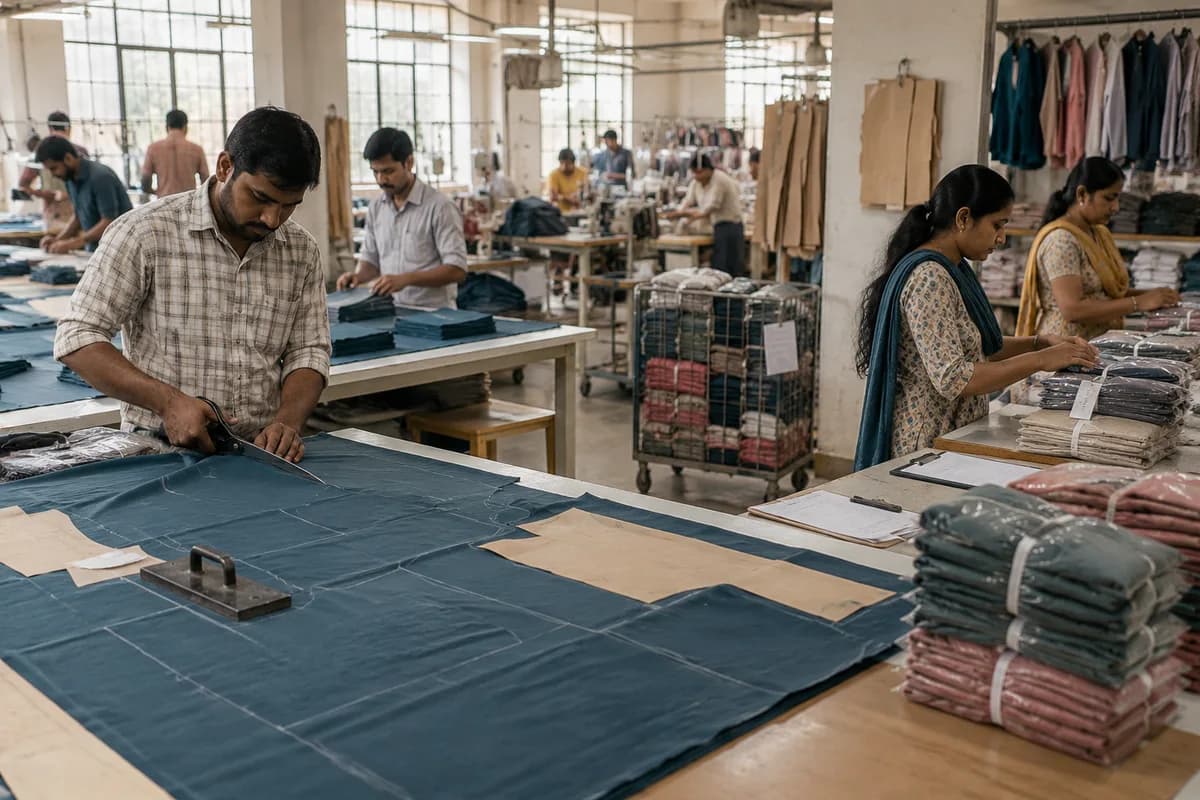
Seven kinds of plant turn fibre into cloth and garments, and each loses track of the order at a different point. A yarn manufacturer spins combed cotton or polyester into counts and lots, and a fabric mill weaves on looms or knits on circular machines into rolls. A processor bleaches, dyes, prints and finishes the cloth. Apparel and uniform makers cut and stitch it, while home and technical textile producers make bed sheets, terry towels, filter cloth and coated fabrics.
Each stage hands over a measured quantity that must be accounted for before the next one starts, and the unit changes at every handover. Yarn is issued by count and lot, fabric by roll and metre, and garments by size ratio and bundle, so no single unit follows the order throughout. Shade and fabric weight in grams per square metre travel with the lot. Shrinkage and four point defect scores go with it too. Waste appears at every step. It is rarely counted until the order closes. A short roll or a mismatched shade is far easier to correct on the cutting table than after the cartons have reached the buyer’s warehouse.
The buyer sits at the end of it. A brand or an institution sets the terms by sending a style, a purchase order, a sample approval and a delivery date that every earlier stage must meet. Uniform makers add measurements and name lists, and processors add a customer cloth that must come back in the same quantity. Trades differ in where they lose track. A roll is not a bundle.
Software for each kind of textile & Garment Manufacturing business.
Yarn manufacturers
Spinning mills turn bales of cotton, polyester or blends into cones of a stated count and twist. Waste, yield and test readings are usually kept in separate registers. The yarn product holds bale lots, mixing plans, frame runs, lab results and packing on one lot record.
Learn moreFabric manufacturers
Fabric mills turn yarn into woven or knitted cloth, then send it to be dyed, printed and finished. The software tracks yarn lots, warp beams, loom output, roll numbers, inspection points and outside processing, so each roll has its construction, defects and customer allocation on record.
Learn moreTextile processors
Textile processors dye, print and finish cloth that belongs to other people. Grey arrives by the lot, goes through a route of recipes and machines, and leaves with weight loss and shade to explain. The product records lots, recipes, machine batches, rejections and returns.
Learn moreApparel manufacturers
Apparel manufacturers cut fabric in-house and send bundle tickets out to stitching units on subcontract delivery notes. The system would track orders, cutting and subcontract work around size ratios, so pieces out and pieces back are counted size by size. Piece rates come off the same record. Friday settlement then starts from one count.
Learn moreUniform manufacturers
Uniform makers cut and stitch the same garment for a school, hospital, hotel or security firm, in sizes taken from a wearer list. Orders come back each term or intake. The software holds size runs, approved samples, logo work and packing by wearer.
Learn moreHome textile manufacturers
Home textile makers produce bed linen, towels, curtains and cushion covers for retailers, hotels and export buyers. Orders are set by set, with labels and carton marks. The home textile product holds designs, fabric lots, set packing and buyer inspection on one order record.
Learn moreTechnical textile manufacturers
Technical textile makers produce woven, knitted or nonwoven rolls for filtration, geotextile, automotive, medical and industrial use. Buyers order by specification, not by pattern. The product holds roll records, coating and lamination settings, test results and certificates in one place.
Learn moreWhere these businesses lose time and money.
What we build across textile & Garment Manufacturing.
Ready products that fit textile & Garment Manufacturing.
Each one is adapted to how your business works before it goes live, and anything your trade needs that it lacks is added then. You are not paying to build the basics again.
Fabric Manufacturer Management Software
Yarn lots, warp beams, loom output, roll registers, grey inspection points, outside processing and packing lists for fabric manufacturers.
Learn moreYarn Manufacturer Management Software
Bale lots, mixing plans, department waste, ring frame allocation, lab readings, machine stoppages and cone packing for spinning mills.
Learn moreTextile Processor Management Software
Grey lots, process routes, dye recipes, machine batches, shrinkage and loss, rework, chemicals and process billing for textile processing houses.
Learn moreThe services behind it.
ERP, CRM and Business Software Implementation
One record of stock, orders, customers and accounts, set up so your team opens it every day.
Learn moreBusiness Process Automation
Approvals, reminders, follow-ups and reports that run on their own instead of on someone remembering.
Learn moreData Migration and Moving Off Spreadsheets
Data migration and spreadsheet replacement covers auditing existing files, cleaning and deduplicating records, loading them into a new system and reconciling the loaded result against known totals. Both systems then run side by side before cutover. Originals stay untouched.
Learn moreWhatsApp Business API and Chatbots
WhatsApp Business API work covers number onboarding, template approval, opt-in records and a chatbot with human handover, all set up under the client’s own Meta account. It connects WhatsApp to a CRM, billing or booking system, so every message is sent from an existing record and every reply is written back. It suits businesses that already take orders, payments or bookings in chat.
Learn moreBusiness Intelligence and Reporting Tools
Business intelligence and reporting work joins accounting vouchers, CRM records and spreadsheet tabs inside Power BI, Metabase or Looker Studio, using metric definitions agreed in writing first. Role dashboards and scheduled packs follow. The model is documented. Your analyst can extend it. Share your requirements and we will say which tool fits.
Learn moreWritten for textile & Garment Manufacturing.
Practical notes on running the business, not product marketing.
Why shade and lot mix ups happen in textile processing
Shade and lot mix ups start when rolls lose their dye lot identity. See where tags, merged stock and re-dyes break the link, and how to stop it.
Learn moreHow to build a garment costing sheet before you quote
Build a garment costing sheet before you quote: fabric consumption, trims, cut make and finish, wastage, overheads, and a check against actual cost.
Learn moreHow to choose software for a textile or garment factory
Yarn, fabric, processing and apparel units need different things from software. Learn what to test and how to shortlist using your own order.
Learn moreHow to track bundles from cutting to packing in a garment unit
Follow bundle tickets from the cutting table through sewing, finishing and packing, and find where cut and packed quantity part ways.
Learn moreQuestions textile & Garment Manufacturing businesses ask.
Does one product cover the whole textile chain?
No. Spinners, mills, processors and garment makers each get a separate product. A count, a roll and a bundle are different units of work. One product handles count and lot, another a roll, a third a bundle.
Can it follow one order through several of our plants?
Yes. Stages can sit in separate units and still report to the same order. How material moves between sites is reviewed during implementation, with the carrier and transit loss noted.
Does it include machine or loom monitoring?
Not on its own. A link to looms, flat knitting machines or line counters is scoped per machine once the make and output are known. Production counts can be keyed in or imported until then.
Can our buyers see the status of their orders?
Only if you choose to share it. Nothing is shown by default. A buyer sees only that buyer’s orders and the stages you permit, such as cutting, packing and shipment.
Tell us how your business runs today.
A few lines on your spreadsheets, software and WhatsApp groups is enough. We reply the same working day.
- No obligation
- A reply within one business day
- Your details stay private
Start with your requirements
Seven short steps that tell us what you need. An engineer reads them before getting in touch.
Share your requirements