Villupuram · LocationsVillupuram’s rice mills, input dealers and transporters run through a busy railway junction town.
A railway junction and district town where roads from Chennai, Puducherry and the south meet. Paddy and groundnut arrive from nearby farms, rice mills and oil sellers handle them, and input shops serve the growers. Most of it runs on Tally and notebooks. GullySystem works remotely from Nagarbhavi, Bengaluru, on stock, farmer accounts and dispatch records.
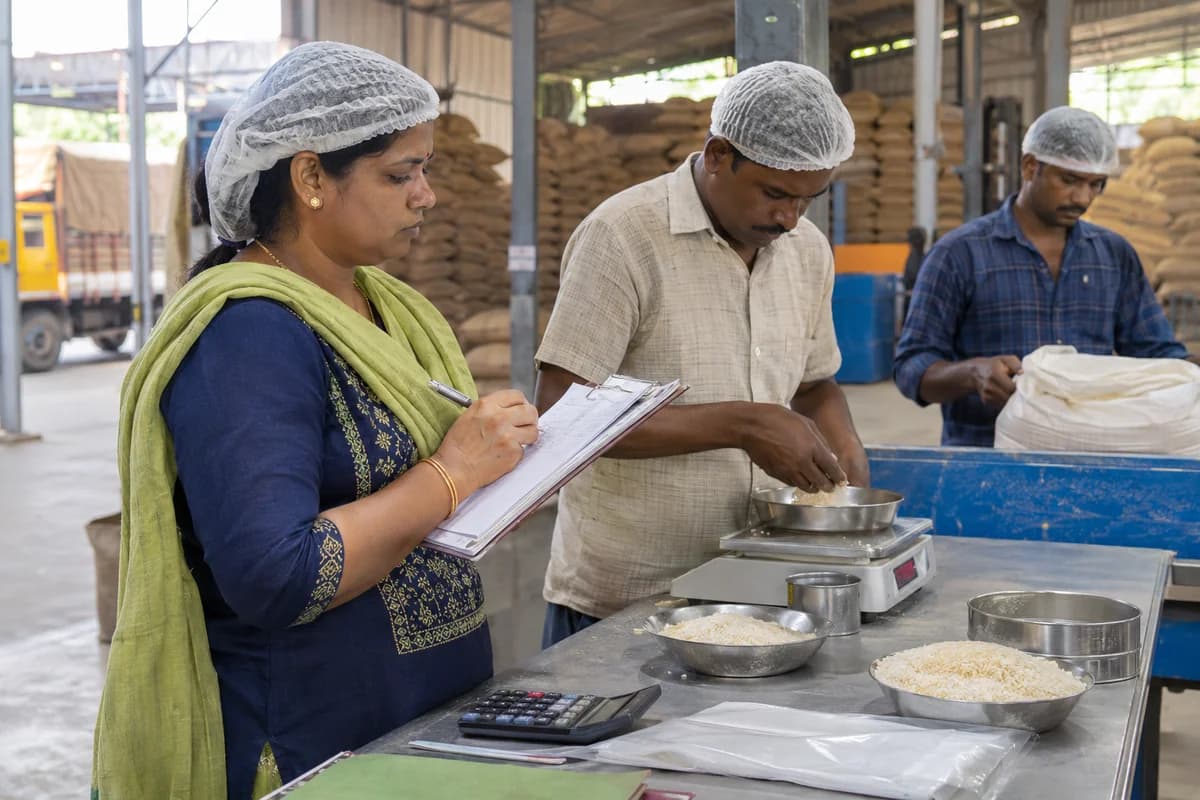
Many routes pass through here every single day. Lorries bound for Chennai, Puducherry, Trichy and the south stop here, and the junction station links the town to most of the state. Villupuram is a place where goods change hands as much as a place where they are made.
Around it lie farms growing paddy, groundnut and sugarcane. Farmers buy seed and fertiliser on credit and repay at harvest, selling through the market or to the nearest mill. Shops and mills carry long lists of small balances.
The areas, estates and markets that matter in Villupuram.
How Villupuram businesses pick and use software.
Mill owners trust their munims and their old registers. A system is accepted when it produces the same daybook, only faster and free of arithmetic errors.
Input shop owners care most about reminding farmers of dues without damaging a relationship built over years. Tone matters. Timing matters as well.
Where Villupuram businesses lose time and money.
Farmer dues are recalled, not recorded
A shop gives seed on credit in June and expects payment in January, by which time the farmer, the shop boy and the owner each remember a different story. By then the exact bags, rates and part payments are blurred, and the farmer’s version can differ from the shop’s.
Rice yield is checked only now and then
Paddy goes in and rice and bran come out, but the ratio is tallied only occasionally. A mill cannot tell whether a loss came from the paddy lot, the machine or a careless shift. Losses hide.
Lorry bookings are made by phone and forgotten
Agents confirm a vehicle with a call, and the freight and advance are noted on any scrap. Later nobody agrees on who owes what. Scraps get lost.
Shops reorder from habit
Owners restock fertiliser and pesticides from memory and a supplier’s visit, so slow items sit for a year while a popular one runs out in sowing week.
What we would build for Villupuram businesses.
Usually in this order, starting with whatever the audit ranks first.
ERP, CRM and Business Software Implementation
One record of stock, orders, customers and accounts, set up so your team opens it every day.
Learn moreBusiness Process Automation
Approvals, reminders and reports triggered by agreed rules, with exceptions assigned to a responsible person.
Learn moreData Engineering and Business Intelligence
Dashboards that answer the owner’s Monday questions without anyone building an Excel sheet first.
Learn moreWeb and Mobile Application Development
Web and mobile apps for customers, field staff and dealers, built to work on ordinary phones.
Learn moreReady products that fit Villupuram businesses.
Each one is adapted to how your business works before it goes live, and anything your trade needs that it lacks is added then. You are not paying to build the basics again.
Rice Mill Management Software
Paddy intake and moisture, parboiling, milling yield, broken percentage, by-products, bag counts and wholesale rice dispatch for rice mills.
Learn moreSeed Dealer Management Software
Seed lots, germination results, validity dates, season bookings, farmer credit, shelf watch and company returns for dealers who sell seed to growers.
Learn moreLogistics and Transport Management Software
Consignment booking, trip sheets, lorry and driver records, attached vehicle hire, delivery proof, freight billing and to-pay collection for road haulage companies.
Learn moreHow the work runs from Bengaluru for Villupuram.
- 1
The audit, by call
A screen-share and a look at the sheets, accounting reports and WhatsApp groups your team uses. No travel needed.
- 2
A written proposal
Scope, what we build first and the cost, agreed in writing before anything starts.
- 3
Build in short rounds
Working screens shared every few weeks. Your team tests them from your own office.
- 4
Go-live, in person when it helps
For data migration and training we can come to Villupuram. Travel is agreed in advance.
- 5
Support online
Fixes, changes and hosting handled remotely by the same team that built it.
The work we have published.
We don’t claim Villupuram clients we don’t have. These are systems our team built; the way we work is the same wherever you are.
PetSeva: matching owners to the right vet, at any hour
A two-sided veterinary platform where vets are searchable by specialisation and bookable outside clinic hours. It now carries more than 2,000 veterinary doctors.
Read the case study Paying guest accommodationSAM Atithi Pavathi: bed-level occupancy as the source of truth
PG management software where allocation, rates and invoices are derived from bed-level occupancy and not maintained in parallel spreadsheets.
Read the case study School transport servicesSAM Tours: school transport on a single ledger
Registration, fee collection, routing and finance write to the same records, closing the gap between journeys run and fees collected.
Read the case study Microfinance and Self Help GroupsVikasa RDO: making SHG loan recovery auditable
Loan proposals, recoveries and commissions sit on one record, with a person attached to every state change, so a business handling a bank’s money can show where each rupee went.
Read the case studyMake the scope specific to your business.
Work through a real example from your operation and agree the handoffs, controls and support the project needs.
Farmer dues are recalled, not recorded
Can you explain the balance from its original documents?
Select a partly settled example in “Farmer dues are recalled, not recorded”. Ask for the invoice, allocated receipts and remaining balance to be shown together before agreeing the opening figures.
Background reading: ERPNext: outstanding invoices
Lorry bookings are made by phone and forgotten
What becomes available when a booking is moved or cancelled?
Use “Lorry bookings are made by phone and forgotten” to move a booking, then cancel a second example. Check the released slot, the person or resource still assigned, and any amount left to settle before accepting the revised schedule.
Background reading: ERPNext: appointment records
Questions Villupuram owners ask before they call.
Can a shop keep a season long account for each farmer?
Yes. Every issue of seed or fertiliser posts to the farmer with its date and rate, and each payment is set against it. At harvest, a printed statement can be handed over, showing every bag, rate and part payment in date order, so the talk at the counter stays short.
Will it work with the Tally books we already have?
Yes. Billing and stock can be handled in the new system while the accountant keeps Tally for the ledger. Invoices and receipts flow across to the ledger on their own.
What happens after I share my requirements?
We review your brief and clarify the work with you. We then look at the software, spreadsheets and WhatsApp groups your business runs on today and write down what works, what slows your team down and what is missing. A demo login, a screen-share or a few screenshots are enough. You get a short written summary ordered by priority, with no obligation to hire us afterwards.
How much will the software cost?
We don’t publish a price, because it depends on what the system has to do. That first review settles the scope, and the cost goes into a written proposal before any work starts.
Industries we build for in Villupuram.
Elsewhere in Tamil Nadu.
- Ariyalur
- Chennai
- Coimbatore
- Cuddalore
- Dharmapuri
- Dindigul
- Erode
- Hosur
- Kanchipuram
- Karaikudi
- Karur
- Krishnagiri
- Kumbakonam
- Madurai
- Nagercoil
- Namakkal
- Pollachi
- Pudukkottai
- Ramanathapuram
- Salem
- Sivakasi
- Thanjavur
- Theni
- Thoothukudi
- Tiruchirappalli
- Tirunelveli
- Tiruppur
- Vellore
- Ambur
- Tiruvannamalai
- Virudhunagar
- Rajapalayam
- Ooty
- Gobichettipalayam
- Palani
- Tiruchengode
- Avadi
- Tambaram
- Ranipet
- Nagapattinam
- Mayiladuthurai
- Kovilpatti
Tell us what your Villupuram business runs on today.
Send a short note on the spreadsheets, software or WhatsApp groups your team depends on. We reply the same working day.
What happens after you share your requirements
- We review your brief and the systems you already use.
- We clarify the workflow, missing information and the work to consider first.
- The proposed scope sets out the deliverables, responsibilities and dependencies.
- Review the scope and commercial terms before deciding whether to proceed.
Start with your requirements
Describe your current process, the people involved and the change you need. Start with the details you know; we can clarify the rest together.
Share your requirements