Ranipet · LocationsRanipet’s chemical units, tanneries and boiler parts vendors answer to inspectors and big buyers.
The SIPCOT estate at Ranipet holds chemical units and leather processors, and a large public sector plant draws in a ring of fabricators and spares suppliers. Compliance papers, batch records and vendor bills decide how smoothly they run. GullySystem works remotely from Nagarbhavi, Bengaluru, on batch tracking, vendor portals and records that stand up to audit.
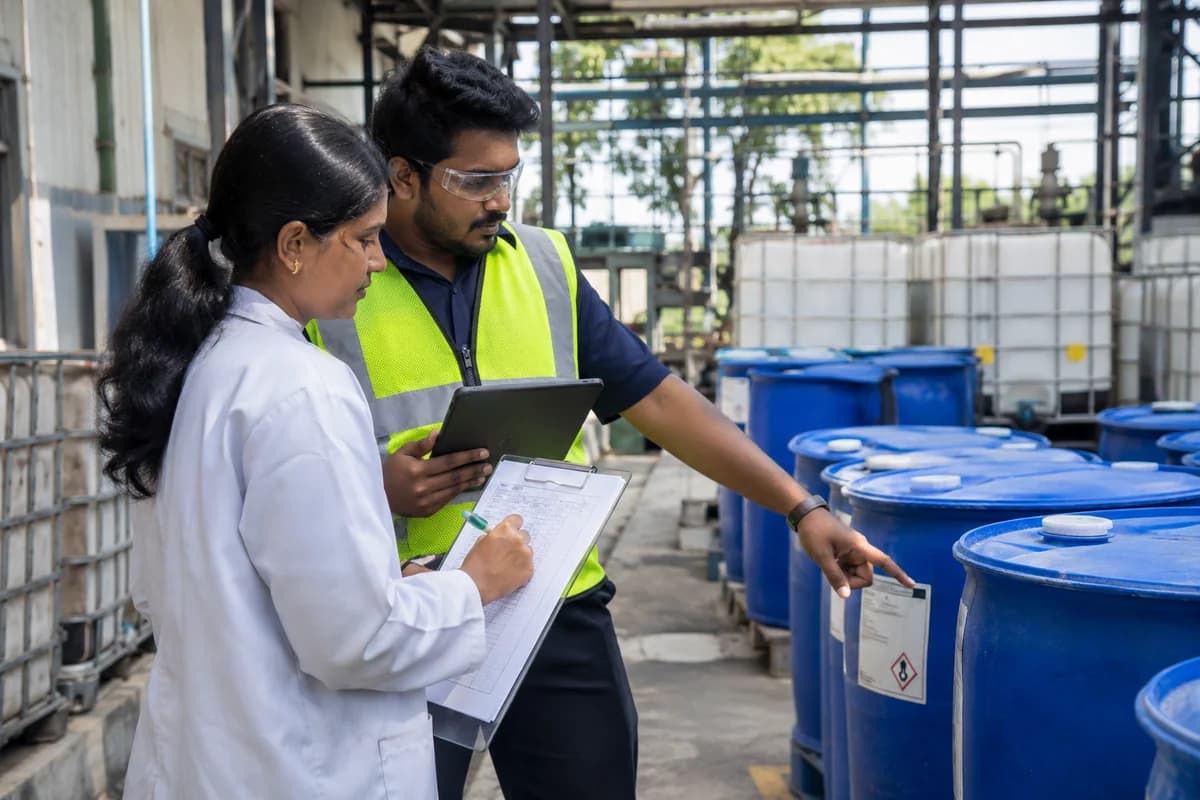
Ranipet became a district of its own only a few years ago. Its industrial estate is far older. Chemical makers, tanning units and engineering shops work in rows of sheds. Trucks carry drums, hides and machined parts out on the highway to Chennai and Bengaluru at all hours.
Rules shape daily work. Inspectors visit without warning. Hazardous chemicals, effluent and waste are inspected by regulators, and big buyers audit their vendors. A plant that cannot show its records quickly loses time, and sometimes orders.
The areas, estates and markets that matter in Ranipet.
How Ranipet businesses pick and use software.
Plant heads and compliance officers are wary of anything that cannot be defended in an audit. They ask who changed a record and when. Answers must be quick.
Owners of vendor workshops worry about getting paid on time by large buyers. They need invoices that match purchase orders on the first attempt.
Where Ranipet businesses lose time and money.
Hazardous stock is tracked loosely
Drums come in, are decanted and move between sheds, sometimes half full and sometimes shared between two batches, which the daily register has no column to show. The register shows the day’s opening and closing but not where each drum sits in between.
Regulator forms are filled from memory
Quarterly returns on chemical use and waste depend on loose notes. Someone rebuilds the figures just before the due date. It takes days.
Vendor invoices bounce on small mismatches
A large buyer returns a bill because the quantity or rate does not match the order. The workshop re-issues it and waits, and payment slips by a month or more while the next order is already in production on borrowed money.
Tanker trips carry no proof
Bulk chemicals leave by tanker, and the weight and seals are noted on a gate pass. Complaints from the buyer cannot be checked against the original dispatch.
What we would build for Ranipet businesses.
Usually in this order, starting with whatever the audit ranks first.
ERP, CRM and Business Software Implementation
One record of stock, orders, customers and accounts, set up so your team opens it every day.
Learn moreIoT and Edge Computing
Machine and sensor readings connected to office records, with buffering limits and recovery after a lost connection defined.
Learn moreBusiness Process Automation
Approvals, reminders and reports triggered by agreed rules, with exceptions assigned to a responsible person.
Learn moreData Engineering and Business Intelligence
Dashboards that answer the owner’s Monday questions without anyone building an Excel sheet first.
Learn moreReady products that fit Ranipet businesses.
Each one is adapted to how your business works before it goes live, and anything your trade needs that it lacks is added then. You are not paying to build the basics again.
Industrial Chemical Manufacturer Management Software
Raw intake, reactor batches, titration assays, yield, tank farm stock, drum and IBC filling, tanker loading, certificates of analysis and safety data sheets for bulk chemical plants.
Learn moreStructural Steel Fabricator Management Software
Piece mark lists, drawing revisions, heat traceability, fabrication stages, erection sequence loading, loose items and tonnage bills for steel fabricators.
Learn moreWarehousing Company Management Software
Client stock by location, inward receipts, putaway, pick lists, dispatch, cycle counts and storage and handling bills for warehousing and 3PL companies.
Learn moreHow the work runs from Bengaluru for Ranipet.
- 1
The audit, by call
A screen-share and a look at the sheets, accounting reports and WhatsApp groups your team uses. No travel needed.
- 2
A written proposal
Scope, what we build first and the cost, agreed in writing before anything starts.
- 3
Build in short rounds
Working screens shared every few weeks. Your team tests them from your own office.
- 4
Go-live, in person when it helps
For data migration and training we can come to Ranipet. Travel is agreed in advance.
- 5
Support online
Fixes, changes and hosting handled remotely by the same team that built it.
The work we have published.
We don’t claim Ranipet clients we don’t have. These are systems our team built; the way we work is the same wherever you are.
PetSeva: matching owners to the right vet, at any hour
A two-sided veterinary platform where vets are searchable by specialisation and bookable outside clinic hours. It now carries more than 2,000 veterinary doctors.
Read the case study Paying guest accommodationSAM Atithi Pavathi: bed-level occupancy as the source of truth
PG management software where allocation, rates and invoices are derived from bed-level occupancy and not maintained in parallel spreadsheets.
Read the case study School transport servicesSAM Tours: school transport on a single ledger
Registration, fee collection, routing and finance write to the same records, closing the gap between journeys run and fees collected.
Read the case study Microfinance and Self Help GroupsVikasa RDO: making SHG loan recovery auditable
Loan proposals, recoveries and commissions sit on one record, with a person attached to every state change, so a business handling a bank’s money can show where each rupee went.
Read the case studyMake the scope specific to your business.
Work through a real example from your operation and agree the handoffs, controls and support the project needs.
Hazardous stock is tracked loosely
What happens to movements entered while a count is being checked?
For “Hazardous stock is tracked loosely”, choose a count date and trace the movements around it. Agree who investigates a difference before an adjustment changes the available balance.
Background reading: ERPNext: stock reconciliation
Vendor invoices bounce on small mismatches
Can you explain the balance from its original documents?
Select a partly settled example in “Vendor invoices bounce on small mismatches”. Ask for the invoice, allocated receipts and remaining balance to be shown together before agreeing the opening figures.
Background reading: ERPNext: outstanding invoices
Questions Ranipet owners ask before they call.
Can drums be tracked from receipt to use?
Yes. Each drum or lot receives a code at the gate, and its movements between sheds and into production are scanned or entered. The current location and balance are visible at any time.
Can we show an auditor who changed a record?
Yes. Every edit is stored with the user, the time and the old value. An auditor can see the history of a batch or a stock entry without anyone preparing a separate file.
What happens after I share my requirements?
We review your brief and clarify the work with you. We then look at the software, spreadsheets and WhatsApp groups your business runs on today and write down what works, what slows your team down and what is missing. A demo login, a screen-share or a few screenshots are enough. You get a short written summary ordered by priority, with no obligation to hire us afterwards.
How much will the software cost?
We don’t publish a price, because it depends on what the system has to do. That first review settles the scope, and the cost goes into a written proposal before any work starts.
Industries we build for in Ranipet.
Elsewhere in Tamil Nadu.
- Ariyalur
- Chennai
- Coimbatore
- Cuddalore
- Dharmapuri
- Dindigul
- Erode
- Hosur
- Kanchipuram
- Karaikudi
- Karur
- Krishnagiri
- Kumbakonam
- Madurai
- Nagercoil
- Namakkal
- Pollachi
- Pudukkottai
- Ramanathapuram
- Salem
- Sivakasi
- Thanjavur
- Theni
- Thoothukudi
- Tiruchirappalli
- Tirunelveli
- Tiruppur
- Vellore
- Ambur
- Tiruvannamalai
- Villupuram
- Virudhunagar
- Rajapalayam
- Ooty
- Gobichettipalayam
- Palani
- Tiruchengode
- Avadi
- Tambaram
- Nagapattinam
- Mayiladuthurai
- Kovilpatti
Tell us what your Ranipet business runs on today.
Send a short note on the spreadsheets, software or WhatsApp groups your team depends on. We reply the same working day.
What happens after you share your requirements
- We review your brief and the systems you already use.
- We clarify the workflow, missing information and the work to consider first.
- The proposed scope sets out the deliverables, responsibilities and dependencies.
- Review the scope and commercial terms before deciding whether to proceed.
Start with your requirements
Describe your current process, the people involved and the change you need. Start with the details you know; we can clarify the rest together.
Share your requirements