Keep stock, prices and sales in step across the shop floor, the till and the online order.
Outdoor stores, department stores, jewellers, furniture showrooms, grocers and fulfilment centres all buy goods, price them and sell them to the public. The software described here ties stock, pricing, billing, customers and returns to one record, whichever counter or channel took the sale, so each branch works from the same figures.
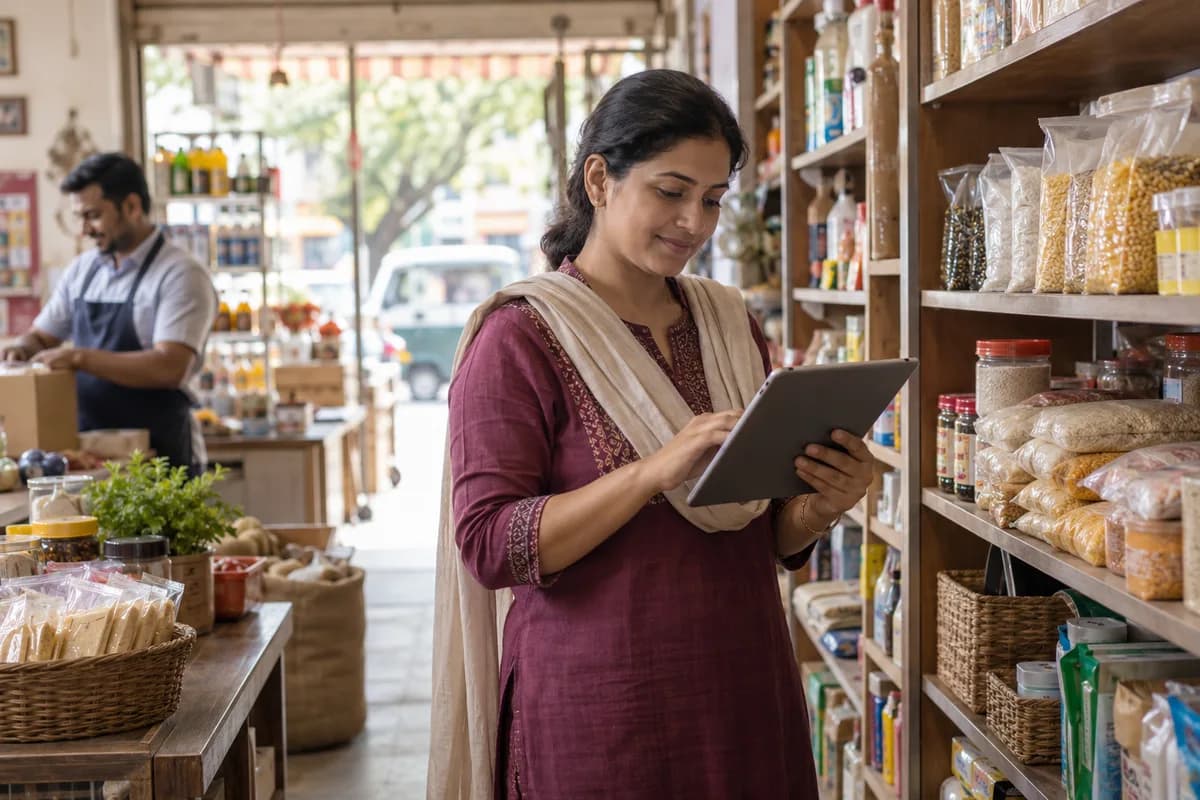
Retail trades differ in what sits on the shelf. A jeweller sells by weight and purity, a furniture showroom sells large items against a delivery date, and a grocer sells thousands of small lines that expire. A fulfilment centre never meets the buyer.
The item record sits at the centre. It carries a code, a barcode, a size or a serial number, a cost and a selling price, and a count for each location. Every sale, return and transfer moves that count. When it is wrong, the shelf, the till and the website disagree.
Around the item stand suppliers, customers, staff and couriers. Buyers raise purchase orders. Cashiers bill at the counter. Online orders arrive from a store front or a marketplace. Accounts match payments to all of them, and every supplier and customer statement is built from the same sales.
- Department stores
- Discount stores
- Clothing stores
- Kirana and grocery stores
- Pet stores
- Outdoor and sports goods stores
- Jewellers
- Furniture showrooms
- Home furnishing stores
- Lighting stores
- Appliance and electronics dealers
- Computer retailers
- Home theatre and AV dealers
- E-commerce fulfilment centres
- Bookstores
- Toy stores
- Gift shops
- Stationery shops
- Optical stores
- Musical instrument stores
- Footwear stores
- Boutiques
- Mobile phone retailers
- Supermarkets
- Organic stores
Software for each kind of retail and e-commerce business.
Department stores
A department store is several shops under one roof, with one entrance and one till. The department store software keeps stock, markdowns and sales separate for each department. It also tracks concession counters, gift cards, layaway, returns and the supplier statements owed at month end.
Learn moreDiscount stores
Discount stores sell household goods, toiletries, stationery, party items and seasonal stock at very low unit prices. The discount store product holds the price tiers, deal bundles, closeout lots and shelf counts behind each till. Managers see which lines earn their space and which are ageing.
Learn moreClothing stores
Clothing stores and boutiques sell by size, colour and season, and most billing software records a style without its size grid or its tailoring work. The system holds each style by size and colour across shop and warehouse, and follows alteration and stitching slips with their promised dates. Each customer’s purchases stay on record for offers.
Learn moreKirana and grocery stores
A corner shop or grocery store bills fast at the counter, lets regulars buy on credit, takes orders on WhatsApp and sends them out by scooter. Your item list, your shelf prices and the running balance each regular clears at month end all sit in the till screen from the first bill. Billing, stock and delivery share one record. You can start with the counter alone.
Learn morePet stores
Pet product businesses sell food, treats, litter, bedding, toys and healthcare items to owners who come back every few weeks. The pet store management software records food by batch and expiry, loose weights, bags per breed and the repeat order each customer follows.
Learn moreOutdoor and sports goods stores
Outdoor gear shops sell tents, packs, boots, clothing and climbing or fishing kit that vary by size, colour and season. The software holds the item list, variant stock, shop and online sales, dealer orders, warranty serials and returns in one record. Buying follows the selling season, and each brand’s terms stay with its supplier.
Learn moreJewellers
Jewellers work in grams, purity and making charges, with old-gold exchange, savings schemes, goldsmith issues and hallmarking running beside the counter bill. When a few grams go missing, nobody can say where. The software follows every piece by tag and by weight, from the bench to the showcase, and sits beside the billing package you already trust.
Learn moreFurniture showrooms
Furniture showrooms sell display pieces, made-to-order sofas and beds, and office furniture for whole floors. Fabric choices, factory orders, delivery and fitting are usually chased by phone. This software holds the quotation, the factory order, the delivery slot and the balance payment on one order, adapted to how your showroom already sells.
Learn moreHome furnishing stores
Home furnishing stores sell fabric by the running metre, blinds by the square foot and made-to-measure curtains that pass through a measurer, a tailor and a fitter before payment. One paper slip carries the whole job. The measurement sheet becomes a quotation, a stitching order and a fitting job, with fabric stock, pelmets and part payments tracked beside it.
Learn moreLighting stores
Lighting stores sell decorative fixtures to homeowners, and project lots of downlights, cove profiles, track heads and drivers to architects and contractors. Wattage, CCT and beam angle decide every line. Software built for the store would turn an architect’s lighting schedule into a priced quotation, hold stock by specification, and follow a project order through phased delivery and the architect’s commission.
Learn moreAppliance and electronics dealers
Appliance and electronics dealers sell TVs, refrigerators and air conditioners with finance, exchange, cashback and installation attached to most bills. The system follows one sale from the counter to the serial number, the finance file, the installation visit and the brand claim. It keeps the warranty against that serial for the day a complaint arrives.
Learn moreComputer retailers
Computer shops sell serial-numbered laptops, NVMe drives and monitors at distributor rates that shift often, with a repair bench behind the counter. The retail software bills by serial, matches scheme credits to units already sold, and follows each job card through to delivery. A dead-on-arrival or warranty claim starts at the serial.
Learn moreHome theatre and AV dealers
Home theatre and AV dealers sell projects, not boxes: a room design, a multi-brand bill of materials, pre-wiring before interiors close, installation, calibration and years of service calls. A project system built by GullySystem would follow each room from site survey to handover, holding stages, equipment serials, acoustic work and service history in one place.
Learn moreE-commerce fulfilment centres
An e-commerce fulfilment centre stores stock for online sellers and ships their orders to buyers. Orders arrive from marketplaces, a seller’s own store and WhatsApp, and returns come back on every channel. One record runs from inward to return. Each seller then sees its own stock, orders and settlement, and the centre bills storage, pick and pack from the work that was actually handled.
Learn moreBookstores
Bookstores hold thousands of titles, each with an ISBN, an edition and a publisher with its own terms. Supplier terms, pending special orders, publisher returns and school lists sit beside each title. The person asking at the till hears a plain yes or no.
Learn moreToy stores
Toy stores sell thousands of small items that move in waves around gifting seasons, with age labels, batteries and pieces that must be complete. This software holds stock by brand and age band, pre-orders and layaways, display samples and returns, so a busy week does not end in lost deposits.
Learn moreGift shops
A gift shop sells moments, so a late parcel or a misspelt name on a mug costs more than the item itself. The software holds stock by occasion, personalisation jobs, hampers and gift cards together. Tax and currency settings are reviewed during implementation.
Learn moreStationery shops
A stationery shop sells thousands of low-priced items, some by the piece, some by the ream and some cut or copied to order. The software tracks pack sizes, school booklists, office accounts and print jobs. Tax and currency settings are reviewed during implementation.
Learn moreOptical stores
Optical stores sell a medical record disguised as a fashion item. The optical product holds the prescription, the frame, the lens order and the fitting on one customer file. A pair is then never made from the wrong figures. A recall list brings wearers back.
Learn moreMusical instrument stores
Musical instrument stores sell strings by the packet and guitars by the serial number. The instrument product keeps new, used and consigned instruments, rentals, workshop jobs and brand terms on one record. A school band order is quoted and supplied without a spreadsheet.
Learn moreFootwear stores
Footwear stores sell one style in a dozen sizes, and a missing size is a lost sale. The footwear product keeps stock by style, size, width and colour, covering the pairs on the shelf and in the back room, and fit-related returns. Supplier orders follow the size run that actually sold.
Learn moreBoutiques
Boutiques sell few pieces to clients they know by name, and much of the sale happens in the fitting room and at the tailor. The software keeps client measurements, pieces held for a client, alteration jobs with trial dates and designer stock on consignment. Deposits and balances stay on the client’s record.
Learn moreMobile phone retailers
A phone shop sells small, costly items that all look alike until someone reads the IMEI printed on the box. The mobile phone retailer software ties each handset to its supplier invoice, its sale and any later return or repair. Accessories, recharges and trade-ins sit in the same bill. Finance schemes and instalment paperwork are set up with your staff.
Learn moreSupermarkets
A supermarket sells thousands of lines with short lives, from yoghurt and baguettes to toothpaste and nappies, and the margin on each is thin. The software holds every item by barcode, tracks batches with expiry dates and receives chilled and dry deliveries against purchase orders, counting each carton at the dock door before the driver leaves. Checkout, promotions and loyalty read one price file. Tax rates are set with your accountant.
Learn moreOrganic stores
An organic store sells trust as much as food. Shoppers ask where the millet was grown, whether the oil is cold pressed and how long the flour will keep. The organic store software holds each lot with its grower, its certificate details and its best before date, so the counter answers from a record. Weekly boxes and delivery rounds sit beside the shop.
Learn moreWhere these businesses lose time and money.
What we build across retail and e-commerce.
Ready products that fit retail and e-commerce.
Each one is adapted to how your business works before it goes live, and anything your trade needs that it lacks is added then. You are not paying to build the basics again.
Department Store Management Software
Department stock, seasonal buying, markdowns, concession settlements, gift cards, layaway, tills, tender reconciliation and supplier statements for department stores.
Learn moreGrocery Management System
Barcode and tax-invoice counter billing, customer credit accounts, stock alerts, phone and WhatsApp orders and a delivery rider app for grocery stores.
Learn moreJewellery Retail Management Software
Tag-wise stock by weight, making charges and wastage, old-gold exchange, goldsmith issue and return, hallmarking records, approvals and savings schemes for jewellers.
Learn moreThe services behind it.
E-Commerce and Digital Commerce
An online store or B2B order portal wired to your stock, billing and dispatch.
Learn moreAPI and System Integration
Accounting software, WhatsApp, payment gateways, tax portals and your own apps sharing one set of numbers.
Learn moreBusiness Process Automation
Approvals, reminders, follow-ups and reports that run on their own instead of on someone remembering.
Learn moreData Migration and Moving Off Spreadsheets
Data migration and spreadsheet replacement covers auditing existing files, cleaning and deduplicating records, loading them into a new system and reconciling the loaded result against known totals. Both systems then run side by side before cutover. Originals stay untouched.
Learn moreWhatsApp Business API and Chatbots
WhatsApp Business API work covers number onboarding, template approval, opt-in records and a chatbot with human handover, all set up under the client’s own Meta account. It connects WhatsApp to a CRM, billing or booking system, so every message is sent from an existing record and every reply is written back. It suits businesses that already take orders, payments or bookings in chat.
Learn moreWritten for retail and e-commerce.
Practical notes on running the business, not product marketing.
Department store software: counters, concessions and stock
How a department store keeps owned stock, consignment, concession counters and branch transfers on one record, and what the billing screen must handle.
Learn moreHow to choose jewellery retail management software
What a jeweller should test in a software trial: tagged items, gross, net and stone weights, metal rates, making charges, old gold and advance schemes.
Learn moreOmnichannel inventory: one stock figure for store and web
Why shelf, till and website stock counts drift apart, and how a single stock ledger with a sync rule for each channel keeps store and web in step.
Learn moreSingle store billing or multi branch retail software: when to move
Signs a retailer has outgrown shop level billing, from branch transfers and central pricing to margin by branch, and what to settle before a rollout.
Learn moreQuestions retail and e-commerce businesses ask.
Does a single product cover every kind of retailer?
No. Department stores, discount stores, grocers, jewellers, furniture showrooms, pet stores and outdoor stores each have a product. Fashion, lighting, computer and AV retailers, plus fulfilment centres, receive a custom build shaped around their own way of trading.
Can it connect to an online store or a marketplace?
Yes. Orders and stock levels can be exchanged with a store front or a marketplace. The channels and the fields that move are agreed during scoping.
Can it work with the barcode scanners and printers we already own?
Often, yes. Most scanners behave like a keyboard. Most label printers take standard formats. Anything unusual is checked against the model during implementation.
Can we move our existing item list and customers across?
Yes. Items, prices, suppliers and customer balances can be loaded from spreadsheets or from the old system, then cleaned and checked with you before anything goes live. Opening stock is counted against the shelf.
Tell us how your business runs today.
A few lines on your spreadsheets, software and WhatsApp groups is enough. We reply the same working day.
- No obligation
- A reply within one business day
- Your details stay private
Start with your requirements
Seven short steps that tell us what you need. An engineer reads them before getting in touch.
Share your requirements