Jalna · LocationsJalna’s seed companies and steel re-rolling mills sell on seasonal credit and by the tonne.
Seed companies and steel re-rolling mills define Jalna’s industry. The market trades pulses, soybean and sweet lime from nearby farms. Seed lots go out to dealers on seasonal credit, and mills sell bars by weight. Stock, dealer and dispatch software for both comes from GullySystem in Nagarbhavi, Bengaluru, installed remotely.
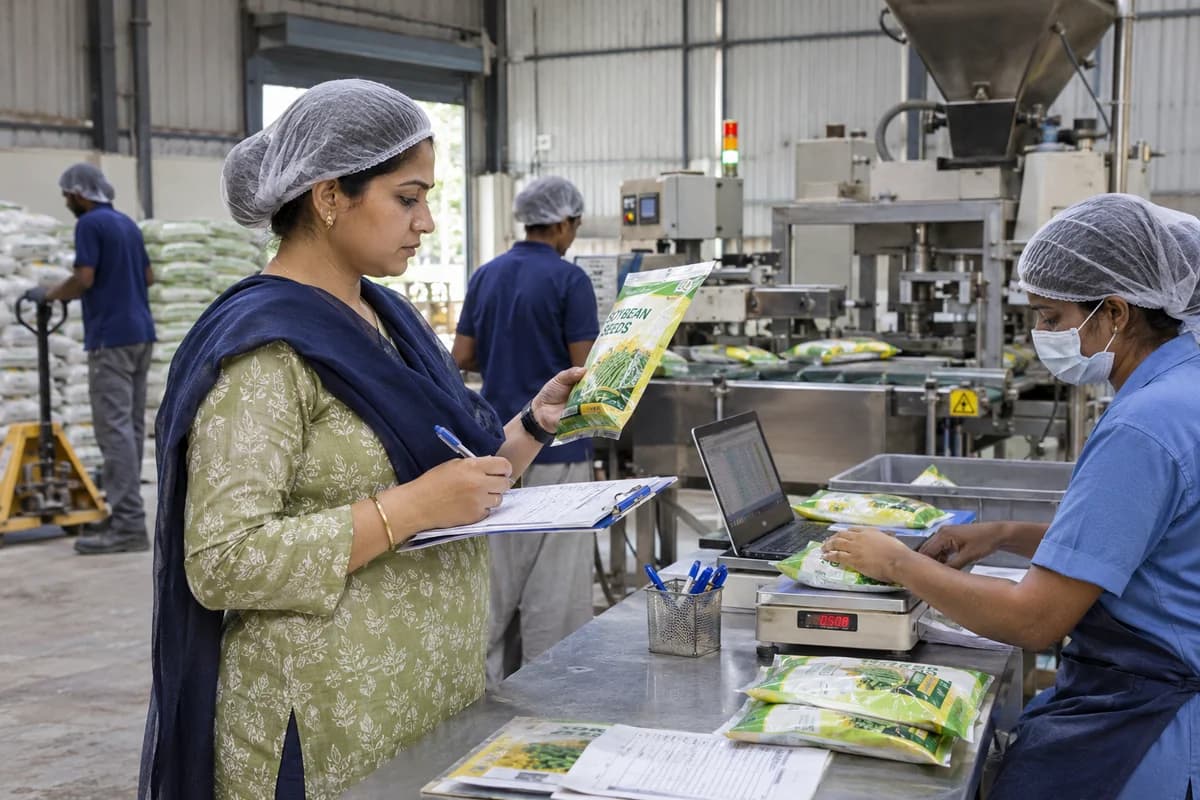
Seed is a seasonal product. Lots are processed, packed, tested for germination and sent to dealers before kharif sowing. Unsold packets come back afterwards, and dealer accounts are settled against them, one return at a time, months after the original sale. Seed returns arrive after kharif.
Steel re-rolling works differently. Billets go into the furnace and bars come out. Yield, fuel and scale loss matter. Traders in the old market sell by weight, and the counter speaks Marathi. A re-rolling mill weighs billets going into the furnace and bars coming out on separate slips, and nobody compares the two until the month’s stock is counted.
The areas, estates and markets that matter in Jalna.
How Jalna businesses pick and use software.
A seed company wants lot numbers, germination results and dealer returns traceable down to the packet.
A mill owner wants billets in, bars out and scale loss shown for every shift.
Where Jalna businesses lose time and money.
Returns arrive in bulk after the season
Unsold packets come back from dealers in large batches. Matching each return to its sale and lot takes weeks of patient desk work, and credit notes wait until the last return is traced.
Germination results live apart from stock
Test reports are filed in the lab. Stock is tracked elsewhere. A weak lot can reach a dealer before anyone links the two. Recalling packets from villages, one dealer and one season at a time, is slow and costly work.
Scale loss hides in weighbridge slips
Billet weight and bar weight are on different slips. Loss per shift is rarely worked out.
Dealer credit follows the sowing calendar
Credit is given before sowing and recovered after harvest. Reminders depend on someone remembering which dealers are behind, and the busiest weeks of the year are exactly when that memory fails.
What we would build for Jalna businesses.
Usually in this order, starting with whatever the audit ranks first.
ERP, CRM and Business Software Implementation
One record of stock, orders, customers and accounts, set up so your team opens it every day.
Learn moreBusiness Process Automation
Approvals, reminders and reports triggered by agreed rules, with exceptions assigned to a responsible person.
Learn moreData Engineering and Business Intelligence
Dashboards that answer the owner’s Monday questions without anyone building an Excel sheet first.
Learn moreWeb and Mobile Application Development
Web and mobile apps for customers, field staff and dealers, built to work on ordinary phones.
Learn moreReady products that fit Jalna businesses.
Each one is adapted to how your business works before it goes live, and anything your trade needs that it lacks is added then. You are not paying to build the basics again.
Steel Mill Management Software
Orders, raw material, heat and lot traceability, test certificates, yard stock, dispatch and receivables for steel mills and re-rollers.
Learn moreWholesale and B2B Ordering Software
A dealer login with its own rates and schemes, live stock, credit checks, picking and dispatch, part loads, returns and repeat orders.
Learn moreHow the work runs from Bengaluru for Jalna.
- 1
The audit, by call
A screen-share and a look at the sheets, accounting reports and WhatsApp groups your team uses. No travel needed.
- 2
A written proposal
Scope, what we build first and the cost, agreed in writing before anything starts.
- 3
Build in short rounds
Working screens shared every few weeks. Your team tests them from your own office.
- 4
Go-live, in person when it helps
For data migration and training we can come to Jalna. Travel is agreed in advance.
- 5
Support online
Fixes, changes and hosting handled remotely by the same team that built it.
The work we have published.
We don’t claim Jalna clients we don’t have. These are systems our team built; the way we work is the same wherever you are.
PetSeva: matching owners to the right vet, at any hour
A two-sided veterinary platform where vets are searchable by specialisation and bookable outside clinic hours. It now carries more than 2,000 veterinary doctors.
Read the case study Paying guest accommodationSAM Atithi Pavathi: bed-level occupancy as the source of truth
PG management software where allocation, rates and invoices are derived from bed-level occupancy and not maintained in parallel spreadsheets.
Read the case study School transport servicesSAM Tours: school transport on a single ledger
Registration, fee collection, routing and finance write to the same records, closing the gap between journeys run and fees collected.
Read the case study Microfinance and Self Help GroupsVikasa RDO: making SHG loan recovery auditable
Loan proposals, recoveries and commissions sit on one record, with a person attached to every state change, so a business handling a bank’s money can show where each rupee went.
Read the case studyMake the scope specific to your business.
Work through a real example from your operation and agree the handoffs, controls and support the project needs.
Scale loss hides in weighbridge slips
Do purchasing, operating and billing quantities use the same unit?
Check the measurement unit and rounding used in “Scale loss hides in weighbridge slips”. Compare the result with a known sample before accepting a converted quantity or calculated charge.
Background reading: ERPNext: units of measure
Returns arrive in bulk after the season
What returns to stock, and what returns to the customer’s account?
Walk through “Returns arrive in bulk after the season” using a partly paid sale. Agree the physical return and the financial correction separately, with a reference to the original transaction.
Background reading: ERPNext: returns and credits
Questions Jalna owners ask before they call.
Can seed packets be traced back to a processing lot?
Yes. Each lot carries its germination result, packing date and the dealers who received it. If a lot is questioned, one search gives the dispatch list.
Can a mill measure scale loss for every shift?
Yes. Billet weight in and bar weight out are entered from the weighbridge, and the difference shows per shift, so a furnace that loses more than its neighbour stands out within days. Fuel use sits beside it.
What happens after I share my requirements?
We review your brief and clarify the work with you. We then look at the software, spreadsheets and WhatsApp groups your business runs on today and write down what works, what slows your team down and what is missing. A demo login, a screen-share or a few screenshots are enough. You get a short written summary ordered by priority, with no obligation to hire us afterwards.
How much will the software cost?
We don’t publish a price, because it depends on what the system has to do. That first review settles the scope, and the cost goes into a written proposal before any work starts.
Industries we build for in Jalna.
Tell us what your Jalna business runs on today.
Send a short note on the spreadsheets, software or WhatsApp groups your team depends on. We reply the same working day.
What happens after you share your requirements
- We review your brief and the systems you already use.
- We clarify the workflow, missing information and the work to consider first.
- The proposed scope sets out the deliverables, responsibilities and dependencies.
- Review the scope and commercial terms before deciding whether to proceed.
Start with your requirements
Describe your current process, the people involved and the change you need. Start with the details you know; we can clarify the rest together.
Share your requirements