Nadiad · LocationsKeep hospital billing, tobacco trading and student fees straight in Nadiad.
Nadiad sits in the Kheda district between Ahmedabad and Vadodara, in the fertile Charotar belt, where traders deal in grain and tobacco, hospitals draw patients from villages, and a university brings students. Santram temple draws devotees all year. Clinic, trading and campus software is made in Nagarbhavi, Bengaluru, and handed over after online sessions with the owner. A visit to Nadiad is rarely needed.
Kheda is farm country. Farmers bring tobacco, grain and vegetables to the market yards, and commission agents advance money against the crop. The expressway puts both cities within a day’s round trip.
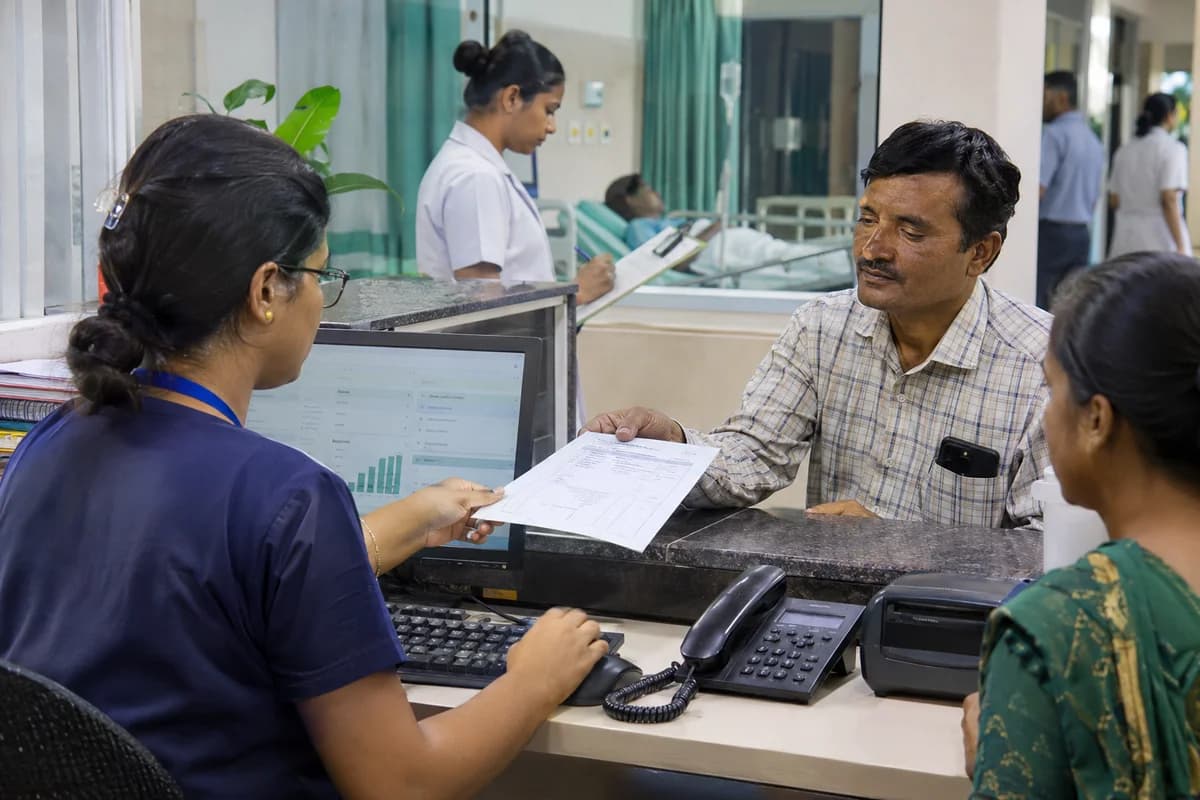
Nadiad has long had private hospitals and clinics, and villagers travel in for treatment, while a technical university pushes students into the rented rooms around it. Devotees visit the Santram temple through the year, and festival days bring bigger crowds.
The areas, estates and markets that matter in Nadiad.
How Nadiad businesses pick and use software.
A hospital owner wants to see daily collections and pending insurance claims without asking three people. A trader wants to know which farmer took an advance and how much crop is due. Both questions come first.
Mess owners and hostel operators have a mix of monthly and daily customers, and they ask whether one system can handle both, without a second register for daily eaters.
Where Nadiad businesses lose time and money.
Hospital bills are assembled at discharge
Charges are gathered from wards, labs and the pharmacy only when the patient is leaving. Something slips. Revenue leaks quietly.
Advances to farmers are not summed
A commission agent hands out small sums through the season and adds them up only when the crop arrives, by which time memory has failed.
Mess and hostel dues are written on a slate
Mess operators chase payments from memory. Defaults are noticed late.
Temple shop stock runs short
Sweet and flower sellers buy for festival days from guesswork, and unsold stock spoils.
What we would build for Nadiad businesses.
Usually in this order, starting with whatever the audit ranks first.
ERP, CRM and Business Software Implementation
One record of stock, orders, customers and accounts, set up so your team opens it every day.
Learn moreBusiness Process Automation
Approvals, reminders and reports triggered by agreed rules, with exceptions assigned to a responsible person.
Learn moreWeb and Mobile Application Development
Web and mobile apps for customers, field staff and dealers, built to work on ordinary phones.
Learn moreData Engineering and Business Intelligence
Dashboards that answer the owner’s Monday questions without anyone building an Excel sheet first.
Learn moreReady products that fit Nadiad businesses.
Each one is adapted to how your business works before it goes live, and anything your trade needs that it lacks is added then. You are not paying to build the basics again.
Hospital/Clinic Management System
Appointments, OPD queue, patient records, billing, medicine stock and staff rosters for clinics and small hospitals, set up around your doctors and departments.
Learn moreHospital Pharmacy Management Software
Medication order verification, ward indents, controlled drug registers, formulary and batch stock, returns from wards, discharge supply and purchasing for hospital pharmacies.
Learn moreSweet Shop Management Software
Weighing and billing, festival advance orders, gift boxes, kitchen production plans, shelf life and branch stock for sweet and confectionery shops.
Learn moreHow the work runs from Bengaluru for Nadiad.
- 1
The audit, by call
A screen-share and a look at the sheets, accounting reports and WhatsApp groups your team uses. No travel needed.
- 2
A written proposal
Scope, what we build first and the cost, agreed in writing before anything starts.
- 3
Build in short rounds
Working screens shared every few weeks. Your team tests them from your own office.
- 4
Go-live, in person when it helps
For data migration and training we can come to Nadiad. Travel is agreed in advance.
- 5
Support online
Fixes, changes and hosting handled remotely by the same team that built it.
The work we have published.
We don’t claim Nadiad clients we don’t have. These are systems our team built; the way we work is the same wherever you are.
PetSeva: matching owners to the right vet, at any hour
A two-sided veterinary platform where vets are searchable by specialisation and bookable outside clinic hours. It now carries more than 2,000 veterinary doctors.
Read the case study Paying guest accommodationSAM Atithi Pavathi: bed-level occupancy as the source of truth
PG management software where allocation, rates and invoices are derived from bed-level occupancy and not maintained in parallel spreadsheets.
Read the case study School transport servicesSAM Tours: school transport on a single ledger
Registration, fee collection, routing and finance write to the same records, closing the gap between journeys run and fees collected.
Read the case study Microfinance and Self Help GroupsVikasa RDO: making SHG loan recovery auditable
Loan proposals, recoveries and commissions sit on one record, with a person attached to every state change, so a business handling a bank’s money can show where each rupee went.
Read the case studyMake the scope specific to your business.
Work through a real example from your operation and agree the handoffs, controls and support the project needs.
Temple shop stock runs short
What happens to movements entered while a count is being checked?
For “Temple shop stock runs short”, choose a count date and trace the movements around it. Agree who investigates a difference before an adjustment changes the available balance.
Background reading: ERPNext: stock reconciliation
Mess and hostel dues are written on a slate
Can you explain the balance from its original documents?
Select a partly settled example in “Mess and hostel dues are written on a slate”. Ask for the invoice, allocated receipts and remaining balance to be shown together before agreeing the opening figures.
Background reading: ERPNext: outstanding invoices
Questions Nadiad owners ask before they call.
Can a hospital see its collections and pending insurance claims every day?
Yes. Billing, receipts and claims are recorded in one place, so the owner sees what came in and what is unpaid, and a summary reaches the phone each evening.
Can a hostel track monthly rent and mess charges for each student?
Yes. Rent, mess charges and deposits are kept per student, with due reminders sent by WhatsApp. Unpaid names stand out.
What happens after I share my requirements?
We review your brief and clarify the work with you. We then look at the software, spreadsheets and WhatsApp groups your business runs on today and write down what works, what slows your team down and what is missing. A demo login, a screen-share or a few screenshots are enough. You get a short written summary ordered by priority, with no obligation to hire us afterwards.
How much will the software cost?
We don’t publish a price, because it depends on what the system has to do. That first review settles the scope, and the cost goes into a written proposal before any work starts.
Industries we build for in Nadiad.
Tell us what your Nadiad business runs on today.
Send a short note on the spreadsheets, software or WhatsApp groups your team depends on. We reply the same working day.
What happens after you share your requirements
- We review your brief and the systems you already use.
- We clarify the workflow, missing information and the work to consider first.
- The proposed scope sets out the deliverables, responsibilities and dependencies.
- Review the scope and commercial terms before deciding whether to proceed.
Start with your requirements
Describe your current process, the people involved and the change you need. Start with the details you know; we can clarify the rest together.
Share your requirements