Follow each patient’s readings, HbA1c, foot checks and eye screening from one visit to the next.
Diabetes clinics see the same patients for years. Glucose diaries, HbA1c slips, foot findings and dose changes sit in separate files, so a missed annual check goes unnoticed. The diabetes product keeps them on one record and lists who is overdue.
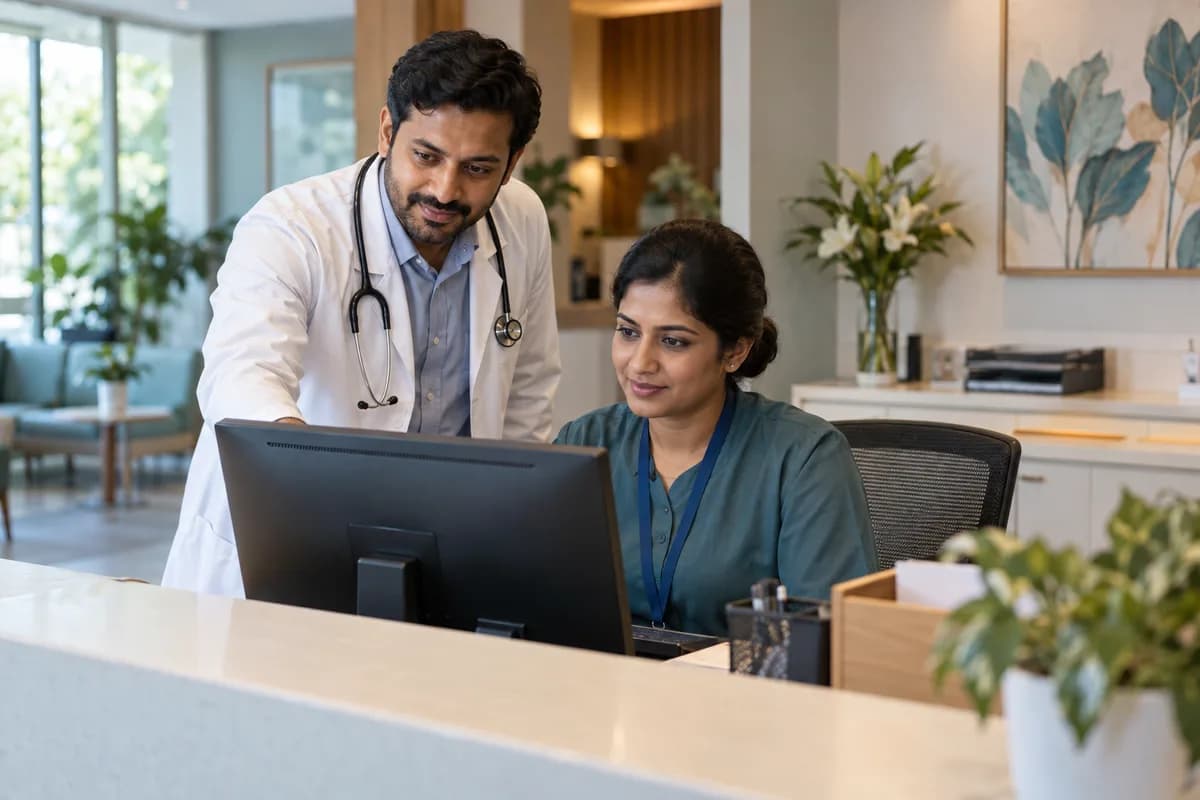
A diabetes clinic lives on follow-up. Patients return every few months with a glucose diary, a fresh HbA1c result and questions about a changed dose. The doctor needs the earlier readings beside the new ones.
Most clinics keep this in paper files and lab slips. When the patient is already in the chair, staff end up paging through folders to learn when the feet were last checked or the eyes last photographed. The diabetes product keeps each of these on the patient’s own record.
The front desk books return visits and sends each patient to the laboratory for fasting and post-meal samples. A nurse weighs the patient, measures blood pressure, reads the meter download and compares waist and weight against the last visit before the doctor calls the next name.
At review, the HbA1c trend is read, tablets or insulin doses are adjusted and the next date is written. An educator teaches injection sites, carbohydrate counting and hypoglycaemia care. Foot checks and eye referrals are noted once a year, if anyone remembers.
Strips, pen needles and insulin pens are sold at the counter. Month end brings one question. Which patients never came back?
What goes wrong for diabetes clinics without a proper system.
What we would build for diabetes clinics.
Named the way your team already talks about the work. We start with whichever part the audit shows is costing you most.
A requirements checklist for diabetes clinics.
What to cover, which reports to ask for and what to put to every vendor, ready to print or save as a PDF.
A product already built for diabetes clinics.
It is adapted to how your business works before it goes live, and anything your trade needs that it lacks is added then.
Diabetes Clinic Management Software
Diabetes registry, glucose and HbA1c trends, dose history, complication screening dates, referrals, educator sessions, strip stock and visit billing for diabetes clinics.
The business modules diabetes clinics use most.
Each one is also available on its own, or inside a system built for you.
The services behind it.
ERP, CRM and Business Software Implementation
One record of stock, orders, customers and accounts, set up so your team opens it every day.
Learn moreBusiness Process Automation
Approvals, reminders, follow-ups and reports that run on their own instead of on someone remembering.
Learn moreWhatsApp Business API and Chatbots
WhatsApp Business API work covers number onboarding, template approval, opt-in records and a chatbot with human handover, all set up under the client’s own Meta account. It connects WhatsApp to a CRM, billing or booking system, so every message is sent from an existing record and every reply is written back. It suits businesses that already take orders, payments or bookings in chat.
Learn moreData Protection and Privacy Readiness
Personal data hides in odd places. We map every CRM, billing export, enquiry inbox and backup that holds it, then build consent records, access roles, retention jobs and a breach runbook into the software. Your lawyer reads the privacy law.
Learn moreHow the work runs from Bengaluru for your city.
- 1
The audit, by call
A screen-share and a look at the sheets, accounting reports and WhatsApp groups your team uses. No travel needed.
- 2
A written proposal
Scope, what we build first and the cost, agreed in writing before anything starts.
- 3
Build in short rounds
Working screens shared every few weeks. Your team tests them from your own office.
- 4
Go-live, in person when it helps
For data migration and training we can come to your city. Travel is agreed in advance.
- 5
Support online
Fixes, changes and hosting handled remotely by the same team that built it.
Software we have built and run.
We only name clients whose work is published. These are systems our team designed, built and supports.
PetSeva: matching owners to the right vet, at any hour
A two-sided veterinary platform where vets are searchable by specialisation and bookable outside clinic hours. It now carries more than 2,000 veterinary doctors.
Read the case study Paying guest accommodationSAM Atithi Pavathi: bed-level occupancy as the source of truth
PG management software where allocation, rates and invoices are derived from bed-level occupancy and not maintained in parallel spreadsheets.
Read the case study School transport servicesSAM Tours: school transport on a single ledger
Registration, fee collection, routing and finance write to the same records, closing the gap between journeys run and fees collected.
Read the case studyQuestions diabetes clinics ask before they call.
Is this a diabetes product or a general clinic system?
Diabetes first. The HbA1c trend, screening schedule and dose history are built for a clinic whose patients return for years. A hospital with wards and beds needs a wider product.
Can it import readings from patient glucose meters?
Glucose readings go in by hand at the desk, or arrive as a file exported from the meter’s own software. Direct device links depend on the make and are reviewed during implementation.
Does it advise the doctor on doses or targets?
No. It records doses, results and dates and shows them in order. Every treatment decision, and the targets used, stay with the treating doctor.
Can lab results from our partner laboratory be attached?
Yes, as files or typed values against the right test. We study the layout your lab uses while building the import. Afterwards the front desk reads through the first results that arrive.
What happens after I share my requirements?
An engineer reads what you send and replies within one business day. We then look at the software, spreadsheets and WhatsApp groups your business runs on today and write down what works, what slows your team down and what is missing. A demo login, a screen-share or a few screenshots are enough. You get a short written summary ordered by priority, with no obligation to hire us afterwards.
How much will the software cost?
We don’t publish a price, because it depends on what the system has to do. That first review settles the scope, and the cost goes into a written proposal before any work starts.
Related industries.
Part of a wider group.
Tell us how your business runs today.
A few lines on your spreadsheets, software and WhatsApp groups is enough. We reply the same working day.
- No obligation
- A reply within one business day
- Your details stay private
Start with your requirements
Seven short steps that tell us what you need. An engineer reads them before getting in touch.
Share your requirements