Every order followed from drawing revision to dispatch.
Machine shops, panel builders, fabricators and plants making cartons, flanges or shirts work to a drawing, a purchase order or a specification. The software holds the revision, bill of materials, stage job cards, outward process notes and dispatch against that order, in one record.
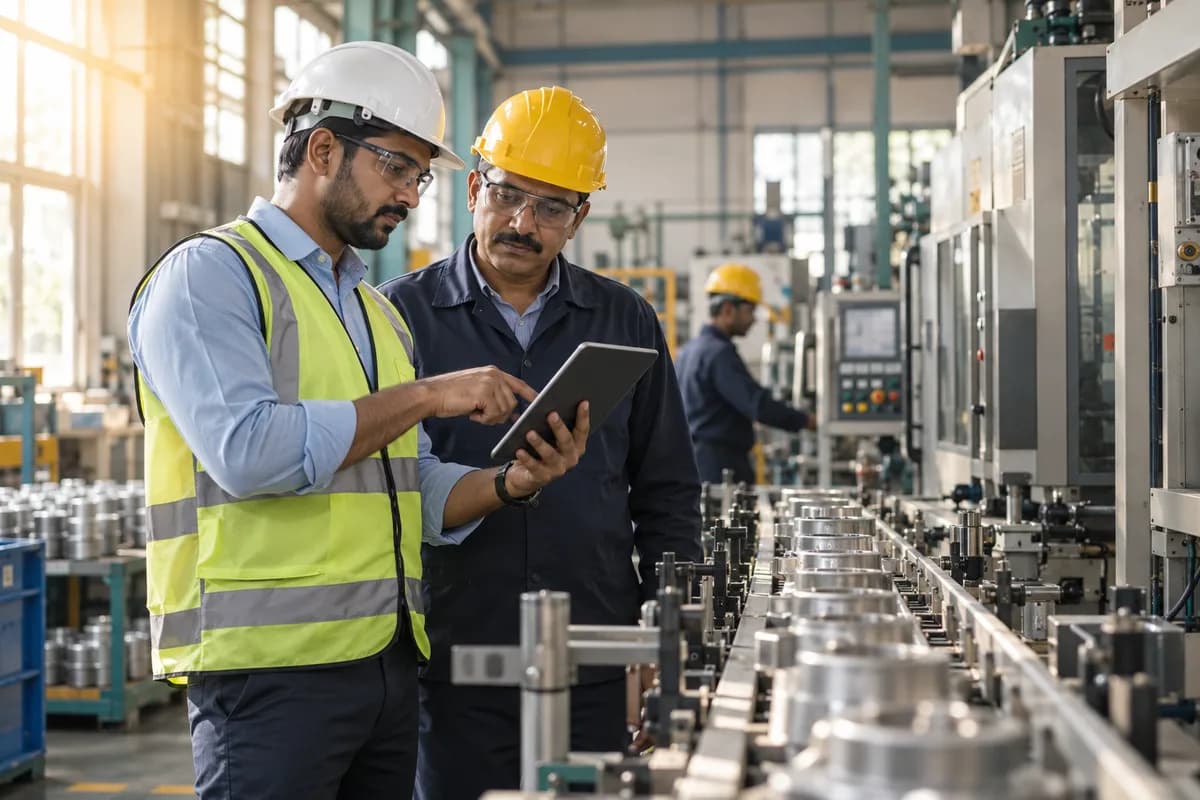
These trades make to an order. A buyer sends a drawing, a purchase order or a specification, and the factory turns it into spindles, busbar panels, corrugated cartons or shirts. Quantities swing. The same part returns in revision C after running as revision B, so the paperwork matters as much as the cutting.
Most orders pass through shearing, turning, MIG welding, assembly, powder coating, hydro testing and packing, with an inspector signing off the first piece at each stage. Some stages go outside to a plater, heat treater, buffing unit or screen printer, and the gate register is often the only proof of what left. Stock arrives as bar, coil, reel, bought-out components or fabric rolls, and the storekeeper books each receipt against the purchase order before anything is cut. Each draws down against one order.
Six people keep six sheets. The estimator, planner, storekeeper, line supervisor, inspector and accountant each keep a private sheet, while the business needs one record that all of them read. After dispatch it keeps growing, with warranty returns, spares, service contract renewals, retention money and debit notes all hanging from the order the estimator first opened.
- CNC machining companies
- Precision component manufacturers
- Automotive component manufacturers
- Electrical equipment manufacturers
- Machinery manufacturers
- Industrial automation companies
- Metal fabricators
- Packaging manufacturers
- Chemical manufacturers
- Lighting manufacturers
- Apparel manufacturers
- Furniture manufacturers
- Commercial refrigeration companies
- Industrial repair companies
- Mining companies
- Oil and gas companies
- Plating companies
- Well-drilling companies
- Aerospace and aviation manufacturers
- Construction material manufacturers
- Cabinet manufacturers
- Countertop manufacturers
- Orthotics manufacturers
- PPE manufacturers
- Medical device manufacturers
- Steel mills
- Pharmaceutical manufacturers
Software for each kind of manufacturing and industrial products business.
CNC machining companies
Turning shops and precision component makers cut shafts, bushes, flanges, banjo bolts and valve bodies to a buyer’s drawing, in lots from five prototypes to a monthly call-off. Revision letters and CMM printouts live apart. The software keeps the revision, grade, each operation and every vernier, bore gauge or micrometre reading on the work order, so a lot is traced from bar to dispatch.
Learn morePrecision component manufacturers
Precision component manufacturers run CNC lathes, Swiss-type turning centres, machining centres and centreless grinders on small parts, each held to a drawing and a tolerance in short runs for many buyers. Revisions, setup sheets, CMM printouts and plating dispatch notes sit in separate files. The software keeps a batch, its stages and its rejections together. Gauge calibration dates and buyer rejection registers are custom work.
Learn moreAutomotive component manufacturers
Automotive component makers supply pressed, machined, cast, moulded and assembled parts to vehicle makers and Tier-1 buyers against monthly schedules, with a quality file kept in folders. Schedules arrive on a portal and rejections return as debit notes. The software ties each schedule line to work orders, job cards, inspection, bin labels and dispatch, so returned parts lead to their lot.
Learn moreElectrical equipment manufacturers
Electrical equipment manufacturers build low-voltage and high-voltage panels, switchgear, distribution transformers and busducts to order for utilities, engineering contractors and factories. Each order carries a drawing approval, bought-out components, stage and final testing, an inspection call and a long payment tail. The software follows one order through its bill of materials, production, test readings and dispatch, and keeps the records a buyer’s inspector asks to see.
Learn moreMachinery manufacturers
Machinery manufacturers build machines to order from spreadsheet parts lists and parts machined outside, so assembly waits on one missing bracket and service contract revenue slips away unnoticed. The production system covers the parts list against the drawing revision, outside machining, assembly and factory acceptance testing. The installed base, service contract renewals and later wear parts are built around it.
Learn moreIndustrial automation companies
An automation company sells offers, builds panels, and spends weeks commissioning at a customer’s plant, with retention money held long after the job. The project side is built for you during implementation. It follows each project from priced offer to final sign-off, holds panel material against it and logs service visits against warranty or a maintenance contract. The IoT monitoring dashboard covers machine readings.
Learn moreMetal fabricators
Metal fabricators quote staircase railings, rolling shutters, mezzanine floors, sheds and stainless kitchen counters by the kilo or by the square foot. Then the shop runs on a whiteboard and a delivery note book. Actual tonnage and offcut loss go uncosted. Job cards, plate movement and outside processing such as laser profiling and powder coating are tracked together, with the steel each job consumed kept on record.
Learn morePackaging manufacturers
Packaging manufacturers making corrugated boxes, mono cartons and labels run on an accounting package, a reel register and paper job cards, so quotes lag behind kraft prices. Costing, job cards and reel stock are built around your corrugator, printing and finishing lines and your regular customers. Wastage is recorded against each job, and old specifications are kept for the repeat order.
Learn moreChemical manufacturers
Specialty chemical, rubber and plastic makers often hold formulations in Excel, batch sheets on paper and QC results in a register. Batch records, QC and dispatch are built around your own formulations and plant, with versions kept and access limited. A batch number then shows what went into the kettle and which customer received the drums.
Learn moreLighting manufacturers
Lighting manufacturers assemble LED luminaires from bought-in constant-current drivers, MCPCB light engines, extruded heat sinks and die-cast housings, with bills of materials (BOMs) in Excel and warranty claims arriving on WhatsApp. BOM, production and warranty tracking are built together here, so each fitting carries the lots that went into it. A returned carton names its driver supplier.
Learn moreApparel manufacturers
Apparel manufacturers cut fabric in-house and send bundle tickets out to stitching units on subcontract delivery notes. The system would track orders, cutting and subcontract work around size ratios, so pieces out and pieces back are counted size by size. Piece rates come off the same record. Friday settlement then starts from one count.
Learn moreFurniture manufacturers
Furniture makers take orders at a showroom counter or from interior designers, then build them from sketches forwarded on WhatsApp. The factory hears late and delivery dates slip. Furniture showroom software holds the order end, while production management software holds the shop floor, and both are joined during implementation. One order number then follows a wardrobe from cutting list through French polish to the installation visit.
Learn moreCommercial refrigeration companies
Commercial refrigeration companies install and service walk-in coolers, display cases, cold rooms, ice machines and condensing units for shops, kitchens and food plants. The software holds each unit by site with its service history, refrigerant log, fault calls and maintenance contract, and it sends the right engineer with the right parts.
Learn moreIndustrial repair companies
Industrial repair companies take in induction motors, centrifugal pumps, gearboxes, hydraulic cylinders and screw compressors from plants, then inspect, quote, repair, test and return them. Each item gets a job number and holds its arrival condition, teardown findings, approved quote, parts used, bench readings and invoice.
Learn moreMining companies
Mining company software holds each pit, quarry or underground working as a site with its own records, and crews key shift output, haul trips, engine hours, diesel and spares in once. Weighbridge tickets feed dispatch and invoices. Maintenance jobs, contractor orders and permits sit beside them, so managers read the same figures as the site office.
Learn moreOil and gas companies
Oil and gas software for operators and field service companies holds each well, pad and facility as a record with its own production readings, jobs and costs. Field tickets, maintenance work, spares and contractor orders are logged where the work happens. Partner statements and invoices are drawn from those same entries. Field office and head office read one set of figures.
Learn morePlating companies
Plating company software follows each customer lot from goods receipt through the process route to dispatch. Racks, barrels, bath analysis, chemical additions and thickness readings are logged against the lot. Rejects and rework are recorded with their cause. From that one job come the certificate, the packing list and an invoice priced by area, weight or piece, as you quote.
Learn moreWell-drilling companies
Well-drilling software holds every borehole as one job. The job carries its site survey, quotation, drilling log by depth, casing and pipe issued, crew days and fuel used. Yield tests and completion reports sit there too. Bills follow metres and items. Pump work and callouts join it.
Learn moreAerospace and aviation manufacturers
Aerospace and aviation manufacturers make machined brackets, fittings, fasteners, cabin interiors and ground support equipment against customer drawings and specifications. The software links each order to its mill certificates, routing, inspections and shipping papers. Any part traces back to its bar, its spindle and its operator, with the quality record held beside the job.
Learn moreConstruction material manufacturers
Building material plants cast hollow blocks, press fly ash bricks, fire vitrified tiles, pour precast lintels and mix ready-mix concrete for contractors and dealers. The software ties each batch to its cement, aggregate or clay issues, cube or water absorption tests and truck loads. Dealer rates and credit limits sit beside them.
Learn moreCabinet manufacturers
Cabinet manufacturers build kitchen, vanity, wardrobe and office units from MDF, plywood, melamine boards and solid timber. The software holds the approved drawing, the panel cut list, the stock of boards, edge tape and hinges, and the stage each order has reached. Delivery, fitting and any later call-out stay on the same job.
Learn moreCountertop manufacturers
Countertop manufacturers fabricate kitchen and bathroom tops from granite, quartz, marble, solid surface and laminate. The software links the site template, the slab chosen, the cut and polish stages and the cutouts to one job. Delivery and install follow. Slab stock and remnants are kept by lot.
Learn moreOrthotics manufacturers
Orthotics software for manufacturers holds each custom device as one order, from clinic prescription to delivery. The record carries the scan or cast, the design file, the materials used and the finishing steps. Clinics see where devices stand. Remakes and adjustments are logged against the original order, so a repeat fit is traced in one search.
Learn morePPE manufacturers
PPE manufacturing software holds each production lot as one record, from the raw material received to the carton shipped. Test results and checks stay with the lot. Distributor, hospital and industrial orders all draw from one stock. Which lot did this box come from? One search answers it.
Learn moreMedical device manufacturers
A device that reaches a patient carries a long paper trail behind it: which parts went in, who checked it and where it was sent. The medical device manufacturer software holds that device history record as one chain per lot. Inspections, supplier approvals, nonconformances and complaints attach to the same record, and your quality team sets the forms.
Learn moreSteel mills
Steel mills melt, cast and roll material that ends up in buildings, vehicles and machines, so a buyer eventually asks which heat a bar came from. The steel mill software links each heat and lot to its ladle chemistry, bend and tensile results, yard bay and dispatch. Certificates, orders and balances follow.
Learn morePharmaceutical manufacturers
Tablets, syrups and injectables are made in batches, and each batch must be explainable years later from dispensed materials, the granulator or filling line, in-process checks and analysts. Batch manufacturing records, certificates of analysis and release decisions sit together. Dispatch and returns point back to the batch.
Learn moreWhere these businesses lose time and money.
What we build across manufacturing and industrial products.
Ready products that fit manufacturing and industrial products.
Each one is adapted to how your business works before it goes live, and anything your trade needs that it lacks is added then. You are not paying to build the basics again.
Manufacturing Production Management Software
Work orders, multi-level bill of materials, job cards by stage, bar and sheet issue, rejection reasons, subcontracted job work, dispatch and tax billing for manufacturers.
Learn moreIoT Monitoring Dashboard
Live values, thresholds and alerts, downtime and run hours, and the history behind every reading from your machines, meters and sensors.
Learn moreThe services behind it.
ERP, CRM and Business Software Implementation
One record of stock, orders, customers and accounts, set up so your team opens it every day.
Learn moreCustom Software and Product Engineering
Software built around how your business actually runs, when nothing off the shelf fits without workarounds.
Learn moreData Migration and Moving Off Spreadsheets
Data migration and spreadsheet replacement covers auditing existing files, cleaning and deduplicating records, loading them into a new system and reconciling the loaded result against known totals. Both systems then run side by side before cutover. Originals stay untouched.
Learn moreIoT and Edge Computing
Machines, meters and sensors feeding the same system your office uses, even when the network drops.
Learn moreBusiness Process Automation
Approvals, reminders, follow-ups and reports that run on their own instead of on someone remembering.
Learn moreWritten for manufacturing and industrial products.
Practical notes on running the business, not product marketing.
Excel, ERP or Industry Software for a Manufacturing Business
Compare a register in Excel, a large ERP and a ready production system for a make-to-order unit, and see which trades need work built to order.
Learn moreWhy the floor keeps cutting to an old drawing revision
Find where a revised drawing or PO amendment gets stuck before it reaches the operator, and how a revision lock on the job card stops old prints being used.
Learn moreProduction planning software for a small manufacturer: where to start
What a first rollout of production planning software should cover for a small manufacturer: orders, routings, job cards, stage tracking and dispatch.
Learn moreOutside processing sent out and never reconciled: how to find it
Match goods sent out, job work received back and vendor invoices step by step to find lost quantities and short returns from plating and other outside work.
Learn moreQuestions manufacturing and industrial products businesses ask.
Does one production system fit every manufacturer here?
No. A ready production system suits machine shops, fabricators, and panel and component makers whose orders follow a drawing through a fixed run of stages. Apparel, project-based automation firms and larger process plants need work built around their own steps, and some may fit an established ERP better.
Will it schedule the machines on its own?
No. The lots queued at each lathe, press and stage are visible, and a planner sequences the batches by hand on the screen. Costing sits at the quotation, where material, machine time and outside work are worked out before a price goes back.
Can it read counts directly from the machines?
Not on its own. Operators mark the job card from a phone or tablet at the machine. Where a PLC or controller shares its data, the monitoring dashboard reads run hours, cycle counts and downtime.
Does it replace our accounting package?
No. Ledgers, returns and tax filing stay in your accounting package. Sales, purchase and stock figures can be read inside GullySystem, and an export to the package you already use is quoted separately.
Tell us how your business runs today.
A few lines on your spreadsheets, software and WhatsApp groups is enough. We reply the same working day.
- No obligation
- A reply within one business day
- Your details stay private
Start with your requirements
Seven short steps that tell us what you need. An engineer reads them before getting in touch.
Share your requirements