Hospitality and food · Software for meat and butcher shopsKnow every kilo from the live bird or carcass to the cut sold at the counter.
A meat shop buys by the bird, the carcass or the crate, and sells by the cut. Weight changes at every step: dressing, trimming, bones, spoilage. The owner needs one record. It shows what came in, what was sold and what was lost.
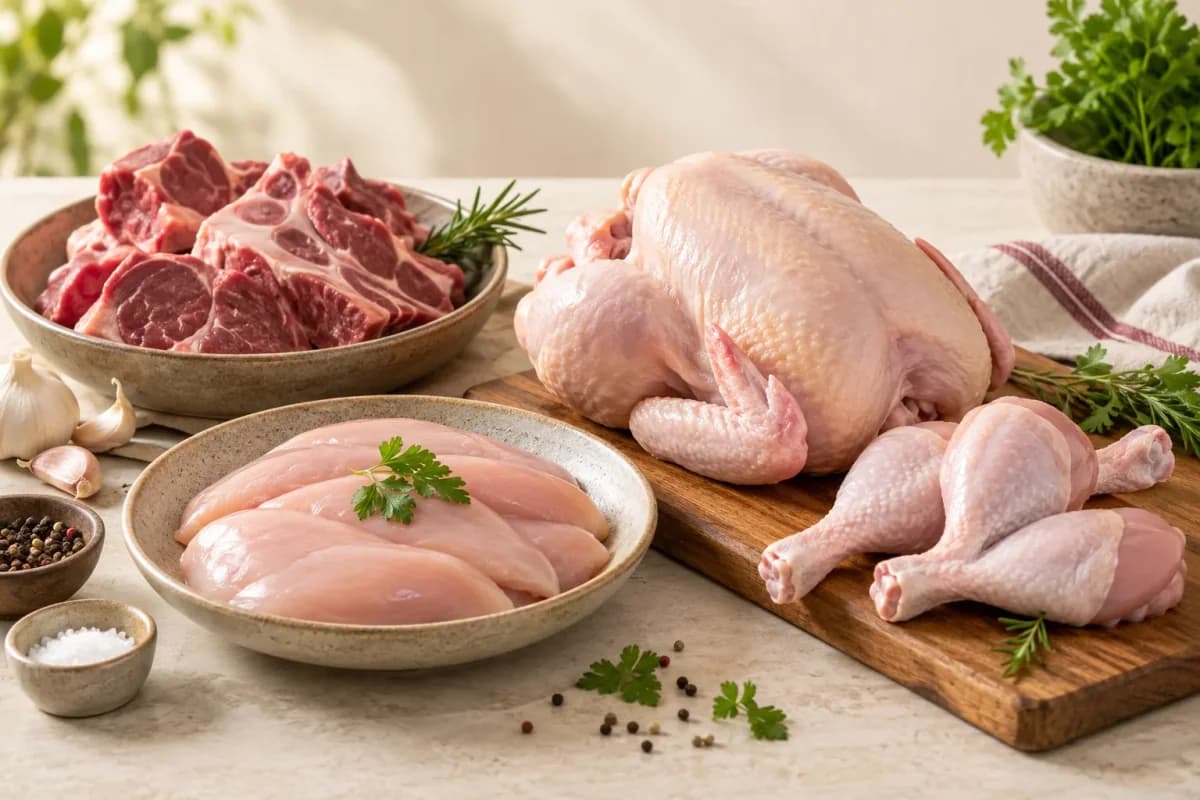
A butcher sells something other than what arrives. A live bird becomes a dressed one and loses feathers, blood and offal on the way, so the kilos paid for and the kilos sold are never the same number. A goat carcass becomes leg, chops, mince and bones, each priced differently, and the mince takes the trimmings that would otherwise be thrown out. Each loss has to be accounted for. Otherwise the margin on paper is a guess. Weights quietly drift between the door and the till.
Meat has a clock that never stops. Cold room space is limited. Racks fill fast. Unsold meat cannot wait for next week, and the owner decides each evening what to mark down, freeze or send to a restaurant customer. That choice is made on the spot. Most shops sell for cash at the counter, a few on credit, and a growing share by standing order or home delivery. Those streams need different records. Mixing them hides the real margin.
The day starts early, before light. The scale is zeroed and the board carries the morning rates. Stock arrives. It comes from the farm, the market or the slaughter house, and is weighed at the door. The cutter breaks it down and the cold room is checked, and then the day’s prices go up on the board for every walk-in customer, regular buyer and passing trader to read. At the counter, customers ask for a weight, a cut or a pack. The bill is made from the scale, less the tray or tare. Every gram is argued over.
Bulk buyers are fussy about weight, cut and hour. Restaurants, hotels and caterers send orders the evening before, by message, and change them again at dawn. They expect a set quantity of a set cut at a set hour. The bill must match the weight received. Home orders go out in slots, each with a rider, an address, a cash or paid flag and a pack list that the cutter has to finish before the rider leaves. Riders cannot wait long. Fish comes in on its own schedule. It must be sold quickly. Festivals and Sundays double the rush. Queues form by eight. and some weeks the shop is closed on religious days. Stock must move before then. Night finally comes. The owner counts cash, notes what is left, lists who owes money and pays the supplier from what remains.
What goes wrong for meat and butcher shops without a proper system.
What meat and butcher shops gain from one system.
Not a feature list. These are the moments in the working day that go differently once the records sit together.
What we would build for meat and butcher shops.
Named the way your team already talks about the work. We start with whichever part the audit shows is costing you most.
A requirements checklist for meat and butcher shops.
What to cover, which reports to ask for and what to put to every vendor, ready to print or save as a PDF.
A product already built for meat and butcher shops.
It is adapted to how your business works before it goes live, and anything your trade needs that it lacks is added then.
Meat Shop Management Software
Daily carcass and cut stock, weight-based billing, cold-room records, wastage, home delivery and credit customers for meat and butcher shops.
What Meat Shop Management Software covers, feature by feature
- Lot purchase and supplier record for butchers
- Dressing yield and cutting for meat shops
- Cut rates and counter price board
- Counter billing from the scale for butchers
- Meat stock by age and cold room unit
- Cold room temperature log for meat shops
- Wastage and spoilage records for butchers
- Standing orders for restaurant and hotel meat supply
- Home delivery slots for butcher shops
- Credit customer and supplier ledgers for meat shops
Other products in the same sector as meat and butcher shops.
- Bakery Management System
- Brewery Management Software
- Catering Management Software
- Hotel Management Software
- Restaurant Management System
- Bank Reconciliation Software
- Wholesale and B2B Ordering Software
- Paying Guest Management System
- Resort Management Software
- Sweet Shop Management Software
- Vacation Rental Management Software
- Winery Management Software
- All industry products
The business modules meat and butcher shops use most.
Each one is also available on its own, or inside a system built for you.
Point of Sale Billing
The scale feeds the weight to the bill, less the tray tare, with the cut named on each line. Mutton, chicken and fish keep their own rates. Prices change with the morning board.
Learn moreStock Tracking and Alerts
Whole birds, carcass quarters and crates are counted in, then broken into cuts and trimmings. A shop low on boneless chicken sees it before the lunch rush. Yesterday’s stock is marked first.
Learn moreOrder Management
A hotel kitchen books a boneless curry cut and a weight for early Friday delivery. The order repeats until changed. The cutter sees it on the prep sheet.
Learn moreCredit Limits and Control
Restaurants and caterers buy on account with a limit and a payment term. A kitchen past its limit is stopped at the counter. Cash buyers are not affected.
Learn moreWhatsApp, SMS and Email Notifications
A regular customer gets a message when fresh mutton is in, and a hotel gets its delivery slot the night before. Rate changes on the board go to standing buyers. Bills go by messaging app.
Learn morePurchase Order Management
Orders to the farm, the market trader or the slaughter house name the bird count or carcass weight and the rate. Live weight and dressed weight are compared on receipt. Shortfalls are queried at once.
Learn moreBarcodes and Labels
Packed cuts get a printed label with the cut name, packed weight, price and date. Pack-out time is printed on it. Counter staff scan the label for billing.
Learn moreRoles and Permissions
A cutter sees the prep sheet, a counter hand bills without changing rates, and the owner sees dressing loss and margin. Rate edits on the board need the owner’s login. Loss figures stay private.
Learn moreAll solutions by area
- Applicant Tracking (5)
- CRM (8)
- Finance & Accounting (10)
- Helpdesk (4)
- Human Resources (13)
- Inventory Management (5)
- Project Management (7)
- Manufacturing (6)
- Procurement (4)
- Sales and Distribution (6)
- Field Service (5)
- Statutory and Compliance (4)
- Retail and POS (4)
- Bookings and Appointments (3)
- Subscriptions (2)
- Assets and Fleet (4)
- Platform (6)
- Analytics (2)
- Documents (1)
Where AI can help meat and butcher shops.
Each one reads records you already keep, and a person approves every decision.
The services behind it.
Data Migration and Moving Off Spreadsheets
Supplier rate sheets, credit customer ledgers and the notebook of daily rates are cleaned and entered as records. Opening balances for restaurant accounts and carcass stock come across, so the first day’s bill already reads right.
Learn moreBusiness Process Automation
A purchased lot can open its yield record, and a counter sale can reduce cut stock as the scale prints the bill. Standing restaurant orders can repeat on their days, and aged meat can appear on the markdown list.
Learn moreWhatsApp Business API and Chatbots
Restaurants and regular buyers can send an order in a messaging app and have it land in the order list in cut and weight. Customers can ask for today’s rates and receive the board list as a reply.
Learn moreAPI and System Integration
The shop’s counter scale, billing screen and accounting software can exchange weights, bills and stock counts directly. Cold room temperature loggers and delivery apps can feed the same records, so nobody types a reading twice.
Learn moreAll our other services
- Custom Software and Product Engineering
- Software Maintenance, Support and Rescue
- AI and Intelligent Automation
- ERP, CRM and Business Software Implementation
- Data Engineering and Business Intelligence
- UI/UX Design and Prototyping
- Cloud Engineering and Managed Infrastructure
- DevOps & Automation Services
- QA and Software Testing
- Performance Engineering
- Cybersecurity and Application Security
- IoT and Edge Computing
- Technology Strategy and Product Consulting
- E-Commerce and Digital Commerce
- MVP Product Development
- Web and Mobile Application Development
- SaaS Product Development
- Training and Adoption
- Data Protection and Privacy Readiness
- Tax and e-Invoice Engineering
- Managed IT Support
- Dedicated Team and Staff Augmentation
- Business Intelligence and Reporting Tools
- Cloud Cost Optimisation
- Global Compliance and Localisation
How the work runs from Bengaluru for your city.
- 1
The audit, by call
A screen-share and a look at the sheets, accounting reports and WhatsApp groups your team uses. No travel needed.
- 2
A written proposal
Scope, what we build first and the cost, agreed in writing before anything starts.
- 3
Build in short rounds
Working screens shared every few weeks. Your team tests them from your own office.
- 4
Go-live, in person when it helps
For data migration and training we can come to your city. Travel is agreed in advance.
- 5
Support online
Fixes, changes and hosting handled remotely by the same team that built it.
Software we have built and run in this sector.
Published with the client’s agreement, with what was built and what changed.
Check the difficult cases before choosing software.
Use examples from your own records to test the workflows that matter in your business.
Cold room log, same-day stock and spoilage
What happens to movements entered while a count is being checked?
For “Cold room log, same-day stock and spoilage”, choose a count date and trace the movements around it. Agree who investigates a difference before an adjustment changes the available balance.
Background reading: ERPNext: stock reconciliation
Credit accounts and supplier payments
Can the same receipt be allocated without counting the money twice?
Take an unallocated amount in “Credit accounts and supplier payments” and apply it to the intended balance. Review the remaining amount and the original receipt reference together.
Background reading: ERPNext: payment allocation
Questions meat and butcher shops ask before they call.
Can it handle chicken, mutton, pork and fish in one shop?
Yes. Each type of meat has its own cuts, rates and shelf life, so a fish counter and a poultry counter share one ledger without sharing stock lines.
How does it deal with the weight lost in dressing?
You enter the purchase weight and the weight after dressing for each lot. The yield then shows beside the supplier, so a poor lot is visible the same day.
Does the scale connect to the billing screen?
A digital scale with a serial or USB output can send weight to the bill. The model is checked during setup. Where a scale cannot connect, weight is typed in.
Can it run when the internet is down?
Counter billing is planned to continue on the shop device and sync when the link returns. Confirm this for your shop at the proposal stage.
How is a meat shop system priced?
The number of counters and outlets, whether restaurant orders and delivery are included, and how much old data is moved. Scales and printers are separate. We quote only after reading the scope.
What do we need to collect first?
Bring your list of cuts and rates, supplier names, a month of purchase slips, the credit notebook and any temperature sheets. Name one cutter and one cashier to check screens.
Who owns our records afterwards?
You keep your purchase, sales, credit and temperature records. They can be exported as plain files, and the source code is yours under the agreement.
What will the butcher shop system not do?
It does not run a slaughter house or replace a food safety plan. It holds the records such a plan relies on.
What happens after I share my requirements?
We review your brief and clarify the work with you. We then look at the software, spreadsheets and WhatsApp groups your business runs on today and write down what works, what slows your team down and what is missing. A demo login, a screen-share or a few screenshots are enough. You get a short written summary ordered by priority, with no obligation to hire us afterwards.
How much will the software cost?
We don’t publish a price, because it depends on what the system has to do. That first review settles the scope, and the cost goes into a written proposal before any work starts.
Part of a wider group.
Tell us how your business runs today.
A few lines on your spreadsheets, software and WhatsApp groups is enough. We reply the same working day.
What happens after you share your requirements
- We review your brief and the systems you already use.
- We clarify the workflow, missing information and the work to consider first.
- The proposed scope sets out the deliverables, responsibilities and dependencies.
- Review the scope and commercial terms before deciding whether to proceed.
Start with your requirements
Describe your current process, the people involved and the change you need. Start with the details you know; we can clarify the rest together.
Share your requirements