Health and wellness · Software for addiction treatment centresRun admissions, beds, daily programmes, medication rounds and aftercare from one resident record.
Addiction treatment centres admit residents or see outpatients, run a daily programme of counselling and group sessions, and follow people after discharge. The software keeps admission, bed, programme, medication round, family contact, billing and aftercare on one confidential record, with each role seeing only what its work needs.
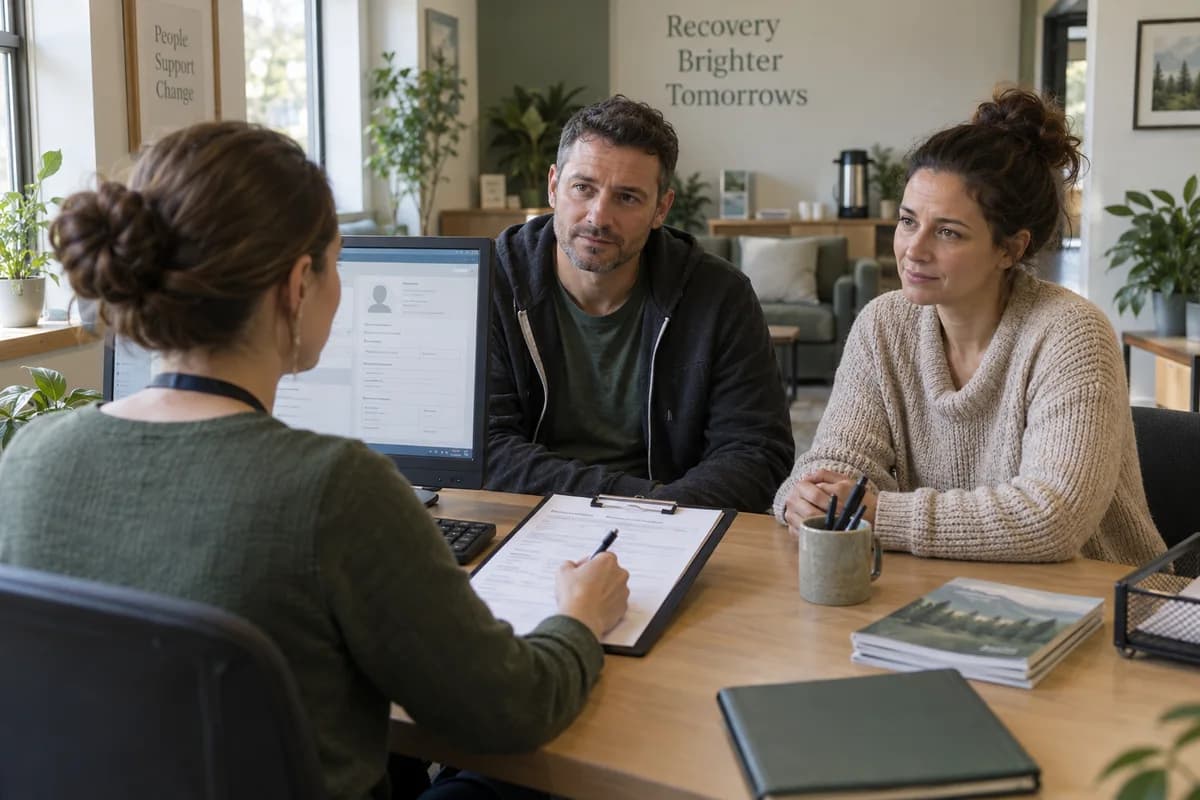
A treatment centre cares for a person over weeks or months. The stay begins with an assessment and an agreed plan. It continues through daily sessions, medication rounds, family meetings and reviews. It ends with a discharge and an aftercare plan that the resident, the family and the counsellor have all discussed and understood. Stays last weeks or months.
Most centres run these parts on separate registers: an admission book, a bed chart, a medicine register and a fee ledger. Nobody sees the whole person in one place. Confidentiality is harder to protect when the same details are copied between books, and each copy is another page that somebody must lock away. Records stay confidential. A resident who leaves early or returns after a lapse changes the plan. The counsellor, the nurse and the family contact need the current version in front of them, not an old copy.
The admissions team takes enquiries, completes the intake assessment, records consent, explains the fee structure to the family and allocates a bed or an outpatient slot. Counsellors run individual and group sessions against a daily programme, and note progress, goals and any concerns.
Nurses prepare and record medication rounds and observations, and the medical officer reviews each resident on a schedule. Families are given set visiting or call times. Visitors are logged at the gate. At each medication round the nurse records the dose given, refused or missed against the resident’s chart, and the count is compared with the register before the shift ends.
The centre manager watches occupancy, the rota, supplies and the kitchen order, and the accounts team follows deposits, instalments and final bills. At discharge, an aftercare plan is agreed and follow up contact is arranged. Some residents return. The earlier record matters then.
What goes wrong for addiction treatment centres without a proper system.
What addiction treatment centres gain from one system.
Not a feature list. These are the moments in the working day that go differently once the records sit together.
What we would build for addiction treatment centres.
Named the way your team already talks about the work. We start with whichever part the audit shows is costing you most.
A requirements checklist for addiction treatment centres.
What to cover, which reports to ask for and what to put to every vendor, ready to print or save as a PDF.
A product already built for addiction treatment centres.
It is adapted to how your business works before it goes live, and anything your trade needs that it lacks is added then.
Addiction Treatment Centre Management Software
Admissions, beds, daily programmes, medication rounds, family contact, deposits, billing and aftercare calls for addiction treatment centres.
What Addiction Treatment Centre Management Software covers, feature by feature
- Enquiries and admissions at an addiction treatment centre
- Consent and documents for addiction treatment residents
- Beds and room allocation for residential treatment houses
- Daily programme and sessions for treatment centres
- Medication rounds in an addiction treatment centre
- Medical reviews and observations in addiction treatment
- Family contact and visitors at a treatment centre
- Deposits, packages and billing for treatment centres
- Supplies and kitchen order for a treatment centre
- Staff rota and access control for treatment centres
- Discharge and aftercare for addiction treatment residents
Other products in the same sector as addiction treatment centres.
- Ayurveda Clinic Management Software
- Assisted Living Community Management Software
- Audiology Clinic Management Software
- Cardiology Clinic Management Software
- Hospital/Clinic Management System
- Chiropractic Clinic Management Software
- Counsellor and Psychotherapist Management Software
- Dental Clinic Management Software
- Skin and Aesthetics Clinic Management Software
- Diagnostic Centre Management Software
- ENT Clinic Management Software
- Hospital Operations Management Software
- All industry products
The business modules addiction treatment centres use most.
Each one is also available on its own, or inside a system built for you.
Lead Management
First calls from families and referring doctors are logged with the substance, the urgency and who spoke. An admissions counsellor owns each enquiry. Cold leads are reviewed before the bed list is filled.
Learn moreDocument Management
Consent forms, intake assessments and discharge summaries are filed under the resident’s admission. Only named roles open them. Family members never see clinical papers, and old records move to an archive.
Learn moreResource and Room Booking
Group halls, counselling rooms and family meeting rooms are booked against the daily programme. Clashes between yoga and a group session show at once. Counsellors see which room is free.
Learn moreAppointment Scheduling
Outpatients book counselling and psychiatric review visits in set slots. Missed visits are marked for follow-up. Counsellors see tomorrow’s list and any new referral before leaving the centre.
Learn moreStock Tracking and Alerts
The medicine cupboard tracks detox drugs, nicotine replacement and daily prescriptions by batch and expiry. A low level raises a reorder note. Nurses see what is left at the evening round.
Learn moreInvoice Management
Residential packages, outpatient sessions and pharmacy items are billed from the admission record. Family deposits are set against the final bill. The fee statement matches what was explained at intake.
Learn moreRoles and Permissions
Counsellors read session notes, nurses read medication records and the front desk sees neither. Family contacts have no login. Each opened record is logged for the clinical head.
Learn moreService Reminders
Aftercare calls, follow-up visits and relapse prevention checks are scheduled after discharge. A counsellor gets the reminder on the due date. Families get a note if they consented.
Learn moreAll solutions by area
- Applicant Tracking (5)
- CRM (8)
- Finance & Accounting (10)
- Helpdesk (4)
- Human Resources (13)
- Inventory Management (5)
- Project Management (7)
- Manufacturing (6)
- Procurement (4)
- Sales and Distribution (6)
- Field Service (5)
- Statutory and Compliance (4)
- Retail and POS (4)
- Bookings and Appointments (3)
- Subscriptions (2)
- Assets and Fleet (4)
- Platform (6)
- Analytics (2)
- Documents (1)
Where AI can help addiction treatment centres.
Each one reads records you already keep, and a person approves every decision.
The services behind it.
ERP, CRM and Business Software Implementation
Enquiries, admissions, beds, programme sessions, medication rounds, family contact and fee ledgers are set up as connected modules. Staff roles decide which parts of a resident’s record each person can open.
Learn moreCybersecurity and Application Security
Resident records are sensitive, so access by role, login history and encryption of stored notes and consent forms are reviewed. Visitor logs, medication registers and counsellor notes are checked for who can read or export them.
Learn moreManaged IT Support
The admissions desk, nurses’ station and counsellors’ rooms rely on working devices and a stable network. Support covers those machines, printers and backups, so a medication round is not delayed by a locked screen.
Learn moreAll our other services
- Business Process Automation
- Custom Software and Product Engineering
- Software Maintenance, Support and Rescue
- AI and Intelligent Automation
- API and System Integration
- Data Engineering and Business Intelligence
- UI/UX Design and Prototyping
- Cloud Engineering and Managed Infrastructure
- DevOps & Automation Services
- QA and Software Testing
- Performance Engineering
- IoT and Edge Computing
- Technology Strategy and Product Consulting
- E-Commerce and Digital Commerce
- MVP Product Development
- Web and Mobile Application Development
- SaaS Product Development
- WhatsApp Business API and Chatbots
- Data Migration and Moving Off Spreadsheets
- Training and Adoption
- Data Protection and Privacy Readiness
- Tax and e-Invoice Engineering
- Dedicated Team and Staff Augmentation
- Business Intelligence and Reporting Tools
- Cloud Cost Optimisation
- Global Compliance and Localisation
How the work runs from Bengaluru for your city.
- 1
The audit, by call
A screen-share and a look at the sheets, accounting reports and WhatsApp groups your team uses. No travel needed.
- 2
A written proposal
Scope, what we build first and the cost, agreed in writing before anything starts.
- 3
Build in short rounds
Working screens shared every few weeks. Your team tests them from your own office.
- 4
Go-live, in person when it helps
For data migration and training we can come to your city. Travel is agreed in advance.
- 5
Support online
Fixes, changes and hosting handled remotely by the same team that built it.
Software we have built and run in this sector.
Published with the client’s agreement, with what was built and what changed.
Check the difficult cases before choosing software.
Use examples from your own records to test the workflows that matter in your business.
Enquiry, admission and consent
Where is personal information copied, exported and deleted?
For “Enquiry, admission and consent”, trace a fictional personal-data field from collection through exports and deletion. Record who holds each copy and take the resulting map to the person responsible for your privacy obligations.
Background reading: MeitY: DPDP rules and notifications
Deposits, packages and billing
Can you explain the balance from its original documents?
Select a partly settled example in “Deposits, packages and billing”. Ask for the invoice, allocated receipts and remaining balance to be shown together before agreeing the opening figures.
Background reading: ERPNext: outstanding invoices
Questions addiction treatment centres ask before they call.
Does it suit both residential and outpatient programmes?
Yes. A residential centre uses beds, rounds and a daily programme, while an outpatient service uses appointments and sessions. Many centres run both. One resident record carries either path, so a person who moves from a stay to day care keeps a single history.
How are resident details protected?
Each role sees only its own part of a record, and every opening of a sensitive entry is logged. The centre’s own privacy and consent rules are applied during implementation, and the legal wording stays with your advisers.
Does it record medication rounds?
Yes. Each dose is marked given, refused or missed with a time and a name, and the count can be compared with stock. Clinical protocols remain the centre’s own.
Can families receive updates?
Yes, to approved contacts only. The centre decides what is shared with each contact, and call times are set for every resident, with messages sent straight from the record.
What moves the centre system quotation?
Mostly the parts taken first: admission and consent, bed allocation or medication rounds. Staff logins add to centres and beds. Carrying over old resident files can change the total. Admission and consent can be priced alone.
Gathering for the centre system: what first?
Bring admission forms, consent sheets, the bed chart and the deposit register. Admissions, nursing and counselling need to be reachable. Samples of consent sheets help most.
Who owns the resident files after we stop?
Source code, resident files, bed charts and medication rounds stay with the centre. Plain-file exports cover resident files, bed charts and medication rounds. Resident files support stays in-house.
What happens after I share my requirements?
We review your brief and clarify the work with you. We then look at the software, spreadsheets and WhatsApp groups your business runs on today and write down what works, what slows your team down and what is missing. A demo login, a screen-share or a few screenshots are enough. You get a short written summary ordered by priority, with no obligation to hire us afterwards.
How much will the software cost?
We don’t publish a price, because it depends on what the system has to do. That first review settles the scope, and the cost goes into a written proposal before any work starts.
Related industries.
- Alternative medicine practices
- Assisted and senior living communities
- Audiology and hearing clinics
- Cardiology clinics
- Chiropractic clinics
- Clinics and doctors
- Counsellors and psychotherapists
- Dental clinics
- Dermatology clinics
- Diagnostic and imaging centres
- ENT clinics
- Eye hospitals and clinics
- Fertility and IVF clinics
- Gyms and fitness studios
- Hospice providers
- Hospitals and nursing homes
- In-home care providers
- Nutritionists and dietitians
- OB-GYN clinics
- Occupational therapy clinics
- Optometrists
- Orthodontic clinics
- Orthopaedic hospitals and clinics
- Pathology labs
- Physiotherapists
- Plastic surgery clinics
- Podiatry clinics
- Psychiatry clinics
- Speech therapy clinics
- Telehealth providers
- Urgent care centres
- Urology clinics
- Veterinary clinics
- Wellness centres
Part of a wider group.
Tell us how your business runs today.
A few lines on your spreadsheets, software and WhatsApp groups is enough. We reply the same working day.
What happens after you share your requirements
- We review your brief and the systems you already use.
- We clarify the workflow, missing information and the work to consider first.
- The proposed scope sets out the deliverables, responsibilities and dependencies.
- Review the scope and commercial terms before deciding whether to proceed.
Start with your requirements
Describe your current process, the people involved and the change you need. Start with the details you know; we can clarify the rest together.
Share your requirements