Keep each pet’s history on the record, and send vaccination reminders automatically.
A veterinary clinic keeps a pet’s history on a card the owner carries, takes walk-ins into a crowded evening clinic, and calls about boosters when somebody remembers. The veterinary clinic management system is built around your vets, rates and vaccine fridge, so the history sits on the animal and reminders go out by themselves.
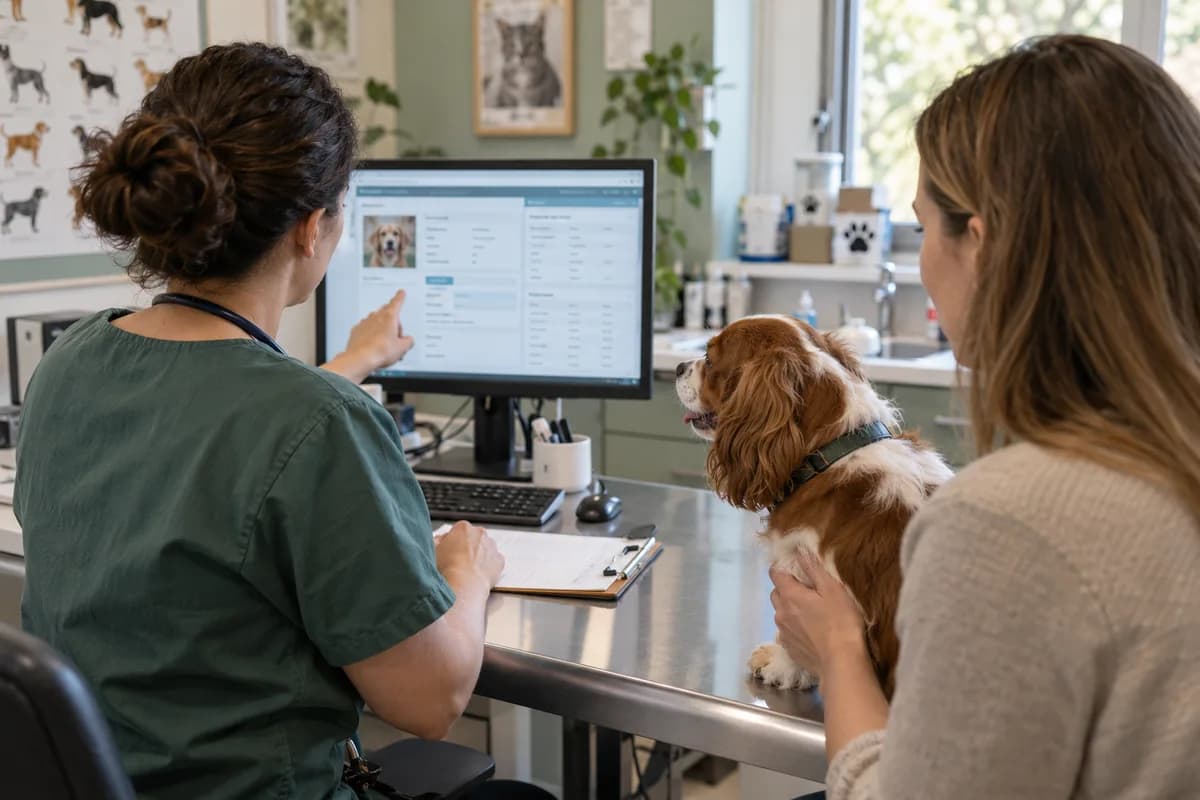
A pet comes back for years: the puppy course, a fever, a dressing, then a booster every year after that. All of it is the practice, and all of it lives on a card in the owner’s drawer.
The record belongs on the animal and not on the card. Start with the evening clinic and the vaccination calls, and watch how each one runs today.
Appointments go into a register and walk-ins arrive beside them. The evening is crowded and the afternoon is empty, and the vet writes on whichever card the owner brought.
Shots and deworming dates are noted on that card and, if the receptionist is careful, in a diary too. A litter’s doses fall due weeks apart, and one missed call becomes one missed dose.
Vaccines sit in a fridge that is checked when somebody opens it. After a long surgery the bill is added up by hand.
What goes wrong for veterinary clinics without a proper system.
What we would build for veterinary clinics.
Named the way your team already talks about the work. We start with whichever part the audit shows is costing you most.
A requirements checklist for veterinary clinics.
What to cover, which reports to ask for and what to put to every vendor, ready to print or save as a PDF.
A product already built for veterinary clinics.
It is adapted to how your business works before it goes live, and anything your trade needs that it lacks is added then.
Veterinary Clinic Management System
Appointments, one record per pet, vaccination and deworming reminders, billing, and vaccine and medicine stock for pet clinics and animal hospitals.
Other products in the same sector as veterinary clinics.
- Addiction Treatment Centre Management Software
- Ayurveda Clinic Management Software
- Assisted Living Community Management Software
- Audiology Clinic Management Software
- Cardiology Clinic Management Software
- Hospital/Clinic Management System
- Chiropractic Clinic Management Software
- Counsellor and Psychotherapist Management Software
- Dental Clinic Management Software
- Skin and Aesthetics Clinic Management Software
- Diagnostic Centre Management Software
- ENT Clinic Management Software
- All industry products
The business modules veterinary clinics use most.
Each one is also available on its own, or inside a system built for you.
- Appointment Scheduling
- Invoice Management
- Service Reminders
- Stock Tracking and Alerts
- Client Portal
- WhatsApp, SMS and Email Notifications
- Report Builder
- Online Booking Portal
- All business solutions
All solutions by area
- Applicant Tracking (5)
- CRM (8)
- Finance & Accounting (10)
- Helpdesk (4)
- Human Resources (13)
- Inventory Management (5)
- Project Management (7)
- Manufacturing (6)
- Procurement (4)
- Sales and Distribution (6)
- Field Service (5)
- Statutory and Compliance (4)
- Retail and POS (4)
- Bookings and Appointments (3)
- Subscriptions (2)
- Assets and Fleet (4)
- Platform (6)
- Analytics (2)
- Documents (1)
Where AI can help veterinary clinics.
Each one reads records you already keep, and a person approves every decision.
The services behind it.
ERP, CRM and Business Software Implementation
One record of stock, orders, customers and accounts, set up so your team opens it every day.
Learn moreBusiness Process Automation
Approvals, reminders, follow-ups and reports that run on their own instead of on someone remembering.
Learn moreWeb and Mobile Application Development
Web and mobile apps for customers, field staff and dealers, built to work on ordinary phones.
Learn moreAPI and System Integration
Accounting software, WhatsApp, payment gateways, tax portals and your own apps sharing one set of numbers.
Learn moreAll our other services
- Custom Software and Product Engineering
- Software Maintenance, Support and Rescue
- AI and Intelligent Automation
- Data Engineering and Business Intelligence
- UI/UX Design and Prototyping
- Cloud Engineering and Managed Infrastructure
- DevOps & Automation Services
- QA and Software Testing
- Performance Engineering
- Cybersecurity and Application Security
- IoT and Edge Computing
- Technology Strategy and Product Consulting
- E-Commerce and Digital Commerce
- MVP Product Development
- SaaS Product Development
- WhatsApp Business API and Chatbots
- Data Migration and Moving Off Spreadsheets
- Training and Adoption
- Data Protection and Privacy Readiness
- Tax and e-Invoice Engineering
- Managed IT Support
- Dedicated Team and Staff Augmentation
- Business Intelligence and Reporting Tools
- Cloud Cost Optimisation
- Global Compliance and Localisation
Written for veterinary clinics.
Practical notes on running the business, not product marketing.
How the work runs from Bengaluru for your city.
- 1
The audit, by call
A screen-share and a look at the sheets, accounting reports and WhatsApp groups your team uses. No travel needed.
- 2
A written proposal
Scope, what we build first and the cost, agreed in writing before anything starts.
- 3
Build in short rounds
Working screens shared every few weeks. Your team tests them from your own office.
- 4
Go-live, in person when it helps
For data migration and training we can come to your city. Travel is agreed in advance.
- 5
Support online
Fixes, changes and hosting handled remotely by the same team that built it.
Software we have built and run in this sector.
Published with the client’s agreement, with what was built and what changed.
Questions veterinary clinics ask before they call.
Can it remind owners about booster doses?
Yes. Dates for each dose and deworming sit on the pet, and a reminder goes by SMS or email before one falls due. Owner messages do not go on WhatsApp. Pet parents see what is coming in their own portal.
Will our billing go into our finance package?
Not built in. Billing and revenue reports are read by your accountant inside GullySystem. An export to that software is extra work, scoped with you and charged separately.
Can we take boarding and grooming bookings in it?
Yes. Grooming becomes a service in the same appointment book. Boarding and daycare hold kennel availability, feeding and medication rounds, per-night billing and a photo update to the owner.
Can we print a rabies certificate for an owner?
Not as a certificate format. The vaccine given, its date and the next dose due sit on the pet’s record, and your clinic writes the certificate it needs from that.
How is an animal clinic quotation worked out?
Vets, branches and reception users set the base. Pet records, appointments, treatment notes, vaccine reminders, medicine stock and billing are modules with separate lines. A finance link adds scope. Owner cards and registers to type in count too.
What should a vet clinic collect before work begins?
Collect the appointment register, a few owner cards with vaccine dates, a prescription slip, the fridge stock list and a bill sample. A lead vet and a receptionist should review screens.
If the clinic stops, do pet histories remain ours?
They do. The clinic keeps its data and the code, and pets, visits, vaccines, stock and bills can be exported as plain files. The team that built the clinic’s system keeps supporting it. GullySystem hosts by default, and the clinic can pick another host.
What happens after I share my requirements?
An engineer reads what you send and replies within one business day. We then look at the software, spreadsheets and WhatsApp groups your business runs on today and write down what works, what slows your team down and what is missing. A demo login, a screen-share or a few screenshots are enough. You get a short written summary ordered by priority, with no obligation to hire us afterwards.
How much will the software cost?
We don’t publish a price, because it depends on what the system has to do. That first review settles the scope, and the cost goes into a written proposal before any work starts.
Cities where veterinary clinics are common.
Related industries.
- Addiction treatment centres
- Alternative medicine practices
- Assisted and senior living communities
- Audiology and hearing clinics
- Cardiology clinics
- Chiropractic clinics
- Clinics and doctors
- Counsellors and psychotherapists
- Dental clinics
- Dermatology clinics
- Diagnostic and imaging centres
- ENT clinics
- Eye hospitals and clinics
- Fertility and IVF clinics
- Gyms and fitness studios
- Hospice providers
- Hospitals and nursing homes
- In-home care providers
- Nutritionists and dietitians
- OB-GYN clinics
- Occupational therapy clinics
- Optometrists
- Orthodontic clinics
- Orthopaedic hospitals and clinics
- Pathology labs
- Physiotherapists
- Plastic surgery clinics
- Podiatry clinics
- Psychiatry clinics
- Speech therapy clinics
- Telehealth providers
- Urgent care centres
- Urology clinics
- Wellness centres
Part of a wider group.
Also sell online?
The e-commerce pages cover the online side of this trade: storefronts, dealer ordering and the link to your stock.
Tell us how your business runs today.
A few lines on your spreadsheets, software and WhatsApp groups is enough. We reply the same working day.
What happens after you share your requirements
- A senior engineer reads your answers. Nobody phones first.
- Within one business day you get a written note: what we understood, what we would start with, and the questions we still have.
- If it fits, a proposal follows with the order of work, what we need from you and what you receive at each step.
- No call is booked and nothing is paid until you have read the note. Your details stay with us.
Start with your requirements
Seven short steps that tell us what you need. A senior engineer reads them before anyone gets in touch.
Share your requirements